
Why castles became stages for events
Many Lower Silesian castles were, for decades, ruins or sites under slow renovation, and maintaining a large stronghold or residence costs more than can be earned from admission tickets alone. Festivals, tournaments and themed events fill the calendar outside the ordinary sightseeing season and attract visitors who learn the history of the place along the way. For a heritage site, this means an additional budget for restoration and a reason to open its interiors more widely than just on a guided route.
A castle that turns once a year into a film set or concert stage also attracts a different kind of visitor than the regular tourist traffic: someone who comes not for the sightseeing itself but for a specific event, and along the way gets to know a place they might not even have heard of before. The organisers of such events are usually the institutions managing the castle itself, working with local knights' brotherhoods, musical associations or florists' guilds - each group bringing a different kind of publicity and a different audience.
Knights' tournaments
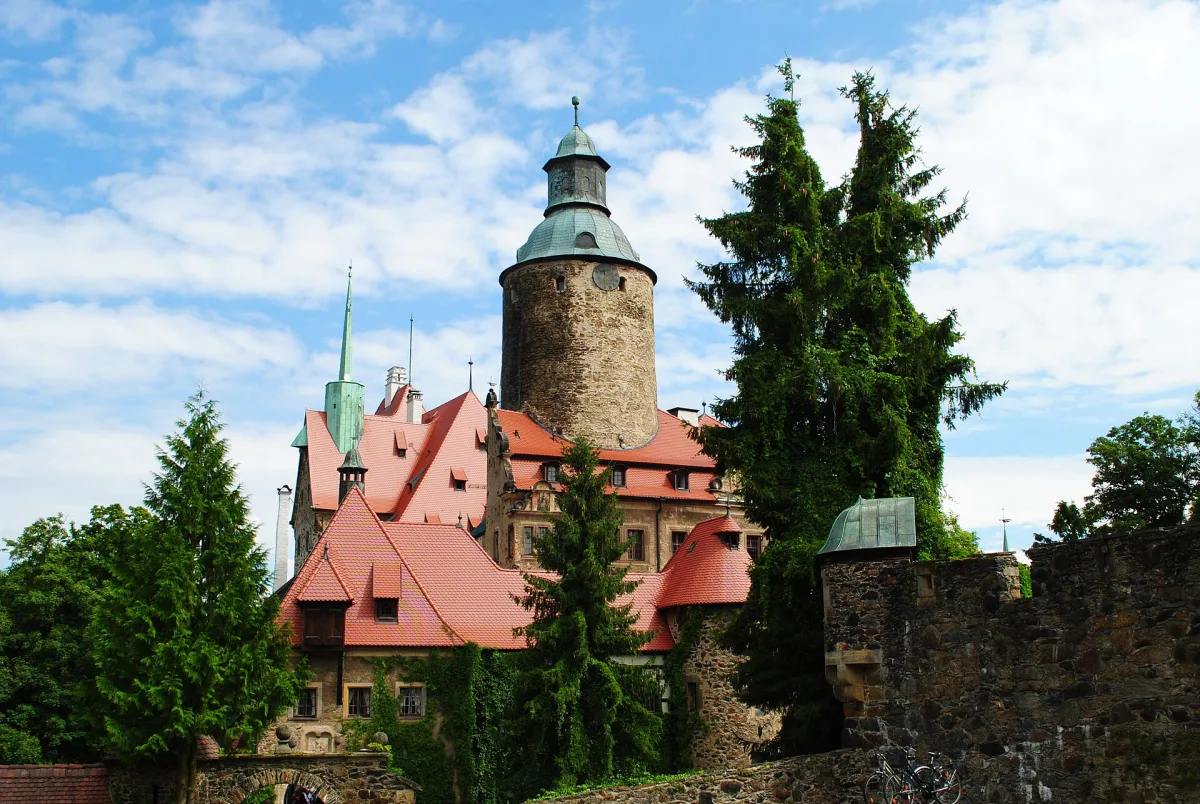
At Czocha Castle, once a year, usually over a long weekend, the Twierdza Rycerska (Knights' Stronghold) festival is held. For the duration of the event, the stronghold turns into a medieval settlement: re-enactors teach catapult building and sword fighting, a tournament is held, and the climax is a staged battle for the castle. This is accompanied by falconry displays, culinary workshops with historical menus, and feasts around the campfire.
At Grodziec Castle, a Knights' Day is held every year on 15 August, organised in cooperation with medieval culture brotherhoods. The programme includes displays of knightly combat, presentations of historic weapons and workshops in writing with a quill pen, and it opens with a ceremonial signing of a cooperation agreement with the invited knightly banners.
Music festivals in castle interiors
The Wrocław festival Wratislavia Cantans, founded in 1966 by conductor Andrzej Markowski as an oratorio and cantata festival, has for years included events beyond Wrocław itself in its programme. Since Tadeusz Strugała took over the festival's direction, countertenor competitions held at the Castle of the Silesian Piasts in Brzeg have appeared in the programme - concerts in the Renaissance interiors of the residence give early music a different resonance than a philharmonic hall or a church. Wratislavia Cantans has, from the start, combined different places across the region, so extending the programme to the castle in Brzeg fits the formula of a festival that travels between heritage sites rather than being confined to a single concert hall.
Flower and garden events at Książ
The Festival of Flowers and Art at Książ Castle has a history of more than thirty years and is held every year during the May Day long weekend, making it the largest floristry event in Poland. More than a hundred florists arrange floral displays in several dozen rooms of the castle, accompanied by lectures on floral art, garden design and the history of the residence, workshops for children, and a market of plants and regional produce. It is a festival for which the castle opens rooms not accessible on an ordinary guided tour.
Night tours and themed events
The Summer Festival of Mysteries at Książ Castle is a recurring event held on the first weekend of August, recalling the residence's Baroque history through re-enactments, displays of court dances and activities for families. A fixed point of the programme is a night tour of the castle with a staged performance woven around its history and legends - the evening route leads through corridors and halls that during the day serve as an ordinary exhibition. Similar night-time attractions, feasts by the fire and torchlit displays, are also sometimes part of the Twierdza Rycerska programme at Czocha Castle.
How such events change the way a heritage site is visited
A festival or tournament breaks the routine of a guided tour along a fixed route. For a day or a weekend, the castle becomes a space one can move through more freely, look into interiors opened only for the event, and talk to re-enactors or florists instead of just listening to a guide's story. For many visitors, it is the festival, not an ordinary visit, that is their first contact with a given castle, and a reason to return on a quieter date and see it without the crowds.

Be the first! Add a comment.
You need to log in to add a comment.
Log in