
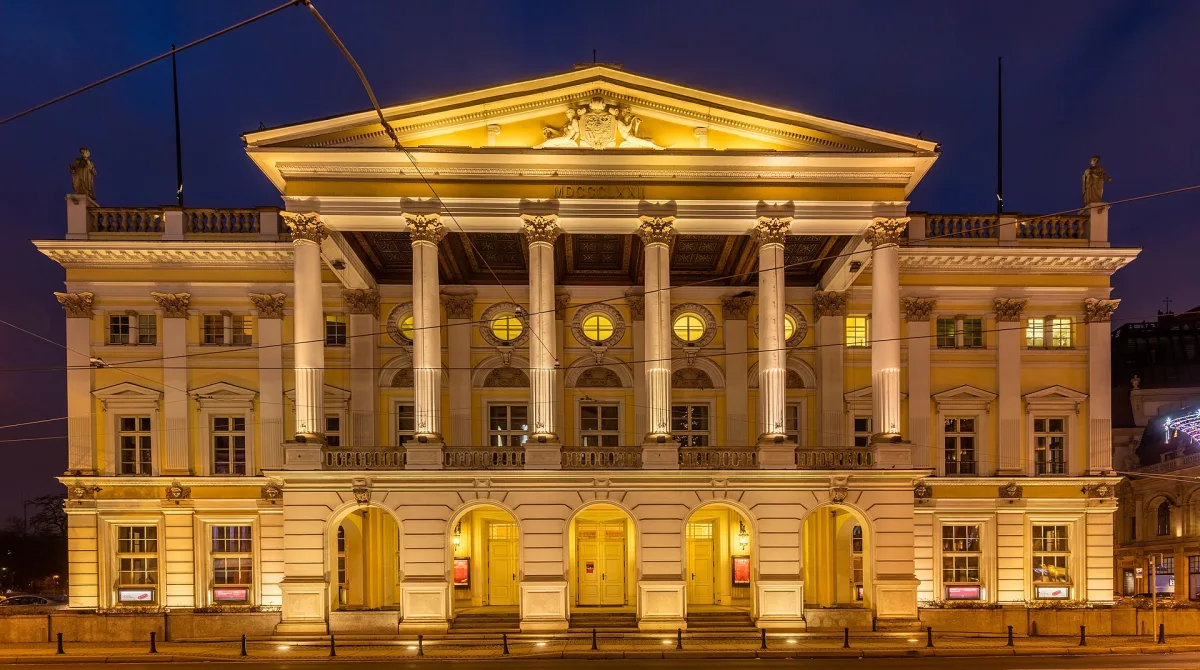
Wrocław today has more than a dozen active theatre and music stages, from a nineteenth-century opera building, through drama and puppet theatres, to places that are only just learning to be a theatre, because they used to serve a completely different purpose. This density has its own history: the city went through wartime destruction, post-war rebuilding from scratch, and an experiment that for over a decade made it one of the more important points on the world map of theatre.
The Opera and its building on Świdnicka Street
The Wrocław Opera occupies a building on Świdnicka Street, erected in 1839-1841 as the Municipal Theatre to a design by Carl Ferdinand Langhans. The building burned down twice, in 1865 and 1871, and was rebuilt each time, the last rebuilding led by the architect Karl Schmidt, who raised the auditorium and extended the portico. Operatic traditions at this site go back to the 18th century, and in 1804-1806 the stage was run by the composer Carl Maria von Weber. After the war the stage was reopened on 8 September 1945 with a performance of Stanisław Moniuszko's "Halka". The interior has kept its nineteenth-century decoration: a ceiling painting with portraits of composers and gilding covering a total of 10,000 square metres of surface. A few hundred metres away stands the National Forum of Music, the city's second great music stage, opened in 2015 after construction had been halted for several years by the bankruptcy of the original contractor.
Polish Theatre and drama on both sides of the war
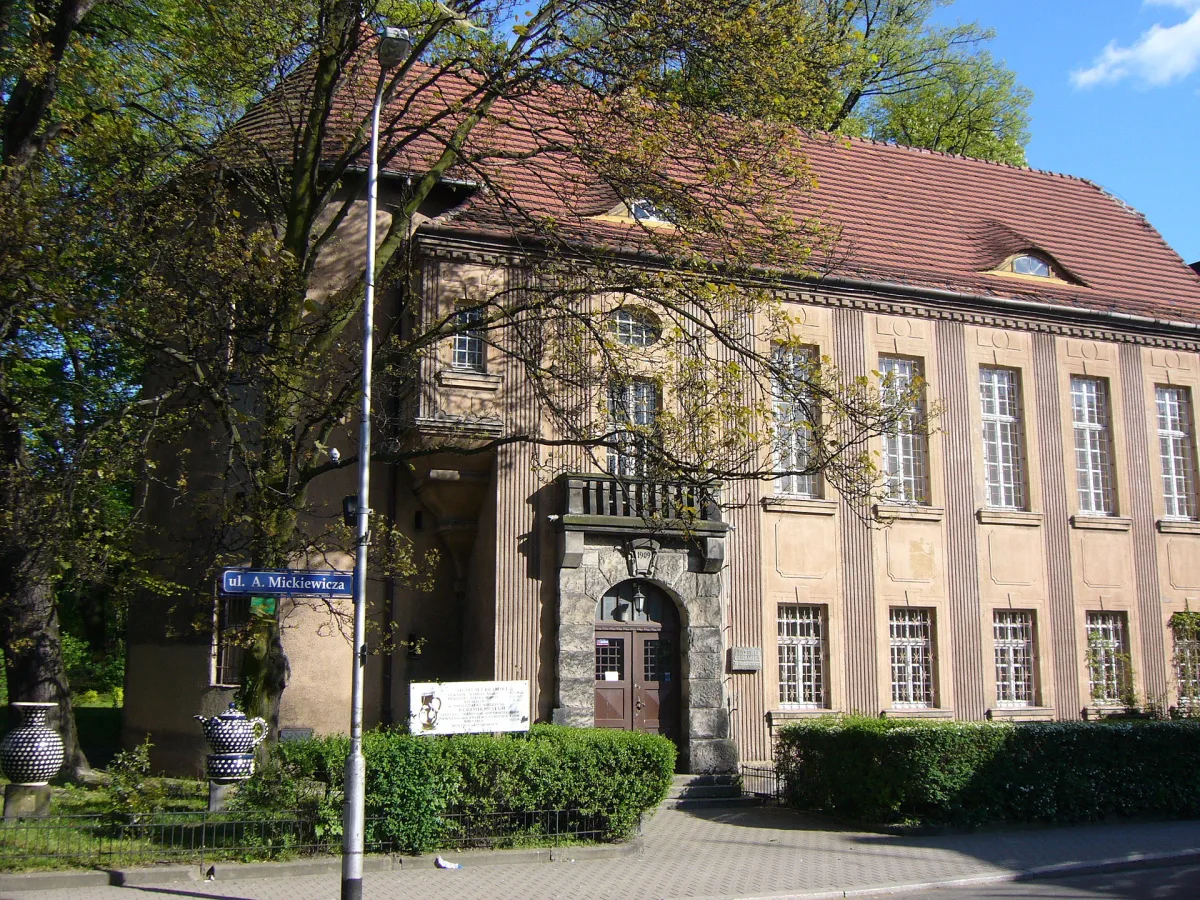
The Polish Theatre in Wrocław has operated since 1949, but the building housing its main stage on Gabrieli Zapolskiej Street is older: it was built in 1906 as an operetta house commissioned by the merchant Paul Auerbach from the Berlin architect Walter Hentschel. It used a reinforced-concrete structure that was innovative for its time and later influenced the construction of the Centennial Hall. The building suffered badly during the war and was rebuilt by 1950, with the first premiere after reconstruction being a performance of "A Thousand Brave Men". On the night of 18 to 19 January 1994 a fire destroyed the auditorium, and the rebuilding was led by the architect Wiktor Jackiewicz. Today the theatre performs on three stages: the main one on Zapolska Street, a chamber stage on Świdnicka Street, and the Świebodzki Stage in the former area of Wrocław Świebodzki station.
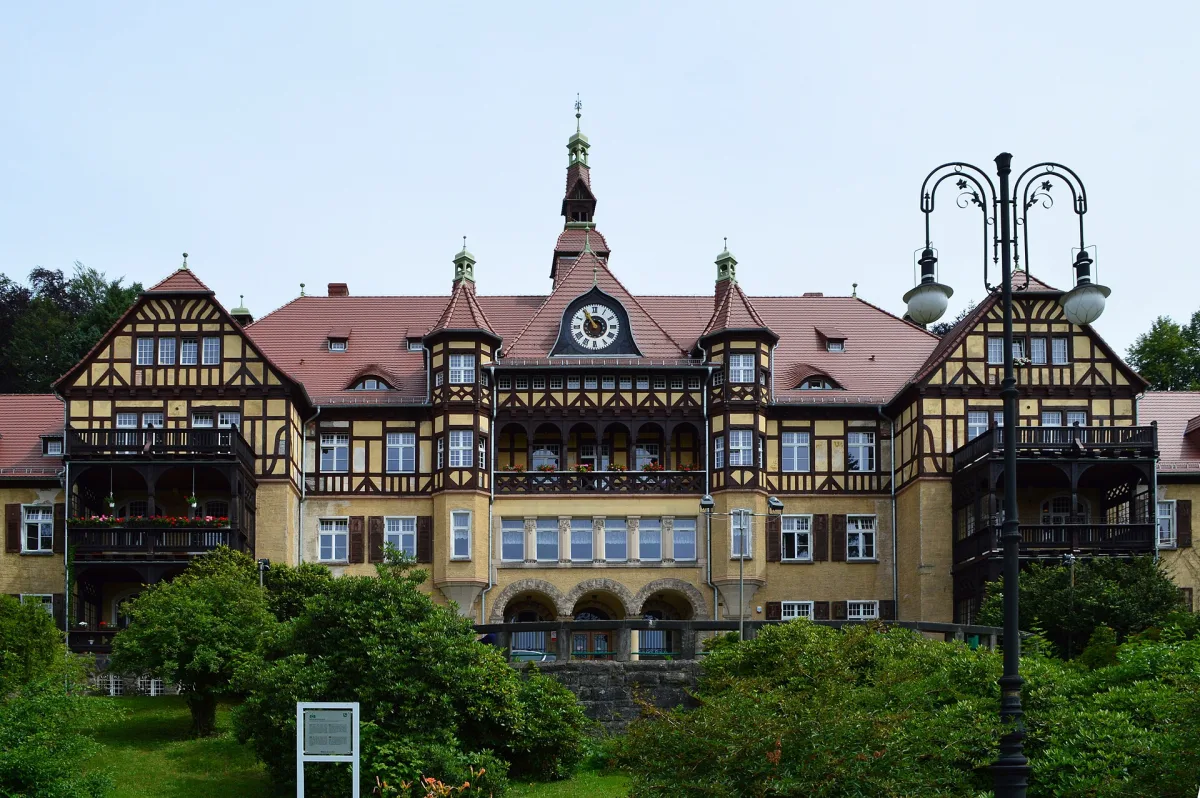
A similar post-war path was followed by the Cyprian Kamil Norwid Theatre in Jelenia Góra, operating since 1904 in an Art Nouveau building of the former House of Art and Associations. As a Polish stage it resumed operation on 23 August 1945 with a performance of Aleksander Fredro's "The Revenge", in which Adam Hanuszkiewicz and Kazimierz Dejmek performed, among others. The theatre later stood out for its foreign tours during the directorship of Alina Obidniak, a rarity for a stage operating outside a large academic centre. The region also has a stage in Wałbrzych: the Jerzy Szaniawski Drama Theatre, which alongside its current repertoire runs a separate information section for visitors with disabilities.
Laboratory Theatre and Wrocław on the map of world theatre
Jerzy Grotowski's company was founded in 1958 in Opole as the Theatre of 13 Rows, and took the name Laboratory Theatre in 1962. In January 1965 it moved to Wrocław and operated there until it was dissolved. Grotowski, together with the critic and playwright Ludwik Flaszen, who served as literary director, and the architect Jerzy Gurawski, who designed the spaces for successive productions, developed an approach to acting based on thorough psychophysical training rather than preparation for a specific role. The company's actors included, among others, Ryszard Cieślak, Zbigniew Cynkutis and Rena Mirecka, and in 1961-1964 the theatre was joined as an assistant director by Eugenio Barba, who later founded his own Odin Teatret in Denmark.
From 1966 the company performed abroad: in several European countries, in Lebanon, Australia, the United States, Mexico and Iran, which for a small stage from the People's Republic of Poland was an unusual phenomenon, and it was precisely these trips that made Wrocław one of the reference points for world experimental theatre in the second half of the 20th century. After the premiere of "Apocalypsis cum Figuris" in 1969, Grotowski gradually moved away from the classical form of the performance towards paratheatre and so-called theatre of sources, work directed no longer so much at the audience as at the participants themselves. The company disbanded on 31 August 1984, following a 1982 letter from Grotowski announcing that the work would continue outside the country. The legacy of the Laboratory Theatre is carried on today by the Jerzy Grotowski Institute, based in Wrocław.
Puppets and pantomime as a separate theatrical language
The Wrocław Puppet Theatre was founded on 18 October 1946 on the initiative of Zenona and Elżbieta Kalinowicz, initially on Rzeźnicza Street. From 1962 it operated as the State Puppet Theatre "Chochlik" (Hobgoblin), and received its current name and seat in the building of the former club of the Association of Christian Merchants on Plac Teatralny in the 1963/1964 season. Since 1967 it has run a Small Stage for Adults, where it takes on more serious themes than the classic children's repertoire, and the theatre also has a Puppet Gallery with a collection of historic exhibits.
A separate branch of stage art is pantomime, whose centre in Wrocław is the Henryk Tomaszewski Wrocław Pantomime Theatre, founded in 1956. The company developed stage movement as an independent theatrical language, based on gesture and choreography without words, and performed on every continent except Antarctica. Today, alongside its productions, the theatre runs a one-year Pantomime Studio and accompanying events, such as an open-air cinema in the garden on Aleja Dębowa.
Alternative stages and places with former functions
Alongside institutions with their own building and permanent ensemble, Wrocław also has private stages that use spaces originally designed for completely different purposes. Ad Spectatores Theatre, formally registered on 27 October 2000, performs in several places around the city, including the former Municipal Brewery and the Attic Stage on Ruska Street. The building of Wrocław Świebodzki station, the oldest of Wrocław's surviving passenger stations, whose construction began in 1842, went through a similar path of adaptation. Train traffic here was suspended in 1991, and today part of the former station rooms house the Polish Theatre's Świebodzki Stage, while a marketplace operates on the former platforms. Teatr Arka has a different character - a professional integration theatre founded in 1993, in which actors with intellectual disabilities perform on stage alongside professional actors, while a lighter tone in terms of repertoire is represented by the Komedia Theatre on Plac Teatralny, operating since 1997.
Plac Teatralny as a gathering point
Many of the stages mentioned above stand within a few hundred metres of each other around Plac Teatralny, the former Zwingerplatz, which was created in the area between the city walls near the now-vanished Świdnicka Gate. The Wrocław Opera stands on the square, with the Wrocław Puppet Theatre right next door. The history of theatre in the city is also documented by the Theatre Museum, a branch of the Municipal Museum housed in the former south wing of the Royal Palace on Plac Wolności, where Henryk Tomaszewski's restored apartment has been preserved along with a collection of theatrical puppets from around the world, including from Japan, Mexico and Australia. From the nineteenth-century opera building, through Grotowski's experiment, to today's stages in a former brewery and a former railway station, Wrocław's theatrical map shows how the city has repeatedly rebuilt its stages without losing the continuity of the institution of theatre itself.

Be the first! Add a comment.
You need to log in to add a comment.
Log in