
What a stave church is, and how many are left in the world
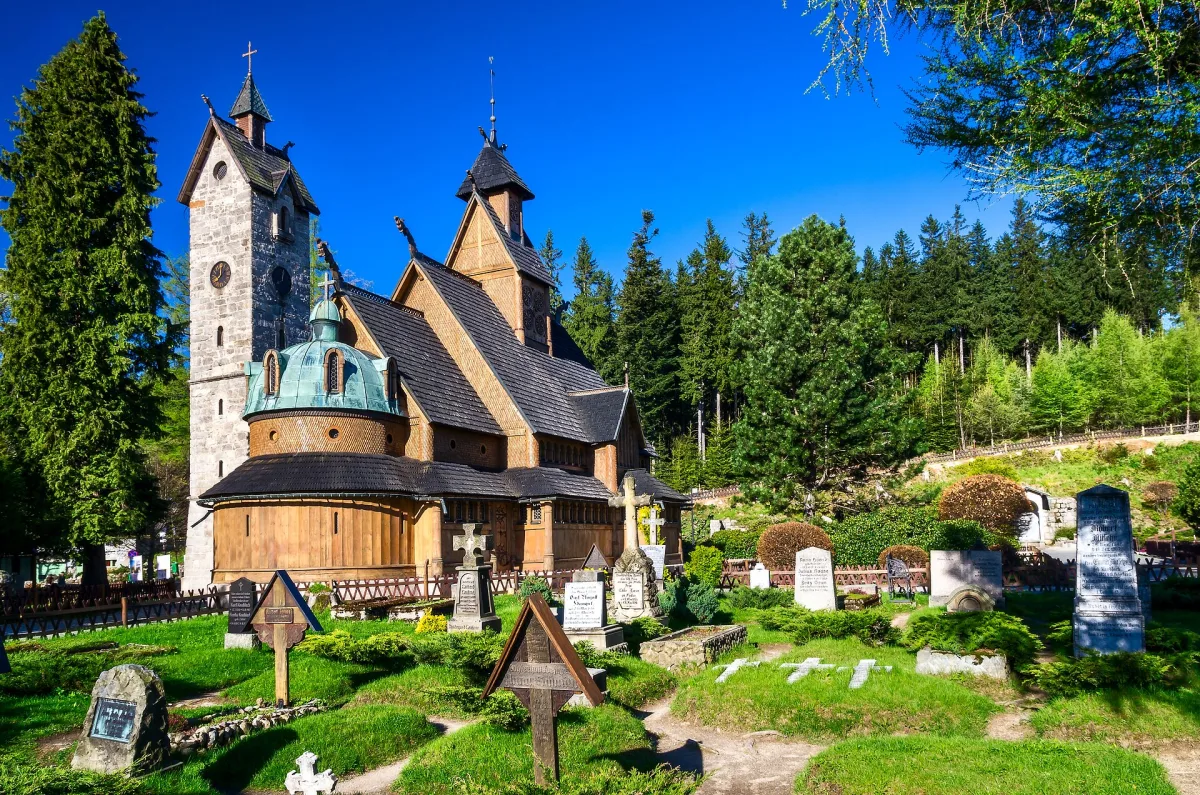
Wang Temple in Karpacz belongs to the family of Norwegian stave churches, in Norwegian stavkirke - wooden buildings raised in the Middle Ages on a frame of vertical posts, without using nails. The elements were joined with mortise-and-tenon joints and pegs, and the whole structure stood on a stone base that protected the wood from damp. According to estimates, around a thousand such churches were built in medieval Norway. Today only a few dozen survive; some sources put the number close to thirty. Wang is one of the few that have left Norway and now stand outside its borders.
The church was built from pine logs at the turn of the 12th and 13th centuries in the village of Vang by Lake Vangsmjøsa in southern Norway, which is where its name comes from. Today, after being moved to the Karkonosze (Giant Mountains), it is often called the oldest wooden church in Poland.
Why it was sold, and who bought it
In the 19th century the old church in Vang could no longer hold its growing congregation. The residents decided to build a new, larger church and sell the old one, so that the money raised would help pay off the loan taken out for the new building. A buyer wasn't long in coming. The Norwegian painter Johan Christian Dahl persuaded the Prussian king Frederick William IV to buy it; the king originally planned to place the relic in a museum in Berlin. According to the Góry dla Ciebie website, the king paid 427 marks for the church. The decision to move it was made in 1841.
It was Countess Frederica von Reden of nearby Bukowiec who persuaded the monarch that, instead of ending up in the Berlin museum, the church should stand in the Karkonosze and go on serving as a place of worship. Thanks to her efforts Wang ended up not in a display case, but back under a roof, just several hundred kilometres from Norway.
Transport and reassembly in the mountains
The church was dismantled into its component parts and transported via Szczecin and Berlin all the way to Silesia. The foundation stone for the new site on a hill below Śnieżka was laid on 2 August 1842. Only part of the original structure reached the Karkonosze, however - roughly one-fifteenth of the original elements were brought from Norway, since the rest was too damaged or incomplete. The missing parts, including the ambulatories and interior windows, were made on site based on surviving drawings and documentation. The work took just under two years, and the solemn consecration took place on 28 July 1844. Since that day the church has served the local parish without interruption.
The added tower, and changes from the original
The original church in Vang had no stone tower - that's a typical feature of stavkirke wooden architecture. In the Karkonosze, a separate bell tower of Silesian granite was built next to the church, added after the church itself had been transported there. Its job was to protect the wooden structure from the strong mountain winds that could otherwise damage the delicate, centuries-old logs. This is the clearest difference from the original in Vang - a stone tower never existed at the original church in Norway; it is a Silesian addition, dictated by the climate of the Karkonosze.
The sculptor Jakub z Janowic completed the church's interior in 1844, making a wooden cross with a figure of Christ and columns by the altar depicting the victory of David and the prophet Daniel. This is already Silesian work, added during the rebuilding, and not part of the original Norwegian furnishings.
The carved detail of the portals
Wang's greatest artistic value remains its original, 12th-century portals and columns, which survived from the Norwegian original. The woodcarvers of Vang covered them with motifs typical of Nordic art: interlaced plant patterns, animals, grotesque masks and faces resembling Vikings. The ends of the roof are decorated with carvings resembling dragon heads, echoing the prows of Viking ships. On the north portal a runic inscription survives, which some researchers consider to be the original sculptor's signature.
Today's function, and the cemetery by the church
Wang Temple today plays a double role. It is an active parish church of the Evangelical-Augsburg Parish, where regular services are held, and at the same time one of the most frequently visited buildings in the Karkonosze, visited by tourists regardless of their faith. Next to the church is a churchyard cemetery. Among those buried there are the theatre director Henryk Tomaszewski and the poet Tadeusz Różewicz, buried there after his death in 2014.
It's worth remembering that Wang is not the only trace of the region's mountain history - at the foot of the same Śnieżka that the church stands on, trails run that have long been known to hikers and pilgrims visiting the Karkonosze.

Be the first! Add a comment.
You need to log in to add a comment.
Log in