
Painted dwarfs and sculpted figures - two different stories
Before the first dwarf sculpture ever stood in Wrocław, the city had already lived through another, earlier story - painted dwarfs from the days of the Orange Alternative. On the night of 30-31 August 1982, Waldemar Fydrych and Wiesław Cupała painted the first two dwarfs on the patches of paint that the authorities used to cover up anti-communist slogans on the walls. Between 1982 and 1983, more than a thousand dwarfs were created this way in six Polish cities. This phenomenon - the birth of the movement, the language of its happenings and its political context - is described in a separate article on the portal about the Orange Alternative, so here we only flag it as a starting point.
The sculpted dwarfs that people associate with the city most today are a completely different matter, and more than two decades later. The first five bronze figures were only unveiled on 1 August 2005. They were named Szermierz (the Fencer), Rzeźnik (the Butcher), Pracz Odrzański (the Oder Washerman) and two figures called Syzyfka. Between the painted graffiti of the 1980s and the sculpted figure of 2005 there is therefore a gap of more than twenty years, and after 1989 the dwarfs disappeared from the walls of the streets for a long time. Confusing these two stages is the most common mistake in stories about the dwarfs, which is why it is worth separating them from the start.
Who designs the dwarfs and how their number has grown
The visual shape of the dwarfs returning in their new form was the responsibility of the Wanilia advertising agency, while the final sculptural form was created by Tomasz Moczek. He gave the figures their recognisable, cartoonish character, which sets the dwarfs apart from classic garden gnomes.
Since the first five figures of 2005, the city has steadily gained more dwarfs. The 101st figure, named the Hundredth Dwarf, was unveiled on 18 June 2008. The following round numbers fell on: 20 November 2011 (the 200th), 24 July 2014 (the 300th), 1 June 2016 (the 400th), 14 October 2017 (the 500th) and 5 April 2019 (the 600th). In September 2025 the thousandth dwarf was put up, and as of that period Wrocław had counted around one thousand and forty figures. The pace at which new dwarfs have appeared has clearly picked up in recent years compared with the project's first decade.
Who can fund a dwarf and what that has changed
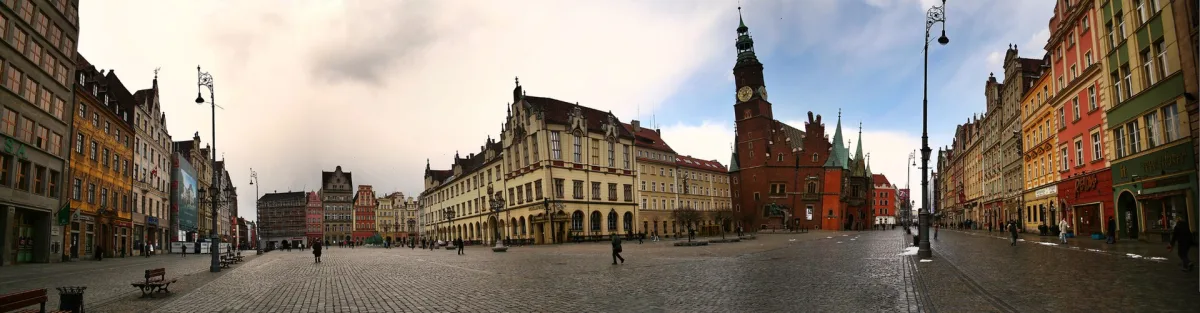
Today, practically anyone can fund a dwarf - city institutions, political parties, businesses and private individuals. The motivations vary: promoting the city, advertising a company, commemorating a person or event, sometimes simply a gift for someone close. This openness has meant the dwarfs have spread across the whole city. They stand in the Market Square and the Old Town, but also by public offices, schools, company headquarters and in districts far from the centre.
The result of this accessibility is enormous thematic variety. Alongside purely decorative dwarfs, figures appear that reference professions, institutions and even specific events from the city's history. Funding a dwarf has become a kind of urban ritual that both large companies and individual people can take part in.
Figures with a message
Some of the dwarfs have a clearly social function. In 2008, as part of the "Wrocław without Barriers" campaign, three dwarfs were put up - Głuchak (the Deaf One), Ślepak (the Blind One) and W-Skers (the Wheelchair User) - which refer symbolically to hearing, sight and mobility disabilities, drawing attention to the accessibility of public space.
Another group, the so-called Alpinki (Alpinists), commemorates figures linked to mountain climbing: Głazek references Kazimierz Głazek, Zarembek references Stanisław Krystyn Zaremba, and Rutek references Wanda Rutkiewicz. A separate figure commemorating a specific cultural personality is Barduś, referencing Jacek Kaczmarski. Dwarfs of this kind show that the project went beyond pure decoration over time and began to serve as informal, intimate monuments - to professions, communities and people that the city wanted to remember in this way.
Finding the dwarfs - trails, maps and a place with a story
For people who want to follow the dwarf trail deliberately rather than by chance, special tourist routes and printed map booklets have been created. There is also a mobile app for Android that makes it easier to find the next figures on the ground. The dwarfs are scattered across the whole of Wrocław, far beyond the Market Square, so some kind of map or route genuinely makes sightseeing easier - otherwise it is easy to miss most of the more than a thousand figures.
Anyone who would rather start with the story than search on their own can visit the House of Dwarfs by the Market Square, where a guide takes visitors through the world of Wrocław's dwarfs, explaining the origin of the phenomenon and pointing out what to look for on a further walk around the city. The Market Square itself remains the natural starting point - it is where the greatest density of figures is concentrated, and from there it is easy to head deeper into the Old Town.
Wrocław's idea has also inspired other cities - one example is the ten-figure dwarf trail in Suwałki, modelled directly on the Wrocław pattern.
Criticism - the dwarf as a marketing tool
Not everyone views the growth of the dwarfs with approval. Researcher Hana Cervinková described the phenomenon she called the "hijacking" of the dwarfs from their original, oppositional context. She pointed out that promotional materials from the city and companies usually do not mention at all the anti-communist origins of the dwarfs from the Orange Alternative era, and that the dwarf figure - from a symbol of street resistance - has, in her view, become a vehicle for ordinary city and commercial marketing.
This dispute shows the dual nature of the phenomenon well: for some, the dwarfs are still a playful nod to the city's rebellious history, while for others they are, above all, an effective but emptied-out element of tourist branding, stripped of its original meaning. Both perspectives have their justification, and a walk around the city counting dwarfs can be taken regardless of which side of this dispute one is on.

Be the first! Add a comment.
You need to log in to add a comment.
Log in