
Punk roots on the walls
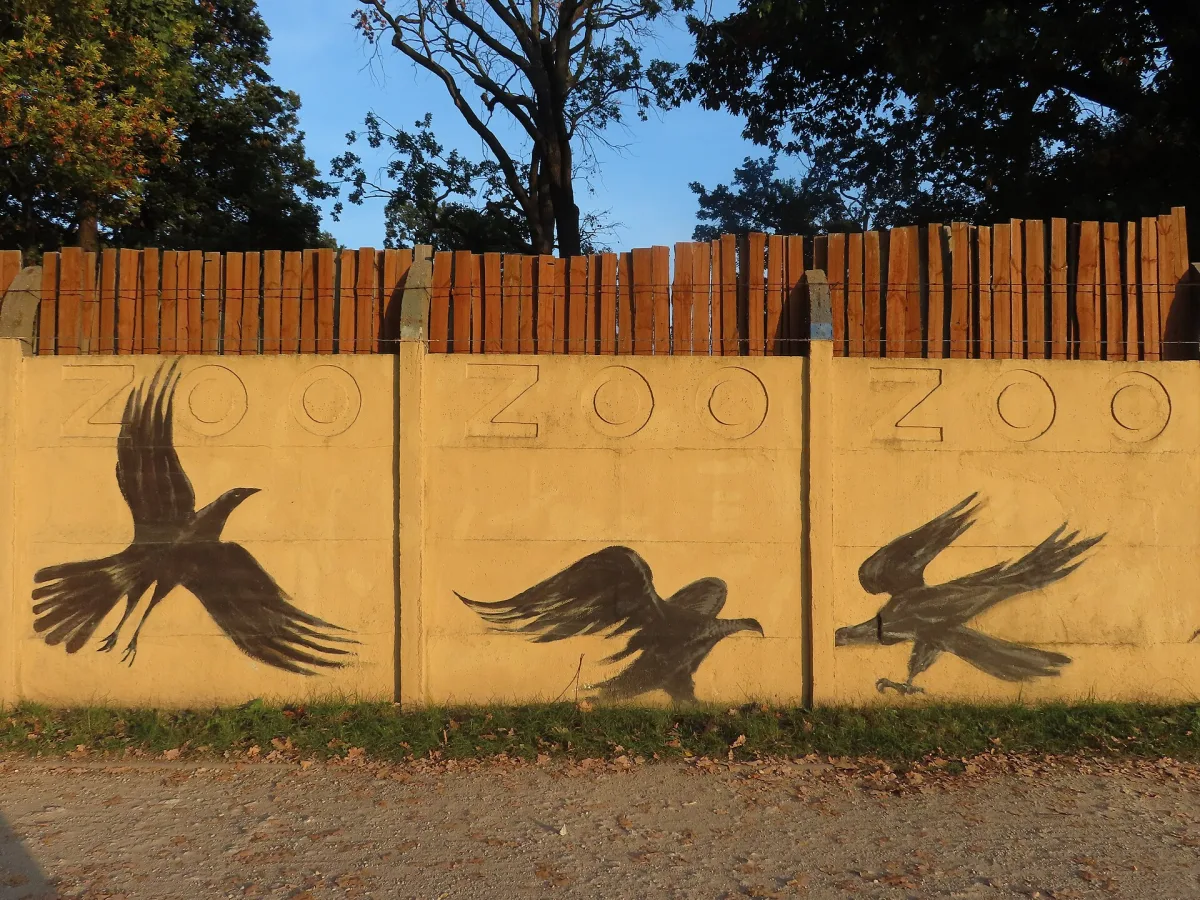
The first forms of street art appeared in Wrocław in the 1980s as part of the rebellion of the punk subculture. That's when illegal paintings and inscriptions started appearing on the city's blocks of flats and walls, partly in opposition to the authorities, partly as a pure gesture of aesthetic defiance against the greyness of the People's Republic of Poland (PRL) city. The best-known echo of that decade are the dwarves of the Orange Alternative, painted in 1982-1983, whose history - the strike at the Faculty of Philosophy, Waldemar Fydrych and the Dwarves' Revolution of 1988 - is told in a separate article on this portal. What matters for street art is this: Wrocław, unlike most Polish cities of the time, gradually came to accept wall painting instead of fighting it, which gave the city a different starting point from the rest of the country once, after 1989, graffiti began spreading as a separate phenomenon, no longer tied to political censorship.
From illegal graffiti to commissioned murals
The 1990s and 2000s were, for street art in Wrocław as in other big cities, a period of transition from spontaneous, often illegal graffiti on walls and viaducts to large-format murals commissioned and funded by the city, housing cooperatives, resident communities or cultural institutions. The difference isn't just formal. Illegal graffiti appears quickly, usually at night, and its author stays anonymous - still a practice found on many of Wrocław's walls and railway viaducts. A commissioned mural is a project with consultations, sometimes involving the residents of a given street or courtyard, stretched out over time and requiring the wall owner's consent. In Wrocław both strands operate side by side today - one of the reasons the city is counted among the centres with the most developed street art scene in Poland.
Nadodrze as an open-air workshop
The most visible effect of this shift is seen in Nadodrze, a district neglected for decades that has been undergoing revitalisation, driven partly by art, for over a decade now. As part of projects known as Kolorowe Podwórka (Colourful Courtyards), residents together with students from the Academy of Fine Arts turned peeling tenement facades into works combining painting, ceramics and sculpture. The largest of these, at Roosevelta 14-16, is about 250 metres long and covers 1,200 square metres of wall. Another courtyard, at Roosevelta 5A, is decorated with portraits of residents, a garden scene and animal motifs. In the same area a mural titled Brama do Nadodrza (Gateway to Nadodrze) was also created, now treated as a landmark marking the entrance to the district. These works differ from typical murals in that they aren't a one-off project by a single artist, but a shared effort by residents and artists, spread out over time.
Specific works in other parts of the city
Beyond Nadodrze, a place known for large-scale mural work is Podwale street, which surrounds Wrocław's Old Town, where successive projects catch the eye of passers-by walking along the former fortifications. In the Ołbina neighbourhood, an artist working under the pseudonym chazme was active, whose works fit into a strand of wall painting that combines graffiti with a more realistic form. The Sławia neighbourhood, in turn, has become a place where young artists from all over Poland leave their work - the district functions a bit like an open gallery for creators at an early stage of their career, where they can experiment without the pressure that comes with projects in the city's more prestigious areas.
Murals that tell the city's history
A separate category are works whose job is no longer just to decorate a wall, but to recall a specific thread from Wrocław's past. An example of this approach is the mural Wrocławskie Legendy (Wrocław Legends), created by a team working under the name Funky Project - a large-format composition drawing directly on the city's legends and history, rather than on an abstract or purely decorative formula. Works like this serve a function close to that of a memorial plaque, only stretched across an entire building facade and accessible to every passer-by, without needing to go into a museum or read the text on a plate.
Where art ends and advertising begins
The growth of large-format wall painting in cities, Wrocław included, has for years raised the question of where the line falls between a mural as a work of art and a mural as a form of advertising disguised as an artistic project. A wall painted on a company's initiative, promoting a specific product or brand under the guise of urban decoration, is a phenomenon that street artists themselves distinguish from work created out of a need to say something about the city, its residents or its history. The line can be blurry, because commercially funded projects can also have artistic value, and some works commissioned by public institutions are closer to official propaganda than to free creative work. In Wrocław this dispute has never been settled once and for all - residents and critics judge each new work individually, looking at who commissioned it, who painted it, and whether the wall really has something to say, beyond a logo.
Where to find the biggest concentrations
Anyone wanting to see Wrocław's street art in a single walk should start in Nadodrze, where the greatest concentration of work falls around Roosevelta street and the courtyards tucked inside the blocks, invisible from the main streets. The second natural direction is Podwale, where large-format works stand next to the historic buildings surrounding the Old Town. A third, less obvious one, is the Ołbina and Sławia neighbourhoods - places where street art is still closer to a living, changing scene than to a fixed, museum-like display, so what you see today may look different again in a few years.

Be the first! Add a comment.
You need to log in to add a comment.
Log in