
Botanical gardens, and how they differ from parks
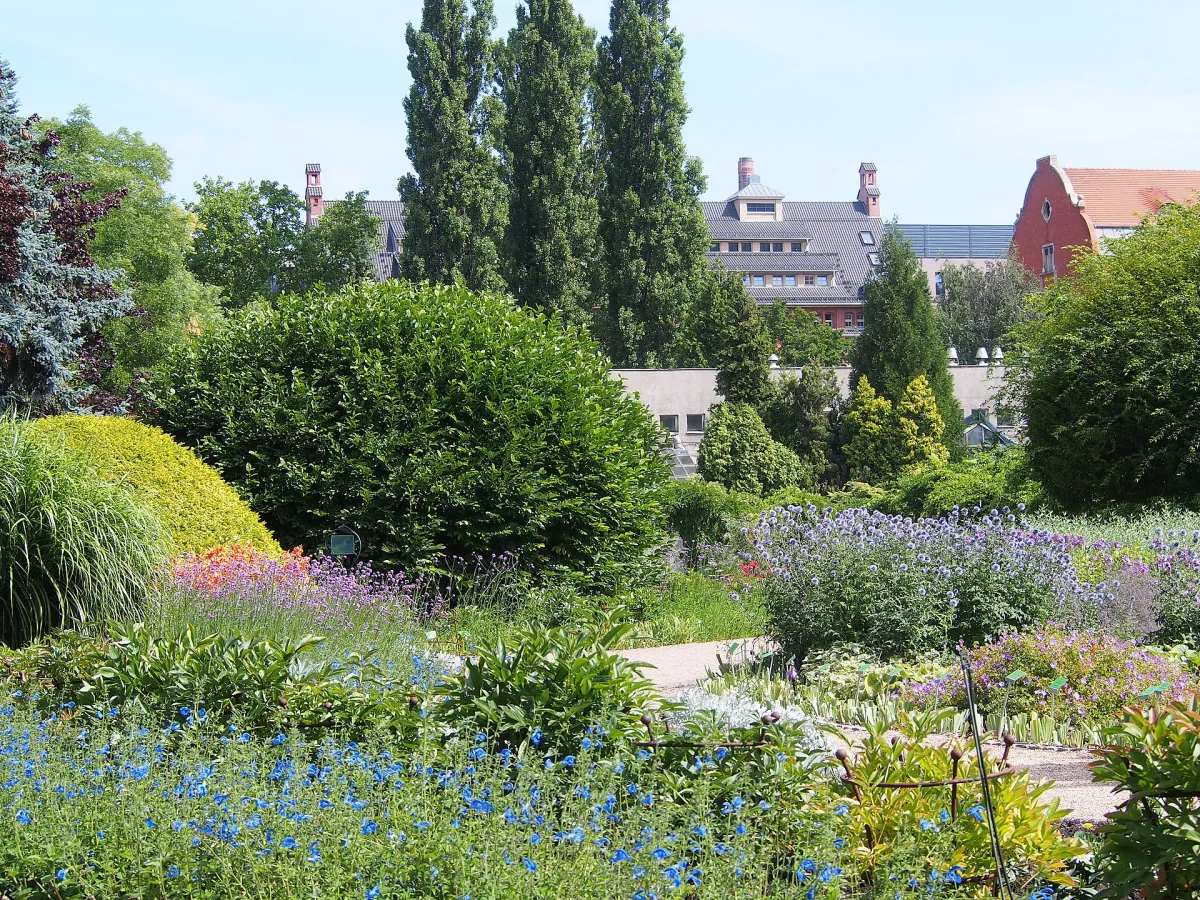
A park is, above all, a place for walking and relaxation; a botanical garden is a scientific collection of plants, arranged, described and catalogued. The best example of this difference is the Botanical Garden of the University of Wrocław, founded in 1811 next to Ostrów Tumski. It is the second-oldest botanical garden in Poland, right after the garden of the Jagiellonian University in Kraków. On 7.5 hectares it holds a collection of around 7,500 species and 11,500 varieties of greenhouse and outdoor plants.
The garden was laid out partly on the grounds of Ostrów Tumski, partly on land reclaimed after the demolition of the city fortifications on Napoleon's orders, and partly on the site of the northern branch of the Oder, which was filled in but left behind the pond that still remains in the garden today. Its collections include 84 species of endangered and protected plants, which sets it apart from municipal parks focused mainly on ornamental trees and recreation.
Arboretums: collections of trees instead of flowerbeds
An arboretum differs from a botanical garden in scope: it focuses on trees and shrubs, often arranged in a layout resembling a natural forest or a landscape park. In Lower Silesia, two such sites stand out for their scale.
Arboretum Wojsławice in Niemcza has formally been part of the Botanical Garden of the University of Wrocław since 1988, although it lies 50 kilometres to the south, among the Niemcza-Strzelin Hills. It is known for national collections of rhododendrons, azaleas and daylilies, as well as a rich collection of boxwood and peonies, laid out in a picturesque valley along the Ślęza river.
The second site, the Professor Stefan Białobok Forest Arboretum in Stradomia Dolna, is run by the Syców Forest District in Oleśnica county. It grew out of a specialist forest nursery established in 1990, which was converted into an arboretum around 1994, with an official opening on 10 November 1995. It holds 1,158 species and varieties of trees and shrubs, plus a separate alpine garden, making it one of the larger sites of its kind in Poland. It is named in honour of Stefan Białobok, a dendrologist and member of the Polish Academy of Sciences.
The palace parks of the Jelenia Góra Valley
A separate category is formed by parks laid out around residences, where the greenery was designed together with the architecture. The Jelenia Góra Valley has a particularly large concentration of them, since in the 19th century the English landscape style was highly fashionable here.
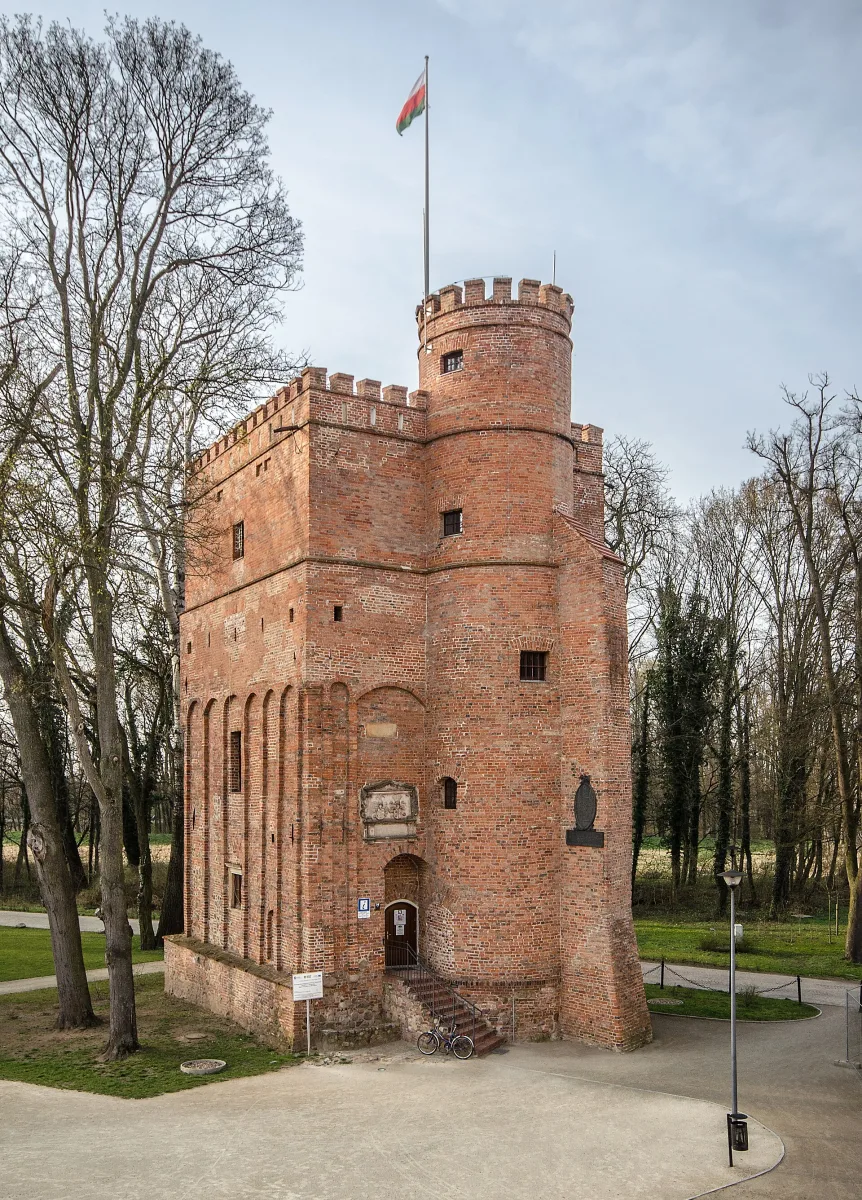
The park in Bukowiec, today part of the Bukowiec Landscape Park, is considered one of the first such layouts in Lower Silesia. Count Friedrich Wilhelm von Reden, captivated by the landscape parks he had seen in England, brought the gardener Hans Karl Walther to his estate and transformed the grounds around the palace into an extensive park in the English style. Within its bounds stand the Ruins of Kessel's Castle, an artificially built folly from around 1800, designed by Friedrich Rabe on the model of a Roman amphitheatre and named in honour of the count's friend, Major Kessel.
The layouts in Karpniki and Łomnica have a similar character and today are linked by walking and cycling trails. The Karpniki Castle, with medieval origins going back to the 14th century, was remodelled in the mid-19th century in the Neo-Gothic spirit to a design by the architect Stüler, and surrounded by a landscape park. A few kilometres away stands the Baroque 17th-century Palace in Łomnica, together with a building known as the Widow's House, which today, after reconstruction, houses a museum of interiors.
Palm houses: the exotic under a glass roof
Palm houses are a specific species of garden, where tropical and subtropical plants grow all year round under the cover of a greenhouse, regardless of the season outside. In Lower Silesia the oldest surviving one stands in the Legnica Municipal Park, the city's largest and oldest park, covering 58 hectares. The palm house dates from 1898, while the park itself has roots going back to 1316, when the town bought extensive meadows adjoining today's Mickiewicza Street from Duke Bolesław III. The park owes its present, landscape form to work carried out between 1815 and 1831 to a design by the landscape architect Eduard Petzold.
The Botanical Garden of the University of Wrocław also runs its own greenhouses, albeit on a different scale, where a significant part of the collection, nearly half of its species and varieties, grows under cover rather than in the open ground.
The Japanese Garden: a memento of the Centennial Exhibition
The Japanese Garden in Wrocław lies within the bounds of Szczytnicki Park, the city's largest park, spread over around 100 hectares with a collection of nearly 350 species of trees and shrubs brought from Asia and both Americas. The garden itself was created between 1909 and 1913 on the initiative of Count Fritz von Hochberg of Iłowa, to a design by the Japanese gardener Mankichi Arai, with the execution of the works overseen by Joseph Anlauf. In 1913 it was the only exotic attraction of the Horticultural Exhibition accompanying the great Centennial Exhibition at today's Centennial Hall.
The garden's history has not been easy. In July 1997, during the flood of the century, it stood underwater for three weeks, and the damage reached around 70 per cent of the newly planted vegetation, forcing another reconstruction. Earlier, in the 1990s, it had already undergone a renovation carried out in cooperation with the Japanese embassy.
A second, much smaller Japanese garden in the region was created in Jarków, in the Lewin Kłodzki municipality. The Japanese garden in Jarków covers about a thousand square metres and combines a pond with a waterfall and a dry karesansui-style stone garden. Work on it began in 1980, and it was opened to visitors in 2003, becoming the second garden of this type in Poland, after the one in Wrocław. Unlike the Japanese Garden in Wrocław, it was not created for any exhibition, but as a private, long-term undertaking.
When Lower Silesia's gardens are in bloom
The seasons determine what is worth seeing at each site. In spring, when the rhododendrons and azaleas bloom, the Wojsławice Arboretum shows off its best-known collection, along with the daylilies and other perennials. At the Botanical Garden of the University of Wrocław, the growing season is extended by the greenhouses, so part of the collection can be viewed regardless of the weather outside. In autumn, the colours of maples and other deciduous trees dominate the extensive landscape parks, such as Szczytnicki Park and the park in Bukowiec, where the old-growth trees are already more than two centuries old.
Scale and access: from a few hectares to a hundred
The difference in size between the places described here is enormous. The Botanical Garden of the University of Wrocław covers 7.5 hectares, the Japanese garden in Jarków a mere thousand square metres, while at the other end of the scale Szczytnicki Park stretches over around 100 hectares, counting the Japanese Garden within its bounds. Botanical gardens and arboretums usually charge admission and have set opening hours, since they are run as scientific institutions or private collections. Municipal and landscape parks remain open at all times, free of charge, which makes them a natural complement to a walk through these more demanding, focus-requiring gardens.
Be the first! Add a comment.
You need to log in to add a comment.
Log in