
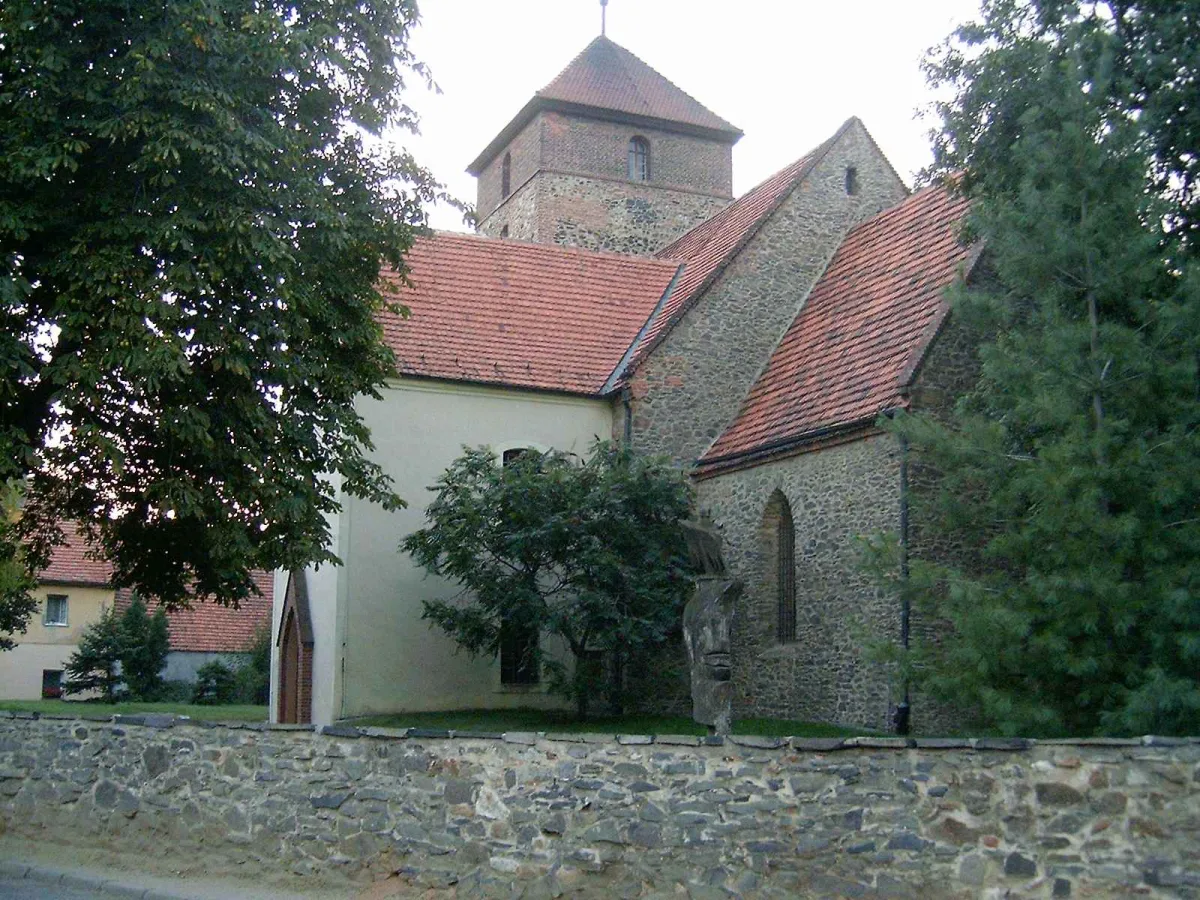
Where the Mongol invasion of Silesia came from
In the spring of 1241, the Mongol invasion swept through Polish and Hungarian lands. The Mongols' main target was Hungary, and the expedition into Poland and Silesia was meant as a pre-emptive strike - its purpose was to prevent the Polish princes from sending reinforcements to their Hungarian neighbour. With the army that set out towards Silesia under the command of Baidar (Pajdar), the Mongols had already marched through Lesser Poland, burning, among other places, Kraków, along the way. Chroniclers and later historians consistently describe this march as a trail of destruction - burning villages and small towns, a decimated population, deserted trade routes. In Lower Silesia, traces of this passage can be seen in the history of Lądek-Zdrój, where, according to local accounts, Mongols returning from Legnica destroyed the bathing facilities that already existed at what is one of the oldest spa towns in Poland.
Defence of the region fell to Henry II the Pious, Duke of Wrocław, Kraków and Silesia, son of Henry the Bearded and Saint Hedwig of Silesia. He gathered knightly troops from various lands under his rule and allied duchies, hoping for help from the west - from King Wenceslaus I of Bohemia, who was approaching Silesia with relief forces but did not manage to arrive in time.
The course of the battle on 9 April 1241
The clash took place on 9 April 1241, on fields near Legnica. On one side stood the Mongol units, on the other Silesian knights led by Henry II the Pious, supported by allied forces, including a detachment from Opole. Accounts left by medieval chroniclers - and, after them, later Jan Długosz - speak of an initial advantage for the Polish heavy cavalry. The turning point is said to have come when panic broke out among the ducal troops, and one unit (according to some accounts, the Opole one) unexpectedly retreated or fled the field. The Mongols exploited the confusion and went on the counterattack, breaking Henry's forces.
Historians today approach this account with caution, because the most elaborate version was left by Jan Długosz two centuries after the event, based partly on earlier, incomplete sources. Some researchers even question the exact location of the clash - at the traditionally indicated site, no objects related to weaponry from the period have been found, so they consider whether the battle might instead have taken place near Oława. Despite this, Legnickie Pole remains the main site of memory associated with the event.
The disputed size of the armies
The size of the armies taking part in the battle is one of the most debated aspects of the event's description. An anonymous Hungarian monk, author of one of the oldest accounts, wrote outright of 40,000 of Henry the Pious's warriors falling in a single moment - a figure modern historians consider absurdly inflated given the military and demographic realities of the 13th century. Traditional 19th- and 20th-century accounts spoke of around 10,000 Mongols and 8,000 Silesian troops, with some works estimating the Polish forces at around 6,000. More recent research lowers these numbers considerably - pointing to a Polish contingent of the order of 1,000-4,000 soldiers, and a Mongol one in the range of 6,000-7,000. The spread arises because medieval chronicles notoriously inflated troop numbers to heighten the drama of events, and no source provides grounds for a single, certain figure for either side.
The death of Henry the Pious and the consequences for Silesia
Duke Henry II the Pious died in the battle - according to accounts, he was captured and beheaded, and the Mongols are said to have mounted his head on a spear or paraded it around the area as a warning to the remaining Polish forces. According to another version, recorded in the chronicle "Historia Tatarorum", attributed to Piotr di Bardia, the ruler's head was carried through Moravia to Hungary, to be shown to Batu Khan - this, however, is a low-certainty account, an event not unambiguously confirmed.
The death of Henry the Pious had serious political consequences. The dominion concentrated in his hands, covering Silesia, Lesser Poland and part of Greater Poland, fell apart - the project of uniting the Polish lands under a single ducal authority lost any real chance of success for several decades, and the duke was followed by decades of fragmentation and disputes among his heirs. The invasion itself, despite the victory, was for the Mongols a side episode on the way to their main target, which remained Hungary - they did not stop in Silesia but moved on southward. The destruction they left behind in the region sped up colonisation processes - the depopulated territories became, over the following decades, a target for settlement, largely German.
The legend of identifying the body and the tradition of the battle
One of the region's best-known legends is connected with the battle. According to the account, the body of the slain and beheaded Henry the Pious was identified on the battlefield by his mother, Saint Hedwig of Silesia (in another version, by the duke's wife, Anna), by one particular feature: the duke was said to have six toes on his left foot. At the spot where the body was found, the duchess is said to have founded a chapel for the fallen knights - this is a legend recorded by later chroniclers and guides to the region, not a historically confirmed event, so it should be treated as part of tradition, not fact.
The death of Henry the Pious also found its way into Polish culture - the writer Zofia Kossak, among others, referred to the duke's struggle against the Mongol invasion in one of her historical novels. The battle functions in collective memory as the moment when Silesia and its ruler stood in defence of Christian Europe, and the image of Henry as a knight-martyr was already established in the Middle Ages.
Legnickie Pole and the abbey commemorating the battle
At the place where, according to tradition, the body of Henry the Pious was found, a monastic complex grew up over time. First a Gothic church dedicated to the Holy Trinity and the Blessed Virgin Mary was built there, and it was placed in the care of Benedictine monks brought from Opatovice in Bohemia by the duke's widow, Anna. In the 16th century the monks lost the church and monastery to the Protestants. The church owes its present, baroque form to a rebuilding carried out between 1719 and 1733 to a design by the Bohemian architect Kilian Ignaz Dientzenhofer - the interior is covered with frescoes by Cosmas Damian Asam, glorifying Saint Hedwig and Duke Henry II the Pious.
In 1961, part of the monastic complex became home to the Museum of the Battle of Legnica, dedicated to the history of the 1241 clash and its place in regional memory.
The annual re-enactment of the battle
Every year, in the warmer season, a re-enactment of the 1241 battle is held at Legnickie Pole. Knightly brotherhoods from across the country take part in the event, and the re-enactment is accompanied by reconstruction camps and demonstrations of medieval crafts. Separately, every year on 9 April, the day the battle was actually fought, ceremonial anniversary observances are also held, more commemorative than spectacular in character. Both events serve the same purpose: to remind successive generations of one of the most important battles in the history of medieval Silesia.

Be the first! Add a comment.
You need to log in to add a comment.
Log in