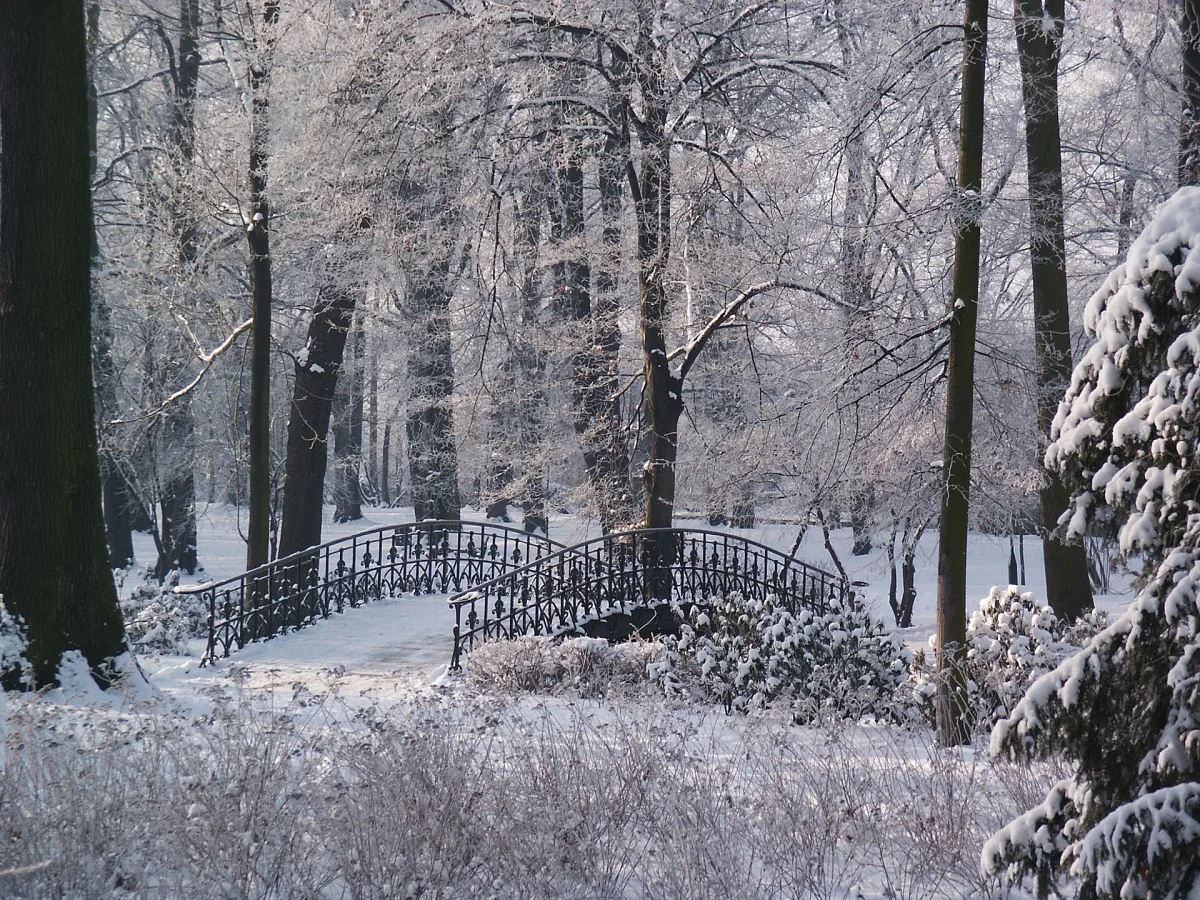
One of the largest parks in Wrocław, about 100 hectares, with the Japanese Garden, a wooden church and Centennial Hall nearby.
Szczytnicki Park is one of the largest parks in Wrocław, spread over about 100 hectares east of the Old Oder, on the site of the former village of Szczytniki incorporated into the city in 1868. The park has a landscape character, and its rich tree stand is a major part of its value.
Before the park was created, the village of Szczytniki stood here for centuries; it was split into New and Old Szczytniki in the 16th century and turned into a suburban residential estate in the 17th century. The land was bought in 1783 by Friedrich Ludwig zu Hohenlohe-Ingelfingen, commander of the Wrocław garrison, who laid out one of the first English-style landscape parks on the European continent here. In December 1806 the park was destroyed during the Napoleonic siege of the city. In the 19th century the site also served other purposes: from 1833 to 1907 it hosted Wrocław's first sporting horse races. The park itself was recognised as a historic monument, entered in the register under number U-3 in 1958 and again under number A/2791/194 in 1962.
Between 1909 and 1912 the Japanese Garden was laid out within the park, designed by the Japanese gardener Mankichi Arai on the initiative of Count Fritz von Hochberg. It was created as part of the preparations for the 1913 Centennial Exhibition, as one of the gardens accompanying the event. The garden suffered in the 1997 flood, and its restoration, begun in 1994, was completed and the garden reopened in 1999. The renovated garden was named Hakkoen, meaning the White and Red Garden, and the government of Japan donated several 19th-century granite lanterns to it. In 2008 Japanese cherry trees were additionally planted there, drawing visitors every year during the blossom season.
A wooden church dedicated to St John of Nepomuk stands in the park, built at the turn of the 16th and 17th centuries by carpenters from Stary Koźle. The building first went to Kędzierzyn, and in 1913, under the direction of architect Theo Effenberger, it was moved to Szczytnicki Park to coincide with the Centennial Exhibition of the time. A monolithic stone cross, moved here from Muchobór Wielki in the 1970s, stands beside the church. Next to the park stands the villa of architect Max Berg, the creator of the neighbouring Centennial Hall. The park also contains monuments to Diana and Friedrich Schiller and a column of Frederick William II, with the whole complemented by numerous avenues, bridges and pergolas leading towards the Oder.
About 350 species of trees and shrubs grow in the park, including plants brought from Asia and from South and North America. This diversity, alongside the compositional layout of the avenues and clearings, accounts for the dendrological value of the site.

Be the first! Add a comment.
You need to log in to add a comment.
Log in