
The fashion for mountain cures
Lower Silesia has one of the oldest spas in Poland: Cieplice Śląskie-Zdrój has been using its warm springs continuously since 1281, making it the oldest operating spa in the country. For centuries, treatment consisted mainly of bathing in the warm springs, but from the turn of the 18th and 19th centuries, with the development of balneology as a branch of medicine, the Sudetes towns began to attract European aristocracy, artists and politicians. Mineral water for drinking, mountain air and walks became a fashionable way to treat illness and spend leisure time at once, and the Kłodzko Valley and the Jelenia Góra Valley filled up with further spa towns: Duszniki, Polanica, Lądek, Kudowa, Świeradów, Cieplice and Szczawno. The portal has a separate, more detailed article on the spa parks, pump rooms and architecture of these towns themselves - here we focus on the people who used to visit.
Chopin and the festival that grew out of it
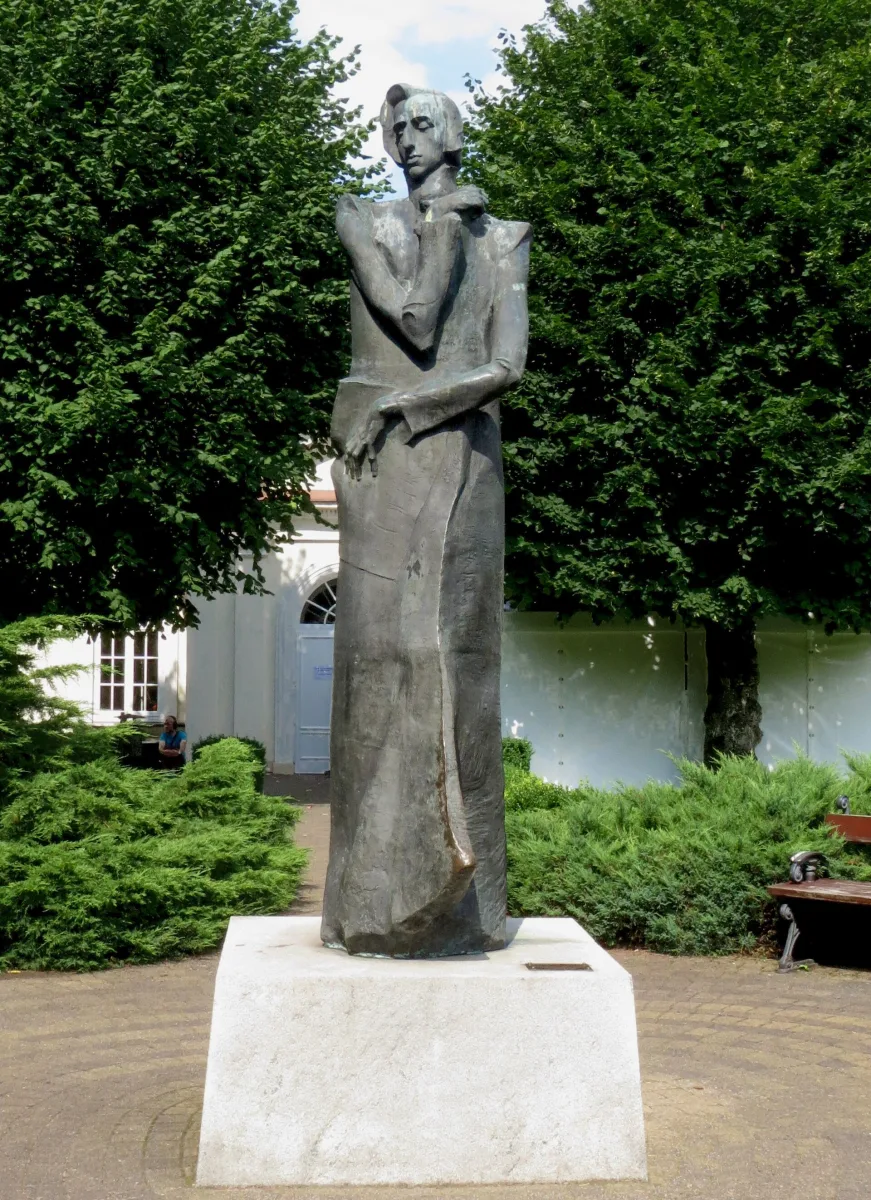
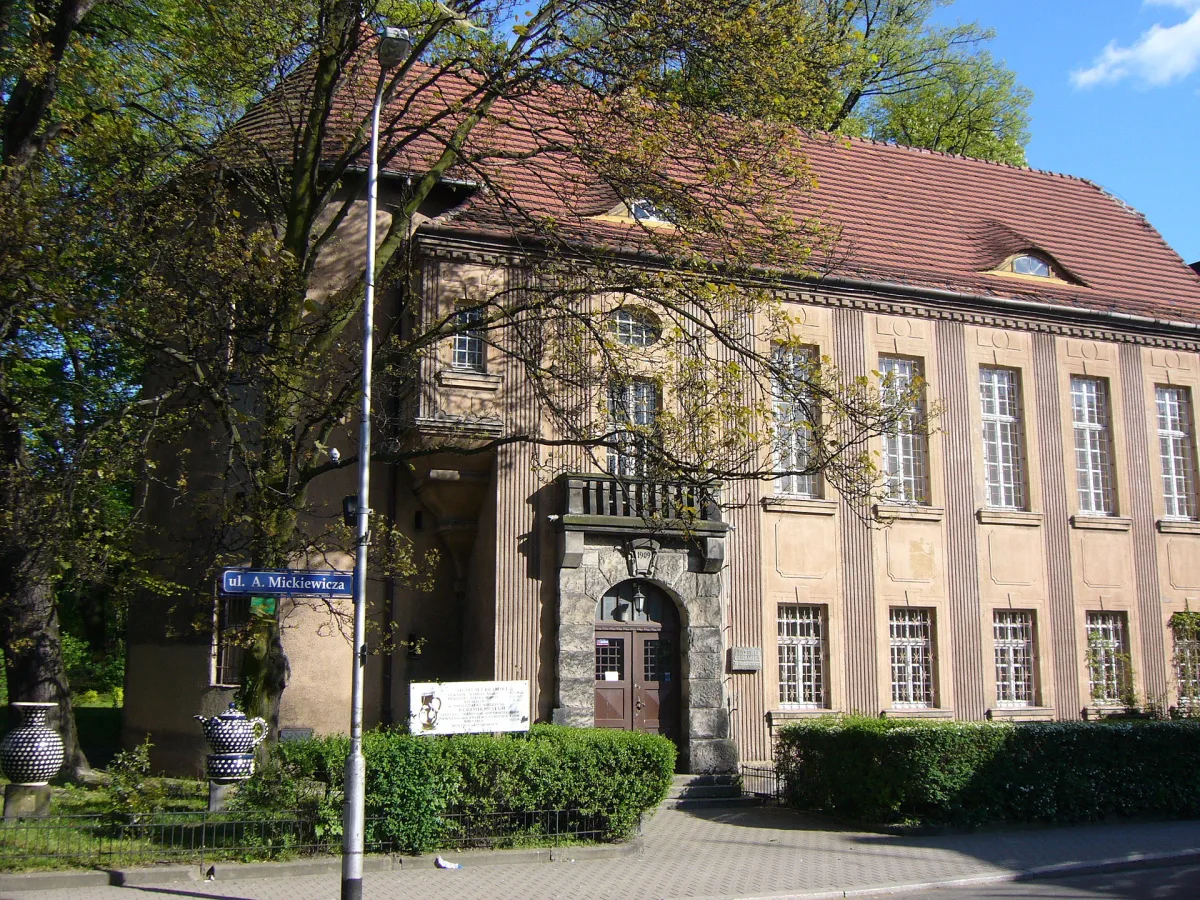
In August 1826, sixteen-year-old Fryderyk Chopin came to Duszniki-Zdrój with his mother and sisters, Ludwika and Emilia, for treatment. It was in Duszniki that he gave his first concerts away from home, performed as charity events for local orphans. A hundred and twenty years later, in 1946, this visit became the pretext for founding the International Chopin Piano Festival in Duszniki-Zdrój. The first edition took place on 25 and 26 August 1946, with performances by pianists Zofia Rabcewicz and Henryk Sztompka. The initiator was Ignacy Potocki, a co-founder of the then board of Lower Silesian spas, who wanted to give Poles settling after the war in the Recovered Territories a reason to take pride in their new region. The festival is held every year in August and is regarded as the oldest continuously running piano festival in the world and the oldest music festival in Poland. In Duszniki, the monument to Fryderyk Chopin still stands today, and the memory of the former paper mill that the spa relied on even in the composer's time is preserved by the Museum of Papermaking in Duszniki-Zdrój.
Cieplice: the oldest spa and its guests
Cieplice Śląskie-Zdrój, today a district of Jelenia Góra, attracted guests from across Europe for centuries precisely because of its age and reputation. Local historical materials list among its spa guests Maria Kazimiera d'Arquien, wife of King Jan III Sobieski and known as Marysieńka Sobieska, the German writer and scholar Johann Wolfgang Goethe, the Great Sejm activist Hugo Kołłątaj, and the art collector and patron Izabela Czartoryska. The exact dates and circumstances of these visits are not specified in the available materials, so this list is best treated as a testimony to Cieplice's reputation rather than a confirmed calendar of visits. A more certain trace is the continuity itself: from the Middle Ages to today, people come to Cieplice for the same reason the named guests did, namely for the warm water from springs that have not dried up in seven centuries.
Szczawno-Zdrój and its politicians and musicians
Szczawno-Zdrój, a spa near Wałbrzych, hosted equally well-known names in its history, though from a different era. Visitors included the violinist and composer Henryk Wieniawski, after whom the Henryk Wieniawski Spa Park in Szczawno-Zdrój is named, the Russian writer Ivan Turgenev, and, already in the 20th century, the British politician Winston Churchill. The park where they walked was established in 1812 on the initiative of Dr August Zemplin, a physician connected with the development of the local spa, and was extended throughout the 19th century in the English style, with winding paths in place of geometric flowerbeds.
What a spa guest's stay looked like
A visit to a Sudetes spa in the 19th century was rarely a solitary cure. Young Chopin came to Duszniki with his whole family, just as most guests of the time travelled with relatives for several weeks rather than for a single treatment. A spa guest's day was divided between drinking mineral water at the pump room, bathing, walks in the spa park, and evening concerts or performances at the local spa theatre. This is why, alongside the bathhouses and pump rooms, spas developed a whole entertainment infrastructure: promenade halls, concert shells, theatres and observation towers from which the mountain panorama could be admired. A spa stay therefore had a social dimension almost as important as the medical one, which explains why artists and politicians, and not only patients seeking relief from a specific illness, stopped in these particular towns.
The architecture they left behind
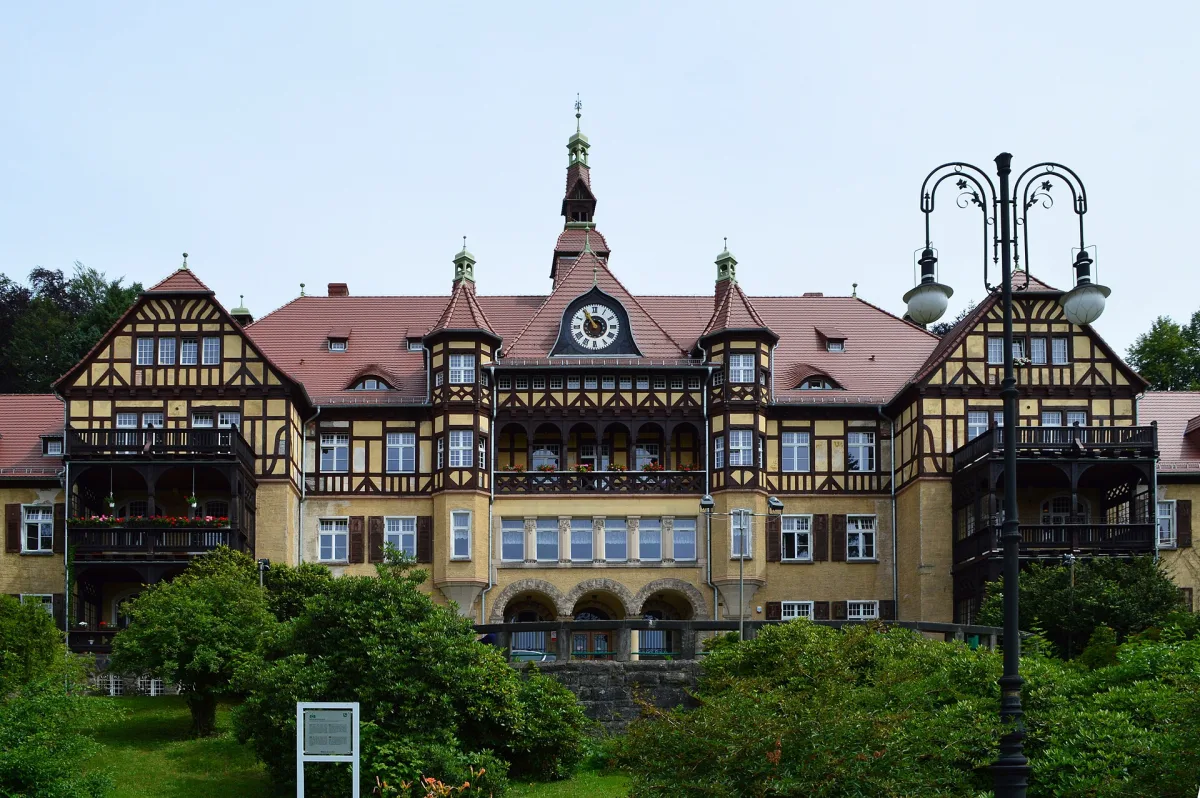
The most visible trace of that era today is not commemorative plaques but the spa buildings themselves. In Szczawno-Zdrój, the Promenade Hall with its late-19th-century mineral water pump room has survived, along with the neo-Rococo Spa Theatre, the former Grand Hotel known today as the Spa House, and Maria's Manor, where Russian spa guests used to stay. Towering over the town is the observation tower on Chełmiec from 1888, built of local porphyry stone, and even older is the Anna Tower from 1818 standing in the park. In Duszniki, from the era when Chopin used to visit, the complex of buildings of the former paper mill has survived, now housing the Paper Museum. These buildings, not legends about famous guests, are the most reliable evidence of how seriously the Sudetes spas took their role as resorts of European standing.

Be the first! Add a comment.
You need to log in to add a comment.
Log in