
The Strike at the Philosophy Department and the First Manifesto
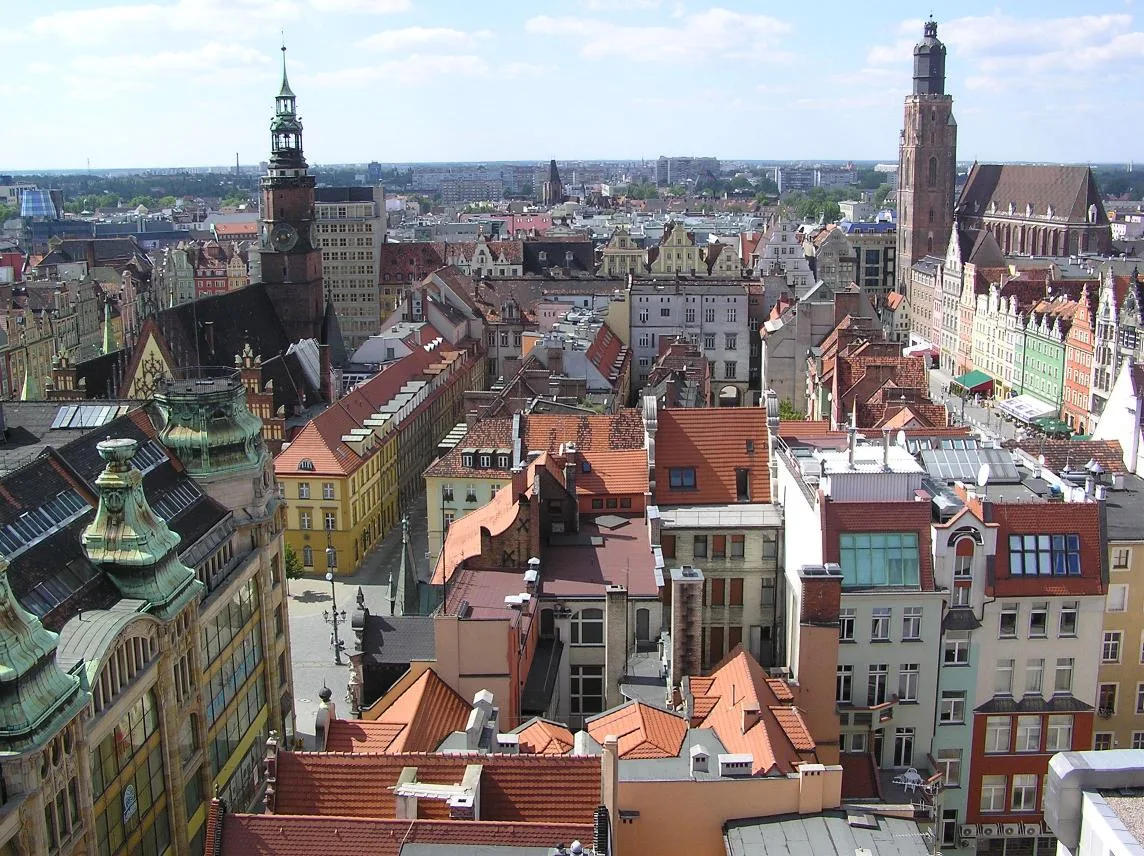
The story begins in the autumn of 1981, during the occupation strike at the Faculty of Philosophy of the University of Wrocław. It was then that the name later given to the whole movement appeared. Its creator is considered to be Waldemar Fydrych, a student who had come to Wrocław from Toruń, later known by the nickname Major. Fydrych jokingly declared himself "commander of the Wrocław Fortress" and wrote the "Manifesto of Socialist Surrealism" - a text in which, instead of political demands, he proposed absurdity as a method of looking at the system. He sought inspiration, among other things, in the Dutch Provo movement, known for its street happenings in the 1960s. Fydrych's companion in the first actions was Wiesław Cupała, known as the Rotmistrz (Cavalry Captain).
A Dwarf on the Patch Left by a Painted-Over Slogan
On the night of 30 to 31 August 1982, Fydrych and Cupała painted the first dwarfs on the blocks of flats in the Biskupin district of Wrocław. They were not a random idea - they appeared exactly in places where the militia had painted over opposition slogans and inscriptions on the walls. Fydrych described it as dialectics in the Hegelian spirit: the inscription was the thesis, the paint patch left by the authorities was the antithesis, and the dwarf painted on it was the synthesis. In 1982-1983, this type of painting - the technique resembled stencil graffiti - appeared more than a thousand times in six Polish cities. The point of this game was simple: by painting over a slogan, censorship itself created an empty space that the movement could fill with something that could no longer be painted over without the authorities making themselves ridiculous. The dwarf carried no slogan, so there was nothing to prosecute it for.
Absurdity as a Weapon
In the following years it was no longer single paintings but organised happenings on the streets of Wrocław. Participants did not demand free elections or the abolition of censorship directly - instead, they handed out toilet paper in a city where it was scarce in shops, held parades in dwarf hats, and led marches under slogans such as "there is no freedom without dwarfs" or "citizen, help the militia - beat yourself up". Fydrych explained the point of this strategy directly: he claimed that people in the West learned more about Poland from news of his arrest for handing out sanitary pads than from reading underground publications. The authorities had a problem with such an opponent - it was hard to arrest someone for painting a dwarf or handing out toilet paper without looking absurd in the process. Even so, the happenings regularly ended with participants being detained for "disturbing public order".
The Revolution of Dwarfs and the Peak of the Movement
The culmination was the "Revolution of Dwarfs" action on 1 June 1988, in which, according to various estimates, between 10,000 and 20,000 people wearing orange hats took to the streets of Wrocław. Earlier, in 1987, happenings such as "Toilet Paper Freedom Day" and "Armed Dwarfs" had taken place, drawing the attention of foreign media, including the American weekly "The Village Voice". In December 1988, the movement received an unusual honour - director Andrzej Wajda presented its participants with an award in the presence of well-known opposition figures. Orange Alternative was not confined to Wrocław: similar, though independently run, actions were organised by student groups in Łódź (including Krzysztof Skiba), Warsaw and Lublin, each with its own repertoire of absurd happenings, such as Warsaw's "Football Match: Poverty versus Prosperity" or Lublin's "Battle of Button versus Loop".
The End of the Decade and the Fading of the Movement in Wrocław
After 1989, with the fall of the system, the opponent against which the movement had defined its strategy ceased to exist in its previous form. Fydrych left for Paris at the start of the 1990s, and Orange Alternative's activity in Wrocław clearly weakened. Some of the former participants and ideas moved to Warsaw, where the movement continued to function under the banner "Gnomes and Dwarfs" - Fydrych later ran in the election for Mayor of Warsaw. The dwarfs painted on walls gradually disappeared from the streets along with the urban decor of the 1980s.
How a Happening Became a Symbol of the City
It was not until more than a decade later that the idea of the painted dwarf returned, and in a completely different form - as sculptures rather than street performance. In 2001, a monument referencing the dwarf from Fydrych's drawings was erected on Świdnicka Street, funded by the Agora company. The real beginning of today's collection, however, dates to 1 August 2005, when Wrocław sculptor Tomasz Moczek set up the first five bronze dwarfs in the city, including the Fencer and two Sisyphuses. Since then the number of figures has grown year by year, and the dispute over image rights even went to court - in 2011 it was ruled that the copyright to the dwarf as a motif belonged to Fydrych, and the city had to apologise and pay damages for using it in promotion without the creator's consent. What began as an underground wordplay against censorship became one of the recognisable symbols of the city - but the story of the figures themselves and their present-day role is a separate topic.
Today, a trace of those events can be found in places associated with the dwarfs, for example in the House of Dwarfs on Wrocław's Market Square, where visitors are told the story of these figures - although the place itself now speaks primarily about today's figurines, not about the movement of decades past.

Be the first! Add a comment.
You need to log in to add a comment.
Log in