
The endowment that changed rabbinical training
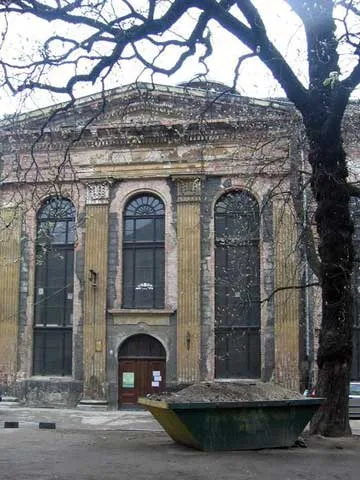
The Jewish Theological Seminary in Wrocław was founded from the will of the merchant Jonas Fränckel, who died in 1846 and left his fortune to a college training rabbis and religion teachers. Among the initiators of its founding, the Wrocław rabbi Abraham Geiger is also named. Sources differ on the exact year it opened: some give 1853, others 1854, but they agree on its location at today's Włodkowica 14 street.
The college, also known as the Fränckel Foundation Seminary, was the first modern institution of its kind in Central Europe. It combined classical Talmudic studies with a university programme of humanities, which in the mid-19th century was an innovative solution: until then, rabbis had been trained exclusively in traditional yeshivas.
The founding of the seminary was part of a dispute that at the time divided German Jews, between supporters of preserving Judaism in an unchanging form and supporters of far-reaching reform of its rites and theology. The Wrocław college, thanks to lecturers who combined a solid knowledge of tradition with an openness to university methods, worked out a third way, which attracted students from across Germany and neighbouring countries.
Between tradition and reform
The seminary represented a direction known as Positive-Historical Judaism. Its essence was summed up by Zacharias Frankel himself, the college's first director, when he wrote of the role of teachers who explain the Law and teach it, without rejecting tradition, but also without treating it as unchanging. This approach, midway between Orthodoxy and Reform, is regarded today as the birthplace of Conservative Judaism, a movement that later developed primarily in the United States.
Lecturers and graduates
Zacharias Frankel remained the seminary's director for years. Among the teachers, David Rosin is also named, known for the thoroughness with which he checked students' sermons, as is Rabbi Manuel Joël, successor to Abraham Geiger as rabbi of the liberal faction of the Wrocław community.
The college's alumni included Leo Baeck, one of the leading figures of 20th-century liberal Judaism and later chairman of the Reichsvertretung der Juden in Deutschland, the organisation representing German Jews before the authorities of the Third Reich. Israel Lewy, regarded as one of the most eminent Talmudists of his era, is also named among the graduates.
249 rabbis in 84 years
Over its 84 years of operation, from opening to its closure by the police after Kristallnacht, the Wrocław seminary trained 249 rabbis. This figure includes graduates who later worked in Jewish communities throughout Germany and beyond, which made the Wrocław college one of the main centres for training rabbinical staff in Central Europe throughout its existence.
A book collection that survived, scattered
At the turn of the 19th and 20th centuries, the seminary's library held around 400 manuscripts and 18,000 books and was regarded as the largest collection of Jewish publications in Germany. During Kristallnacht in November 1938, the book collection was scattered. Some volumes were later found in Moscow and Prague, and a significant part of the collection was recovered by the Wrocław Jewish Religious Community; today it is held in the Special Collections of the University of Wrocław Library.
The end of the college and what remained
The seminary was effectively closed by the police immediately after Kristallnacht in November 1938. The last rabbinical ordination ceremony was still held there on 21 February 1939. In 1941 the building was taken over by the Reichsvereinigung der Juden in Deutschland, an organisation imposed by the Nazi authorities in place of the existing community structures.
After the war, the building became the property of the State Treasury. In the late 1960s it was demolished due to its poor technical condition. Today, on the site where successive generations of German Judaism's rabbis trained for almost a century, there is a car park. Traces of the former college remain mainly in archives and libraries, which preserved part of its scattered book collection, as well as in the legacy of its graduates, such as Leo Baeck, whose religious thought is still studied by scholars of Judaism around the world.

Be the first! Add a comment.
You need to log in to add a comment.
Log in