
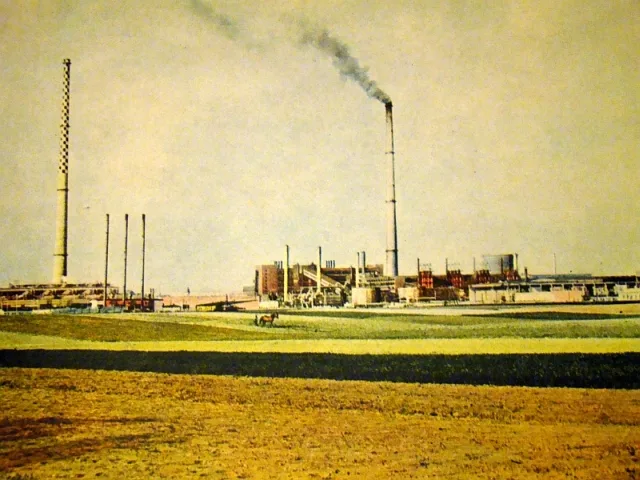
A smelter built in the shadow of a new mining district
When construction of the mines of the Legnica-Głogów Copper District began in the 1960s, a plant to process the extracted ore into metal had to be built alongside them. Construction of the Głogów Copper Smelter began in 1967, with a planned production capacity of 80,000 tonnes of copper a year. Just a year later, the decision was made to expand the plant to 160,000 tonnes. The first part of the smelter, "Głogów I", with shaft furnaces, started up in July 1971, and the target capacity of 160,000 tonnes a year was reached in 1974. That same year construction began on the second part of the plant, "Głogów II", with a capacity of 150,000 tonnes a year, which started up on 9 January 1978. The plant was also expanded much later: in October 2016 a new flash smelting furnace installation was brought online, and this line was officially opened on 20 January 2017. Successive stages of the smelter's expansion went hand in hand with growing output at the nearby mines - the more ore that arrived from Lubin, Polkowice and the Rudna mine, opened in 1974, the greater the processing capacity the smelter needed to keep up with extraction.
Contamination of the area and the protective zone
Smelting copper ore on such a large scale, using the technology of the 1960s and 1970s, took its toll on the environment around the plant. Emissions from the smelter harmed crops, forests and the health of residents of the surrounding villages to such an extent that a protective zone was designated around the plant - an area in which permanent habitation was deemed inadvisable because of the smelter's harmful environmental impact. The decision covered several localities lying closest to the plant.
The villages that had to disappear
Because of the harmful environmental impact of the Głogów Copper Smelter, seven localities were resettled: Wróblin Głogowski, Winowno, Bogomice, Rapocin, Biechów and Żukowice. The scale of depopulation varied, but in the documented cases it was dramatic. In Wróblin Głogowski, only one family remained from the entire former village, numbering six people. In Żukowice, more than 700 people still lived there in 1998, but between 1998 and 2011 the population fell by 86.8 percent, to 96 people in 2011. Despite this, Żukowice formally remained the seat of the municipality, and among its today's few residents men decisively predominate - women make up under 23 percent of the population, which in itself shows how few families chose to stay.
What happened to the abandoned areas
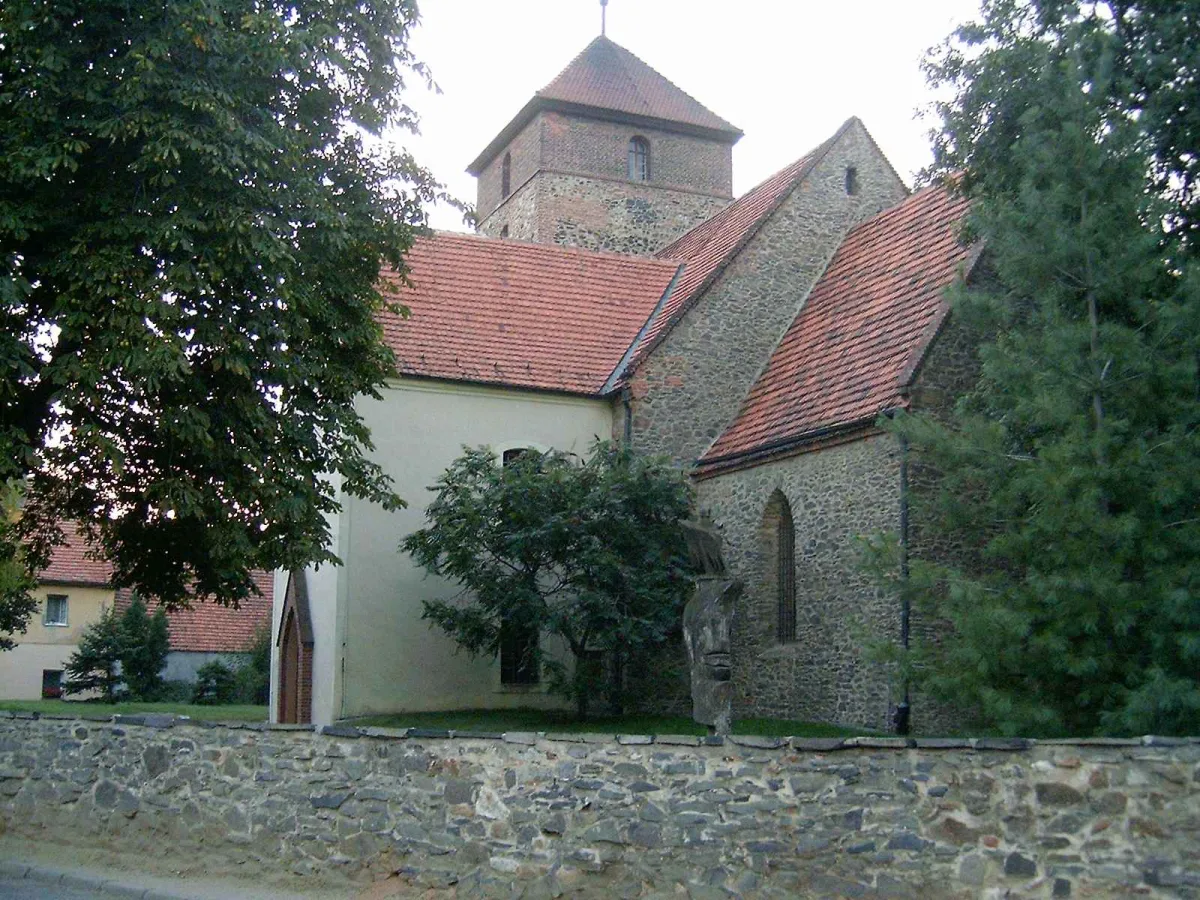
A large part of the land left by the resettled inhabitants was transferred to neighbouring Głogów. On 1 January 1990, almost the entire area of Wróblin Głogowski, 360.36 hectares, was incorporated into the city's boundaries. On the same day, 601.84 hectares of Żukowice's territory were also attached to Głogów, and from 1 July 1990 this area was extended to 923.18 hectares. Of the former buildings of Wróblin Głogowski, only individual historic structures survive: a Classicist chapel from 1810 and a wooden bell tower, today listed on the heritage register. The rest of the village has practically ceased to exist as a place of residence.
A trace in the region's memory
The history of the resettlements around the Głogów Copper Smelter rarely makes it into popular accounts of the Copper Basin, which usually focus on the economic success of discovering the ore deposit and building the mines. For the residents of Wróblin Głogowski, Żukowice and the other resettled localities, however, the same process meant the loss of homes and farms that their families had sometimes been building for generations after settling in these areas after 1945. Sources available today do not allow the exact dates of resettlement of the individual villages, nor the precise number of people relocated in Winowno, Bogomice, Rapocin and Biechów, to be established. It is known, however, that the process dragged on for years, in parallel with the smelter's own expansion, and its effects are still visible today in the empty, largely unpopulated areas south of Głogów. It is a good example of how the economic success of the Copper Basin, usually described through the lens of the ore discovery and the growth of the mines, also had a side that portals and travel guides rarely pay attention to.

Be the first! Add a comment.
You need to log in to add a comment.
Log in