
Where Lower Silesia's industry came from
Before factories appeared in Lower Silesia, there were mines. Silver mining in the Boguszów-Gorce area goes back to the 14th century, and the first mentions of coal extraction around Nowa Ruda and Wałbrzych already date from the 15th century - the oldest record is dated 1434. The mine from which the Wałbrzych Julia mine later grew was registered under the name Fuchs in 1770, and its main shaft was put into use in 1867, reaching 611 metres below ground.
On top of that came the rivers and forests of the Sudetes and the Sudeten Foothills, which for centuries had favoured textile manufactories, glassworks and paper mills - there was no shortage of raw material or of water to drive the mill wheels. In the 19th century the railway was added to this: the line linking Kowary with Jelenia Góra opened in 1882, and in 1902 the Owl Mountains Railway was launched between Dzierżoniów and Radków. The transport of ore, coal and finished goods became faster, which sped up the development of factories across the whole region.
The clockmaker who turned Świebodzice into a town of clocks
Gustav Becker arrived in Świebodzice at the start of 1847 and opened his first workshop in the Golden Lion hotel. In May 1850 he moved to a tenement house on the market square, and over time his business grew into a factory on what is now Strzegomska Street. In doing so, he committed to employing and maintaining, at his own expense, 80 boys from poor weaving families - one of the few concrete traces of how factory owners of that era looked after the social welfare around their plants.
At its peak, Becker's factory employed more than 1,200 people and produced around three million numbered clocks, which is why, before the war, Świebodzice was spoken of as Silesia's town of clocks. After the war the plant was taken over by the communist authorities and began producing gas cookers instead of clocks. The history of Becker's clocks and their present-day collectors is covered in a separate article on the portal; here it is worth remembering only that he was one of the region's first great industrialists.
The weavers, spinners and sugar makers of the Foothills
Similar stories were repeated in smaller towns to the south and east of Wrocław. In Twardogóra, an industrial centre developed from the mid-19th century onward - according to local sources, Henryk Pirschel founded a mechanical weaving mill there in 1852, and Henryk Lichtenberg launched industrial furniture production. This information carries lower certainty, without confirmation from a second independent source, but it is consistent with the general picture of industrialisation in this part of the region at the time.
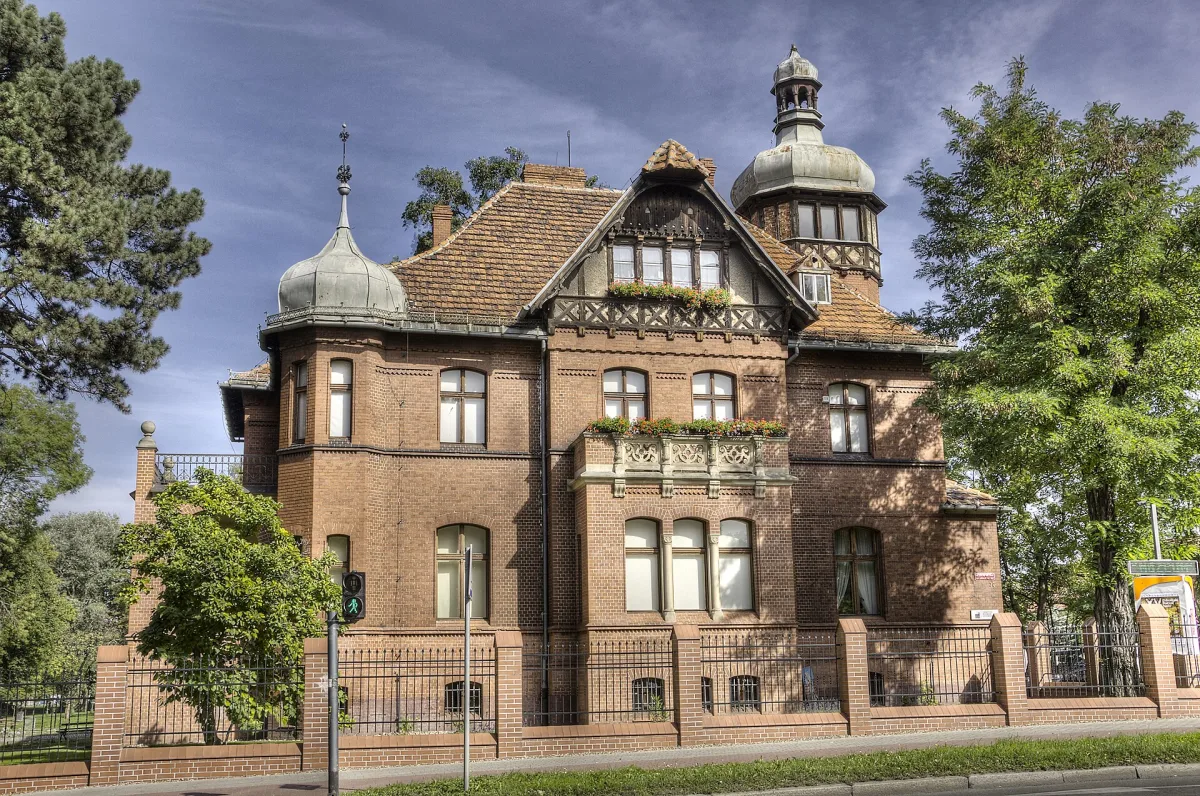
In Dzierżoniów, the factory owner was Hermann Cohn, co-founder of the Cohn Gebrüder plant - one of the first mechanical spinning mills in the town. His villa on what is now Świdnicka Street, built around 1897, today houses the Dzierżoniów City Museum, with a permanent exhibition devoted to the postwar Diora radio receiver factory, which years later took the place of the town's former textile industry.
Coal, carpets and chemistry: the region's heavy industry
Not every industry in Lower Silesia had the face of a single factory owner. In Kowary, in 1856, a Smyrna-carpet factory was moved there from Wleń, giving rise to a weaving and carpet-making tradition that survived in the town right up to the postwar period. Before the Second World War, seven breweries operated in Wałbrzych, and after the war only one survived until 1978, on what is now Aleja Wyzwolenia, brewing the Jasne Górnicze and Górski Zdrój beers.
The factory in Brzeg Dolny has a separate, darker history. The secret Nazi Anorgana factory, built from 1941 onward, produced chemical warfare agents, including tabun and sarin. After the war, the Rokita Chemical Works were built on its site, still operating today under the name PCC Rokita - the name refers to the folk devil Rokita, whose spirit, according to local tradition, was said to watch over the plant.
What happened to these plants after 1945
The postwar fate of Lower Silesian factories followed a single pattern: nationalisation and a change of production profile. Becker's clock factory started making gas cookers, the Dzierżoniów spinning mill gave way to the Diora radio receiver factory, and the chemical plant in Brzeg Dolny switched from weapons production to civilian chemistry. Coal was still mined beneath Wałbrzych for another half-century - the last cart came up from the Julia mine on 20 September 1996, ending more than a century of extraction on the site. In the Wałbrzych Coal Basin alone, 1,031 miners died underground between 1945 and 1998.
What remains of them in the landscape
Some of the region's post-industrial sites have been given a second life as tourist attractions. On the grounds of the former Julia mine, the Stara Kopalnia Centre for Science and Art now operates, with an underground route, a former bathhouse and historic hoisting machinery. In Boguszów-Gorce, the tower of the former Witold mine shaft was, after the coal mine closed, renovated and turned into an observation tower. Factory owner Hermann Cohn's villa in Dzierżoniów became the town museum, and every Saturday an antiques market is held on the Wałbrzych market square, where - in a town with mining and ceramic traditions - objects from old factories of the Sudetes and mementos of mines that no longer exist can still be found.

Be the first! Add a comment.
You need to log in to add a comment.
Log in