
The priest who discovered the bees' secret
Jan Dzierżon was born on 16 January 1811 in Łowkowice near Kluczbork. He studied at a Polish parish school, then at a grammar school in Wrocław, which he finished with distinction, and from 1830 studied theology at the University of Wrocław, also attending lectures in mathematics and astronomy. He was ordained a priest in 1834, and from 1835 spent 33 years as parish priest in Karłowice near Brzeg in Opole Silesia.
He had been interested in bees since his youth, but it was systematic observation that led him to the discovery for which the history of science remembers him. By crossing native bees with Italian ones, he established that drones develop from unfertilised eggs - the phenomenon of parthenogenesis. He announced the theory in 1845, after ten years of observation, and it was confirmed only in 1855 by Professors Karl Theodor von Siebold of Munich and Rudolf Leuckart of Leipzig. Full, universal recognition from the scientific community, however, only came in 1906, at a conference in Marburg - after Dzierżon's death.
His second contribution was a hive with movable comb frames, constructed around 1840 - the foundation of today's frame hive. In 1848 he introduced grooves measuring 8 by 8 millimetres, based on an understanding of what is known as bee space, thanks to which the combs could be removed without destroying them. He published 26 books and more than 800 articles, ran his own journal, "Der Bienenfreund aus Schlesien", and kept around 400 bee colonies in his apiaries.
He paid for his discoveries with a conflict with the Church. In 1868 he was forced to resign as parish priest, and after the dogma of papal infallibility was announced in 1870, he publicly criticised the decision in the press and refused to take an oath of loyalty. On 30 October 1873 the Bishop of Wrocław, Heinrich Förster, excommunicated him. Dzierżon, meanwhile, openly acknowledged his Polish national identity despite Prussian pressure. The scientific community valued him for it: in 1866 he became a member of the German Academy of Natural Sciences Leopoldina, and in 1872, on the occasion of the university's four-hundredth anniversary, he received an honorary doctorate from the University of Munich. He died on 26 October 1906 in his native Łowkowice. In 1946 the Lower Silesian town of Reichenbach was renamed Dzierżoniów after him, although the priest himself had no documented connection with that particular town.
The geologist who was meant to become a priest
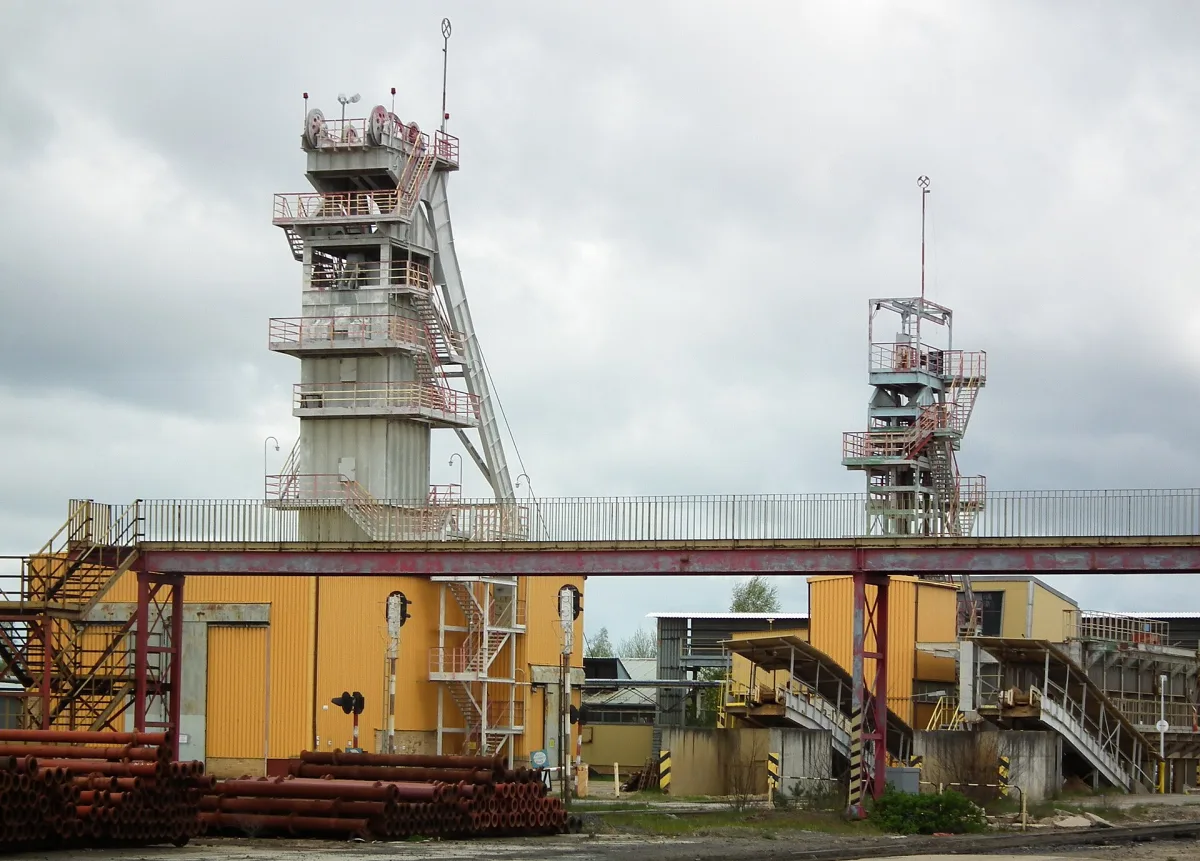
Jan Wyżykowski thought about the priesthood in his youth, but became a geologist instead - and it is to him that Lower Silesia owes one of the greatest mineral discoveries in postwar Polish history. On 23 March 1957 the team he led came across a copper ore deposit in the area of Sieroszowice, between Lubin and Głogów. On the strength of this discovery, construction of the Lubin Mining Works began on 1 January 1960, the first and oldest mine of the Polish Copper Belt, handed over for initial operation on 19 July 1968 and reaching full production capacity in 1972.
For the discovery, Wyżykowski received the First Class State Prize in 1966, together with his whole team. He died suddenly of a heart attack in 1974, not living to see the full flourishing of the industry that grew out of his work - today's KGHM Polska Miedź, which owns, among others, the Rudna Mining Works near Polkowice. The portal describes the scale of the deposit found by his team separately, in connection with the discovery of copper at Lubin itself - here it is worth remembering above all his path from a boy who wanted to become a priest to the geologist whose name is today borne by one of the largest mining districts in Europe.
The apothecary of poison and the radiation engineer
Lower Silesia also has other researchers, less well known than Dzierżon or Wyżykowski, but just as concrete in their discoveries. In Złoty Stok, a town with several centuries of tradition in gold and arsenic mining, the apothecary Hans Scharffenberg was active, and he developed a method for extracting poisonous arsenic trioxide from post-mining spoil heaps. Thanks to this method, the town became one of the main centres of production of this poison in Europe - today the former workings can be visited as the Gold Mine in Złoty Stok.
In Świeradów-Zdrój, the discovery was made by engineer Schmidt, who in 1933 served as mayor of what was then still the German Bad Flinsberg - it was he who established the radioactivity of the springs on the slope of Wysoki Grzbiet, which gave rise to the local balneological tradition based on radioactive waters. Earlier still, in 1605, the healing properties of the waters at Szczawno were described by the Jelenia Góra physician Caspar Schwenckfeldt - his notes are among the oldest surviving records of balneology in Silesia.
What these discoveries changed
Of all these discoveries, Dzierżon's have lasted the longest - the design of the frame hive and the principle of bee space that he formulated still form the basis of beekeeping worldwide today, and his work on parthenogenesis in bees is cited in biology textbooks. Wyżykowski's work gave rise to the Legnica-Głogów Copper District and the whole economic identity of the region around Lubin, Polkowice and Głogów - today one of the largest industrial centres in Poland, built around a deposit that in the mid-20th century was regarded as a chance find in a poorly surveyed area.
Smaller-scale discoveries also left a lasting mark. Scharffenberg's method turned Złoty Stok into a European centre of poison production for several centuries, and the observations of engineer Schmidt and Dr Schwenckfeldt laid the foundations for the spa towns of Świeradów-Zdrój and Szczawno-Zdrój, which still attract patients today.

Be the first! Add a comment.
You need to log in to add a comment.
Log in