
The Six-Day War as a turning point
The end of the so-called "small stabilisation" for the Jewish diaspora in Poland came in mid-1967. This was driven by the outbreak of the Six-Day War, the position of the Polish People's Republic's government on this conflict announced on 7 June, and Władysław Gomułka's speech at the 6th Congress of Trade Unions on 19 June 1967. The Security Service stepped up its surveillance of Polish citizens of Jewish origin who had contacts with international Zionist organisations or the Israeli Embassy in Warsaw. The Social and Cultural Society of Jews in Poland refused for several weeks to issue a resolution condemning Israel, which the authorities were demanding; it gave in to the pressure only on 12 July 1967.
March 1968 in Lower Silesia
On 18 March 1968 a rally was held in Wrocław at which the first secretary of the PZPR Provincial Committee, Władysław Piłatowski, assured those gathered that "the party and its leadership can always count on us". Wałbrzych was not a university town, so there were no open student protests there of the kind seen in Warsaw or Wrocław. There were, however, incidents of an anti-Jewish character: hostile graffiti appeared on the walls of the Congregation of the Mosaic Faith building and the seat of the Social and Cultural Society of Jews, and windows were smashed in the Society's building. Neither the party nor the local authorities reacted. At rallies and meetings, statements were made directly targeting Jewish residents; a teacher at one of Wałbrzych's secondary schools said of pupils of Jewish origin that they "got into school thanks to various connections", and that "our children, the children of workers, now have to complete their education in evening schools".
Dismissals from work and from the party
From the middle of 1967 a process of "exposing" people of Jewish origin was under way, who were attributed with a nationalist attitude. Statements from the time of the Six-Day War, in which Jews had expressed joy at the successes of the Israeli army, were later cited in Security Service reports as evidence of guilt. In the following months a wide-ranging "cleansing" of party ranks was carried out, from basic organisations in workplaces up to county and municipal committees. Jewish party members were interrogated, punished with a reprimand or simply struck off the list, regardless of the actual accusations against them. Those expelled from the party included the long-serving Wałbrzych councillor Henryk Grynfeld and activists of the Botwin cooperative: Estera Szpakier, Chana Boruczek, Salomon Dzikowski, Bencjan Lichtenberg, Markus Hanzer, Siemion Gilkis and Ignacy Szlajen. Expulsion from the party often also meant the loss of one's existing job.
A one-way travel document
Unlike earlier waves of emigration, the authorities this time did not run a campaign to stop people leaving; on the contrary, much suggested that they wanted to get rid of as many people of Jewish origin as possible. Those wishing to leave had to submit an application to the State Council to change their citizenship from Polish to Israeli, and on payment of a fee they received a travel document. From 12 July 1967 its price rose from 300 to 5,000 złoty; only pensioners and disability benefit recipients, women over sixty and men over sixty-five were entitled to a fifty percent discount, while children under sixteen were exempt from the fee. Refusals were given to people who had access to classified information, had a Polish spouse, or had court or prosecutorial proceedings under way against them.
The scale of departures in numbers
The mass emigration movement got under way as early as 1968, but was particularly intense in 1969, weakened in 1970 and rose again in 1971. Across the whole country, 3,437 people declared their wish to leave in 1968, 7,674 in 1969, 698 in 1970 and 1,118 in 1971. In total, around 13,000 so-called March emigrants left Poland in the years 1968-1971, of whom around 4,000 left from Lower Silesia. The scale of the phenomenon in the region itself is also shown by partial data: by mid-November 1968, 702 people in Lower Silesia had submitted applications to leave, and over the eleven months of 1969 as many as 1,877 people applied for travel documents, of whom 1,816 received them.
What was left of Jewish institutions after 1968
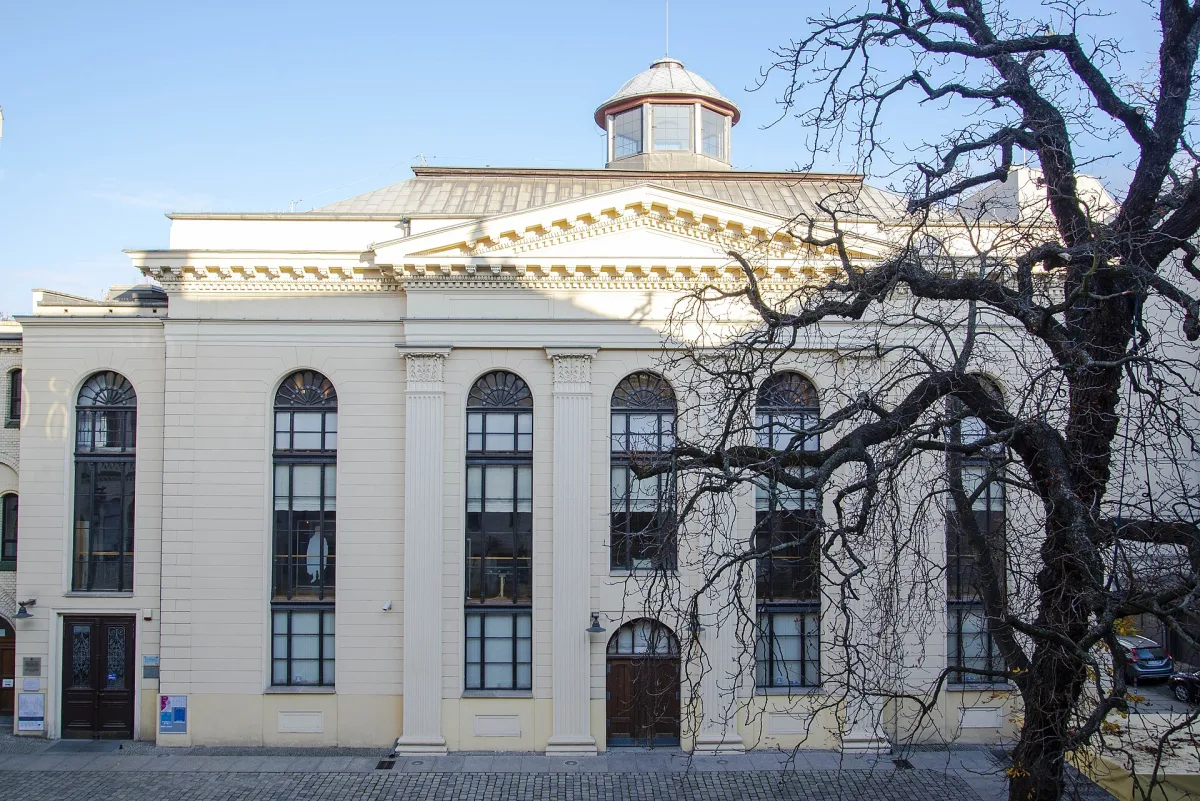
If around 7,000 people of Jewish nationality were still living in Lower Silesia in the second half of the 1960s, only a little over 2,000 of them remained by the early 1970s. The chairman of the local Nationalities Commission assessed in 1972 that "the community is secretive, it isolates itself from society", and that the Social and Cultural Society of Jews no longer had much influence, because most of the surviving Jews kept away from the organisation. Half of those who remained were old-age and disability pensioners, and only around a quarter of the community was still of working age. A year later, the head of the local internal affairs office divided those who remained into three groups: those tied to the Social and Cultural Society of Jews, those tied to the religious congregation, and those who "do not belong to any of the aforementioned groups and do not admit to their origin", mainly members of the intelligentsia who preferred to disappear from view rather than be counted among the shrinking minority. Today the Jewish Religious Community of Wrocław numbers around three hundred people, and its two active synagogues, including the White Stork Synagogue, are a small but still living trace of a community that as recently as the mid-1940s numbered between 90,000 and 100,000 people in Lower Silesia.

Be the first! Add a comment.
You need to log in to add a comment.
Log in