
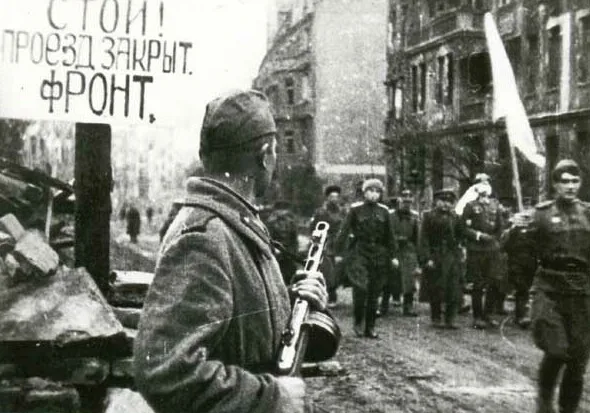
The fortress order and the decision to march out
On 19 January 1945, the authorities of Wrocław issued an order for the forced evacuation of the civilian population. Initially, it was hoped that people could be moved out by rail and road transport, but Soviet forces were approaching the city faster than expected, and the rolling stock was already burdened with military transports and the wounded. So the following day, 20 January, Gauleiter Karl Hanke formally declared Wrocław a fortress (Festung Breslau) and ordered an immediate evacuation on foot. On the same day, all men aged 16 to 60 were called up for military service, which in itself reduced the number of people able to help women, children and the elderly along the way.
At the time, around a million people were in the city, including refugees from territories in the east already occupied by the Red Army. The evacuation order applied first to women, children and the elderly, theoretically with the possibility of staying for those essential to the defence of the city or to work in armaments plants.
On foot, in twenty-degree frost
The evacuation took place on foot, because there were not enough trains or vehicles for everyone wanting to leave. People left their homes during the night of 20-21 January and in the days that followed, in temperatures reaching around minus 20 degrees Celsius. Everyone could take only as much as they could carry themselves or transport on a handcart or sledge. The roads leading out of the city filled with thousands of people walking through snow and ice, with no lodging along the way and no organised food supplies.
The march in such conditions was exhausting even for healthy people, and those being evacuated were mostly women with small children, the elderly and the sick. Sources agree in pointing to cold, exhaustion and disease, rather than combat, as the main causes of death along the way.
Routes: Opatowice, Kąty Wrocławskie and onward to the west
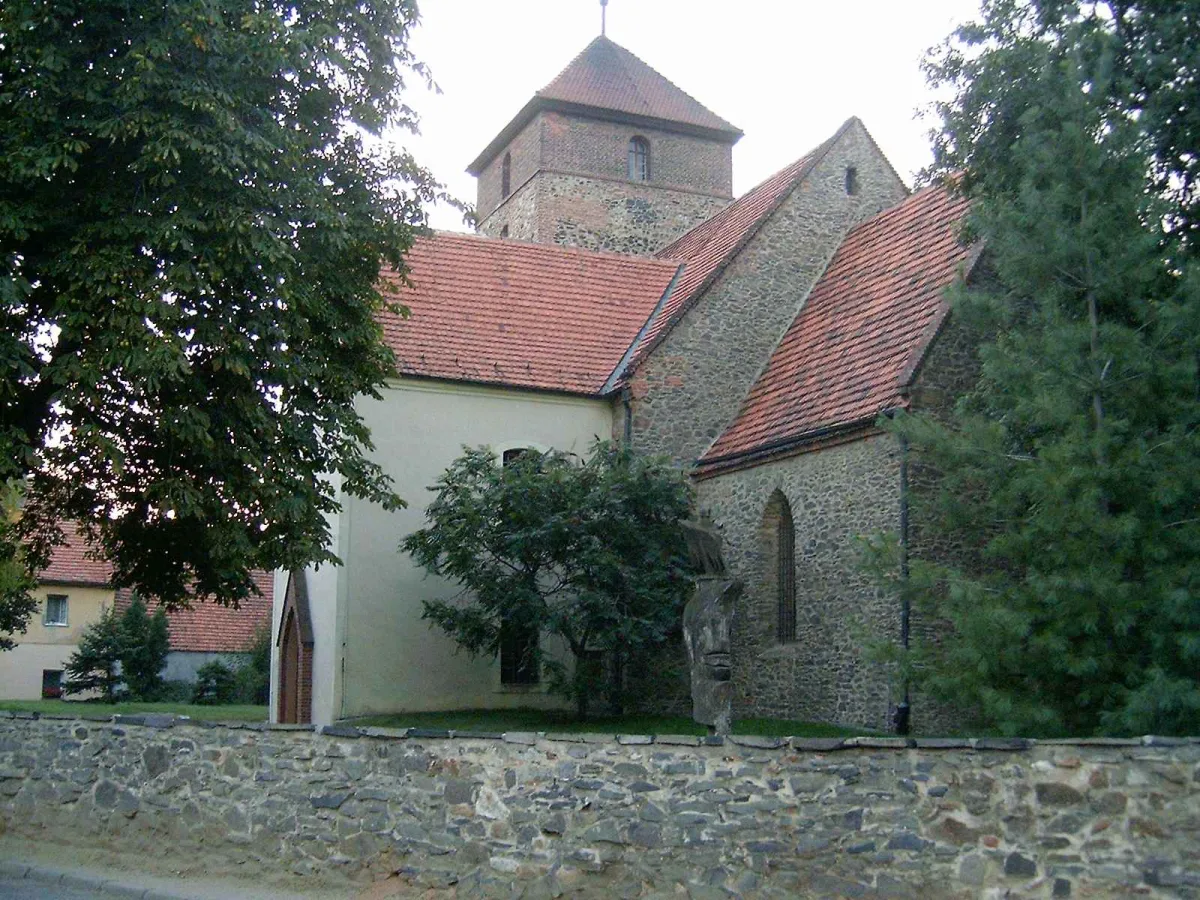
The first direction of the march was toward towns lying to the west and south-west of Wrocław, including present-day Opatowice (then Opperau) and Kąty Wrocławskie (Kanth). From there, some of the evacuees headed further, toward Świdnica and other towns in the region, hoping for the possibility of onward transport by rail deeper into Germany.
A significant proportion of the refugee columns from Wrocław eventually reached Dresden, then considered a safe city, far from the front line. It was a choice with tragic consequences: in mid-February 1945, shortly after Wrocław's refugees had filled Dresden's streets and railway stations, the city was destroyed in Allied bombing raids. How many of the people fleeing Wrocław died in Dresden at that time cannot be established today - none of the available sources gives such a figure.
How many people did not survive the march
The number of casualties of the January evacuation is one of the most disputed points in the history of the siege of Wrocław. Polish-language studies, including Polish Wikipedia and historical texts devoted to the capitulation of Festung Breslau, give an estimate of around 90,000 people who died during the march, from frost, exhaustion and disease. This is a high figure relative to a city that then had around a million inhabitants, and would require that almost one in ten of the people covered by the evacuation died.
English-language Wikipedia, describing the same event, is far more cautious and speaks only in general terms of "many thousands" who died during the makeshift evacuation, without giving a specific figure. This discrepancy, between tens of thousands and a vaguer "many thousands", shows how uncertain the data are from the final months of the war on this stretch of the front: no systematic record of refugee deaths was kept at the time, and some of the victims died outside Wrocław, in Dresden or along the way through other towns, making them hard to attribute unambiguously to the evacuation march itself.
Those who stayed in the city
Not everyone managed or wanted to leave Wrocław in January 1945. Some residents stayed because of military duties or work deemed essential to the defence, while others did not manage to leave before the Red Army closed the encirclement of the city, which happened in the following days of February. Those who remained then spent more than three months under artillery fire and air raids, amid growing hunger and destruction, until the garrison capitulated on 6 May 1945, a few days after the capitulation of Berlin.
Detailed data on how many of the civilians who remained in the city died during the siege itself, as distinct from the victims of the January march, are not given unambiguously by the available sources - this is another thread of the story that remains untold in full.

Be the first! Add a comment.
You need to log in to add a comment.
Log in