
One town on both banks of the river
Until 1945 Zgorzelec did not exist as a separate town. All the buildings along the Nysa Łużycka, on both its banks, formed a single urban organism called Görlitz - with a Gothic, Renaissance and Baroque old town, churches and tenement houses that had developed over the centuries as a single trading centre on the route between Saxony and Silesia. The right bank, today's Zgorzelec, was at the time one of the districts of this town, not a separate settlement.
A border on the river and blown-up bridges
The division came with the post-war settlements that set the Polish-German border along the Oder and the Nysa Łużycka. The right-bank part of Görlitz was incorporated into Poland and became a separate town, Zgorzelec, while the left bank remained on the German side as Görlitz. Even before this division, in April 1945, the retreating German troops blew up all the bridges over the Nysa Łużycka at this spot. The crossing that today links the two old towns, the Old Town Bridge, was rebuilt from scratch only in 2003-2004 and opened on 20 October 2004 - for nearly sixty years the residents of the two parts of the former town were cut off from each other by the river, with no direct pedestrian link at this point.
A treaty signed in a divided town
It was in Zgorzelec, in the town created by the division, that the border on the Oder and the Nysa Łużycka was confirmed by a formal international treaty. On 6 July 1950 prime ministers Józef Cyrankiewicz and Otto Grotewohl signed here the Treaty of Zgorzelec, the first legal recognition of the course of this border between Poland and the German Democratic Republic. The document applied at the time only to the GDR, so the final recognition of the border by reunified Germany came only after 1990, but it was in Zgorzelec that the division of the town and the country first received the status of a state treaty, rather than just a post-war fact on the ground.
People on two sides
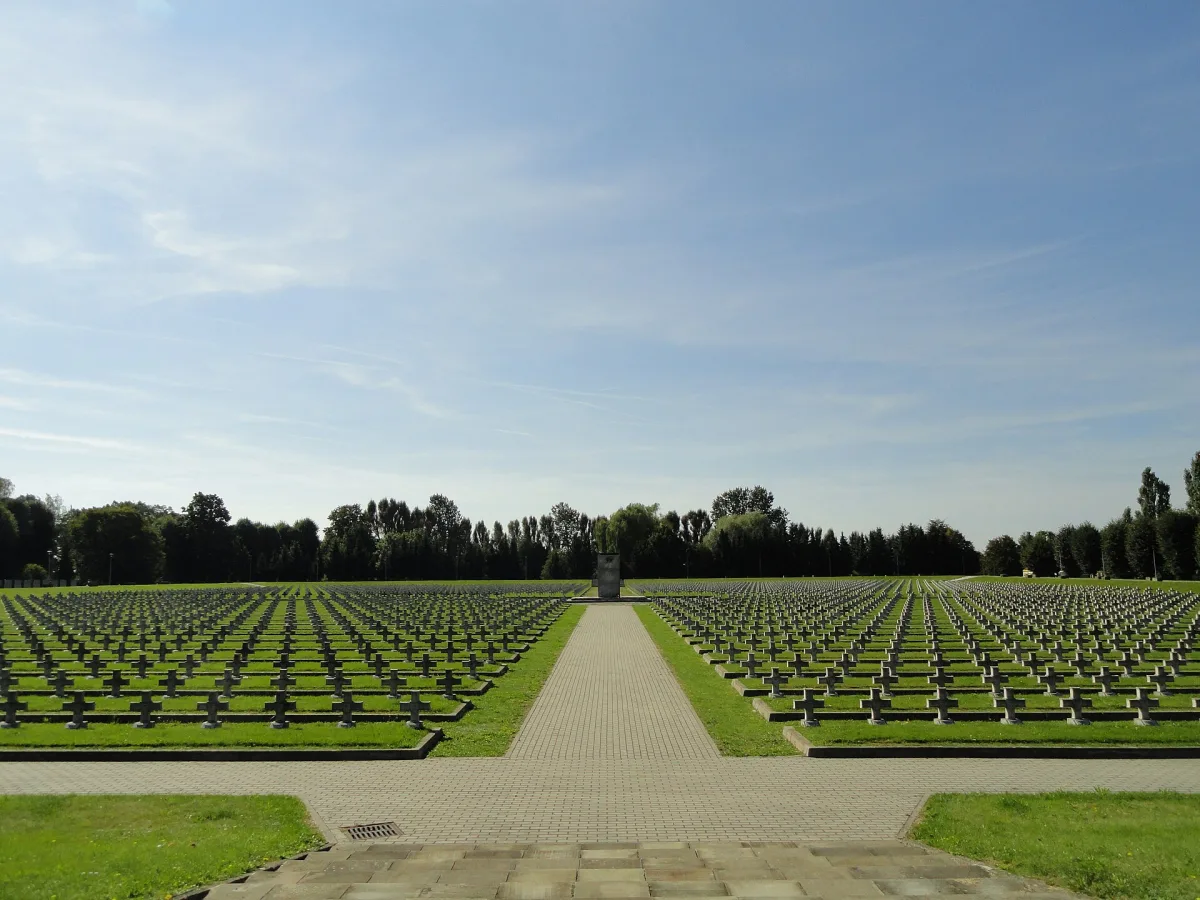
The division of the border also meant a division of the population. The former German residents of the right-bank part of the town were expelled westward, beyond the new border, and Polish settlers arrived in their place, occupying the abandoned houses and building Polish urban life in Zgorzelec from scratch. The fighting for the crossing of the Nysa Łużycka in the spring of 1945 cost the lives of soldiers of the Polish 2nd Army, forcing the river on their way to Dresden and towards Bautzen - their graves are today at the war cemetery on Bohaterów II Armii Wojska Polskiego street.
Two different faces of the former single town
The historic, Gothic and Renaissance old town of the former Görlitz lies on the western, German side of the river - it is there that most of the tenement houses with rich architectural detail, which survived the war without major destruction, are concentrated. Zgorzelec on the Polish side has a different character of buildings, though here too traces of the shared past have survived: on Plac Boehmego stands the house of Jacob Böhme, dedicated to the philosopher-mystic who once lived here (the portal describes him separately). On the Nysa Łużycka in Zgorzelec there also stands a 475-metre stone railway bridge from 1847, one of the longest of its kind in Poland - a witness to the times when both banks were still linked by a single piece of railway and road infrastructure, without any border.
A shared town after years of separation
Since 1998 the authorities of both towns have formally cooperated under an agreement known as Europastadt (Europe-town), with joint sessions of both town councils. Real freedom of movement across the bridge, however, came only with Poland's entry into the Schengen area on 20 December 2007 - from that day border checks on the bridge disappeared, and residents and tourists now cross between Zgorzelec and Görlitz without any control, as if they were merely crossing a bridge on a river within a single town. Today the two centres together number around 86,000 residents and increasingly promote themselves as a single tourist organism, even though they formally remain two towns in two different countries.
Görlitz as a film set
The well-preserved historic buildings on the German side have for years attracted film crews from around the world, looking for the setting of pre-war Europe without having to build sets from scratch. Görlitz has hosted filming for Quentin Tarantino's "Inglourious Basterds", for "The Book Thief" and "The Reader", and Wes Anderson used the town as the setting for a fictional Central European resort in "The Grand Budapest Hotel". Film cameras in the narrow streets of the old town are today as much an everyday sight for the residents of Görlitz and Zgorzelec as passers-by on the Old Town Bridge.

Be the first! Add a comment.
You need to log in to add a comment.
Log in