
The Saturday they never returned from
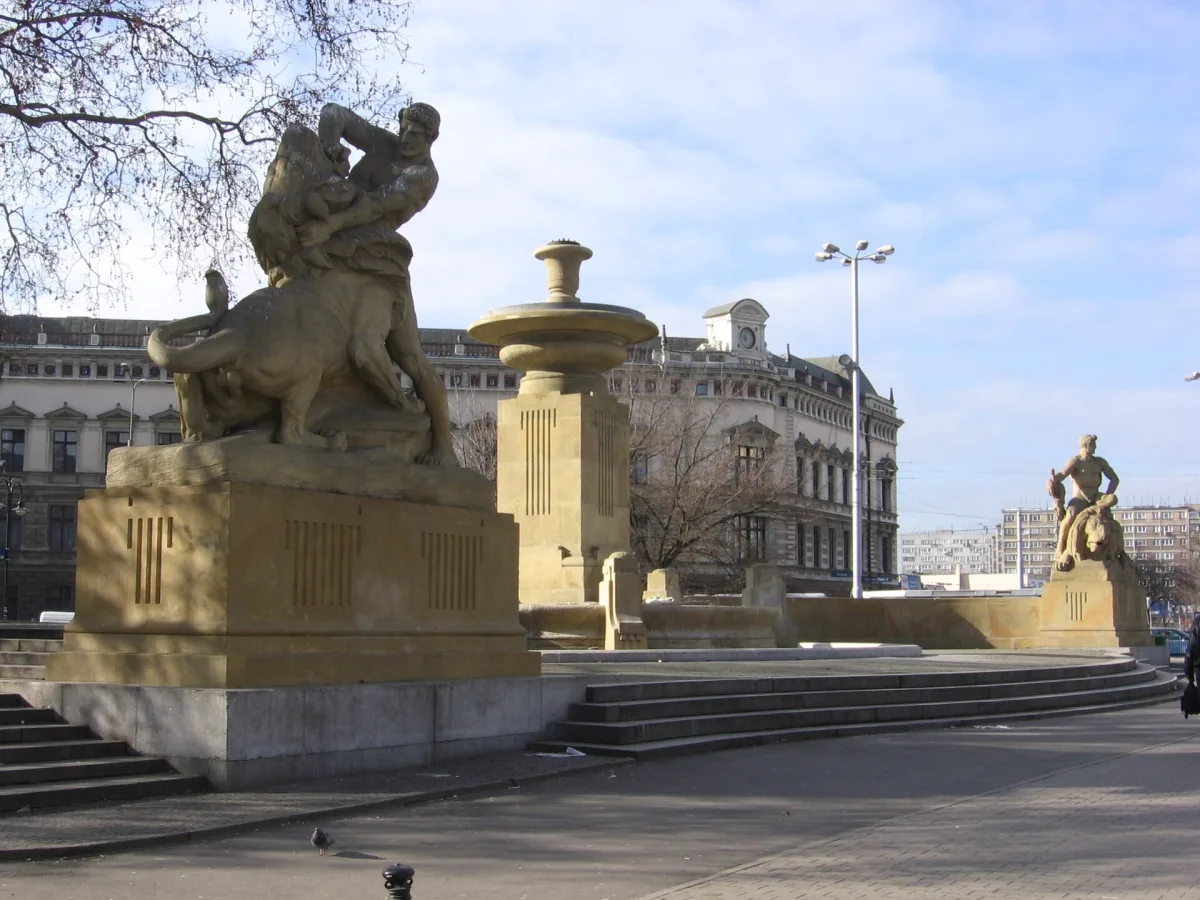
On 5 June 1926, on a Saturday afternoon, the grandfather of ten-year-old Erika and eight-year-old Otto Fehse asked his grandchildren to collect a parcel for him from the parcel post office. The family lived on the third floor of a tenement house near today's Plac Jana Pawła II, then called Königsplatz. The children were last seen that afternoon on Dominikanerplatz. They never came home.
Remains found in two places
A few days after the disappearance, dismembered remains of the children began to be found in the city - first near what was then the polytechnic, then in Szczytnicki Park, at the time called Scheitniger Park. On 7 June the children's grandfather received a parcel containing further remains of his granddaughter. The way the perpetrator or perpetrators had dealt with the bodies meant the case immediately made front pages across Germany.
An investigation that gave no answer
Ernst Gennat, head of the Berlin criminal police and regarded as one of the leading murder specialists in Germany at the time, travelled to Wrocław together with his deputy, who headed the murder division. Despite the experience of the investigators from Berlin, a lack of local contacts and months of work without results meant the case was shelved for several years. According to accounts of Gennat's career, the Wrocław murder case is sometimes cited as one of the biggest failures of his professional life.
A wave of accusations against Jews
Already in 1926 rumours were circulating in the city that the children's death was a ritual murder committed by Jews, and that the bodies had supposedly been drained of blood, allegedly needed to bake matzah for Passover. The right-wing press seized on these accusations, the police confiscated magazines publishing malicious articles on the subject, and a delegation of German Jews lodged complaints about the matter. The rumours of the time also featured an alleged Jewish butcher supposed to have committed the murder - he was never found, and the whole version remained an unproven rumour. None of these accusations was confirmed by the evidence.
Eight years later, in 1934, the Nazi newspaper "Der Stürmer" returned to the case, publishing in issue 32 an article claiming that the children's bodies had been found mutilated and drained of blood, and demanding that the investigation be reopened. The paper also cited a letter allegedly written by the children's grandmother, accusing "world Jewry". The police responded with a press conference at which the deputy head of the murder division stated that everything pointed to an ordinary sexually motivated killing rather than a ritual murder, and all copies of that issue of the newspaper were confiscated.
Suspects who could not be convicted
After 1934 the investigation returned to two names: Dr Arthur Engel, a thirty-five-year-old man, and Herbert Hoell, a thirty-two-year-old student from Bohemia. It was Hoell who aroused the greater suspicion - experts assessed him as a sadist, he lived in conditions described as extremely neglected, and a search of his belongings turned up around 6,700 postcards with notes and 1,230 loose slips of paper with the addresses and names of Wrocław children, among which the name Erika appeared repeatedly. Witnesses reportedly saw him in the company of children, but evidence sufficient to bring charges was never gathered. Hoell's guilt, like Engel's, was never proven, and the case formally remains unsolved.
The place in today's Wrocław
Neither Plac Jana Pawła II nor Szczytnicki Park bears any trace today commemorating the case of the Fehse siblings - they are simply ordinary, busy places in the centre and east of the city. The story itself, however, has survived in another, less comfortable context: it is sometimes invoked by neo-Nazi circles as a supposed example of ritual murder, even though the accusations against Jews had already been declared baseless by the police in the 1930s. Some accounts also suggest that the Wrocław case may have been one of the inspirations for Fritz Lang's 1931 film "M", about the hunt for a child murderer - this, however, is an interpretive link that the director never confirmed outright.
Be the first! Add a comment.
You need to log in to add a comment.
Log in