
Where the story of the train full of gold came from
Legend has it that at the end of 1944, as the eastern front approached Lower Silesia, an armoured train set off from Wrocław towards Wałbrzych. It was said to be carrying valuables, works of art and documents evacuated ahead of the advancing Red Army. The train never reached its destination: it is said to have vanished in one of the railway tunnels in the Owl Mountains, roughly around the 65th kilometre of the Wrocław - Wałbrzych route.
For decades this version of events circulated as a loose story, but it owes its concrete shape to one man. In 1953 Herbert Klose was arrested and testified that he had taken part in transporting around 1.5 tonnes of gold from the Wrocław police headquarters. The historian Tomasz Bonek later established that it was Klose who effectively invented the legend of the golden train, most likely to divert suspicion from himself in another case. Today it is treated as an urban legend with no confirmation in the documents.
Searches during communist Poland
The subject resurfaced many times before becoming a media sensation. As early as the 1970s the Security Service (SB) took an interest in it, with the search led by Major Stanisław Siorek. In 1977 Tadeusz Słowikowski and Piotr Kruszyński received official permission to carry out field research. In the 1980s the SB searched eleven sites in the Wałbrzych area, finding no trace of any treasure at any of them.
The only concrete find from this period, in fact, has nothing to do with the train: in November 1982 a metal tube containing more than 1,300 silver and gold coins, with a combined weight of over 6 kilograms, was dug up near the monastery in Lubiąż. This shows that the region genuinely does hold wartime deposits, but it explains nothing about the train itself.
2015-2016: ground-penetrating radar, the conservator's statement and the excavation
The matter gained momentum in 2015, when two treasure hunters, Piotr Koper and Andreas Richter, reported the alleged location of the train to the authorities, citing a map from a retired miner and the results of ground-penetrating radar surveys. On 28 August 2015 Piotr Żuchowski, the chief conservator of historic monuments, publicly stated that the train probably existed. This statement, cautious as its wording was, triggered an avalanche of interest from media around the world and a wave of tourists to Wałbrzych and the surroundings of the alleged search site.
Earthworks with excavators began in August 2016, despite the conservator's earlier opinion. After several weeks of digging, no trace of the train or of the tunnel it was supposed to be hiding in was found.
What the research actually showed
The key question was whether the signal detected by the radar actually indicated an underground structure. Scientists from the AGH University of Science and Technology analysed the data and concluded that the detected anomaly was a natural rock formation, not a tunnel or a railway carriage. In 2022 a further analysis was carried out, this time of documents and aerial photographs from 1944. No trace was found, in the area of the alleged tunnel, of any construction work on the scale needed to hide a train.
A separate blow to the foundations of the legend came from archival research. The historian Tomasz Bonek showed, on the basis of German documents, that gold from the Berlin Reichsbank was never brought to Wrocław in any significant quantity, even though, according to the story, it was precisely this gold that the train was supposed to be carrying. There is thus no evidence for the train itself, while the basis for its alleged cargo is also weakening.
Why the legend persists despite the negative results
None of the research carried out, whether by radar, by excavation or in the archives, has confirmed the existence of the golden train. Yet the story has all the ingredients that let urban legends live a life of their own, regardless of the facts: the chaos of the last months of the war, real cases of valuables being hidden by the retreating German authorities, genuine underground structures built in the same period and region (such as the unfinished Riese complex in the nearby Owl Mountains, which has its own separate story), and one public, ambiguous statement by a state official. On top of this there is a dense network of real, old railway tunnels and mining adits in the area, which makes such stories easy to believe, since something of the kind genuinely does exist underground.
What this story did for Wałbrzych
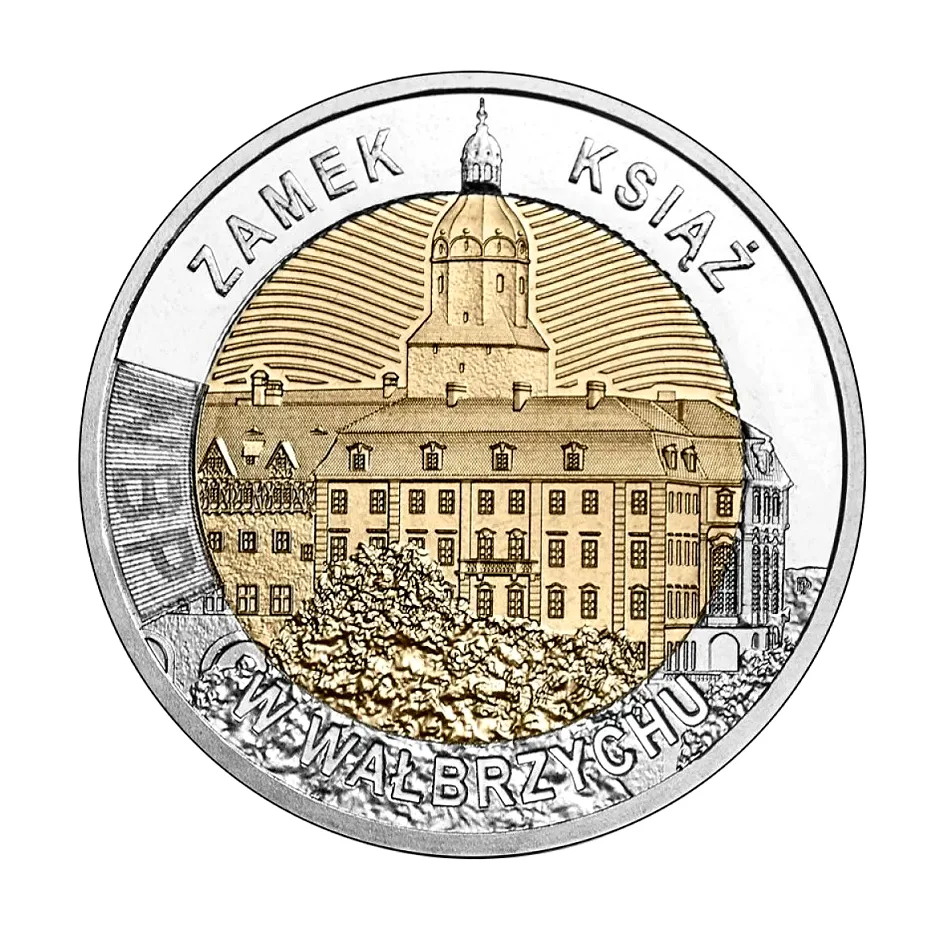
Regardless of the outcome of the search, the golden train story gave Wałbrzych something it had previously lacked: recognition in the national and international media. At the peak of interest, in 2015 and 2016, journalists and tourists flocked to the town and its surroundings, and local tourist information points recorded a rise in visitors. The town, previously associated mainly with coal mining and Książ Castle, gained an extra reason for people to search for it online. The local press considered the matter closed after the failed excavation in 2016, but the question itself, whether something really is buried in the Owl Mountains, keeps returning with each new anniversary and publication.
For visitors who want to see real, documented underground spaces from the same period and region, rather than the hypothetical ones, a good starting point is the Stara Kopalnia Science and Art Centre in Wałbrzych, a former coal mine that today shows what the digging of tunnels under this town actually looked like.
Be the first! Add a comment.
You need to log in to add a comment.
Log in