
Two digs in the same spot
The Środa Śląska treasure came to light in Środa Śląska twice, three years apart, in the same spot on today's Daszyńskiego Street. The first time, in June 1985, workers digging foundations for a telephone exchange building came across a clay jug filled with silver coins from the 14th century - Prague and Meissen groschen. The find went to the Archaeological Museum in Wrocław, and the building site seemed to have been fully explored.
It turned out otherwise. On 24 May 1988, almost in the same spot, a digger uncovered a second, much richer part of the treasure. This time chaos broke out on the site: on hearing about the gold, dozens of people rushed onto the plot and snatched coins from each other's hands, while some of the rubble from the dig had already been carted off to a landfill before anyone realised what had happened. Treasure hunters later combed through the spoil heap and recovered another batch of coins, and archaeologists from Wrocław added their own find from the building site to the total.
A crown, coins and jewellery from seven hundred years ago
In total, close to eight thousand silver coins and several dozen gold ones were recovered from the ground - sources give slightly different figures, ranging from 3.9 to almost 7.7 thousand silver pieces, depending on whether they count only the recovered specimens or also the coins bought back from finders in later years. Alongside the money, the treasure included elements of a gold Gothic wedding crown - eight segments topped with eagles, to which one more recovered piece was later added - as well as a round clasp decorated with a cameo, pendants with Italian and Balkan motifs, a bracelet, three ornamental rings and a narrow strip of gold sheet.
It was the crown that made the Środa Śląska find one of the most valuable treasures discovered in post-war Poland. Popular publications today put its value at several hundred million złoty, though the figures given vary and are only approximate - it is hard to put a price on an object that is not meant to be sold.
Whose crown was it
Several hypotheses have grown up around the crown's owner, none of which is today considered certain. The most frequently cited one links the jewels to Charles IV of Luxembourg, the future Holy Roman Emperor, and his efforts to secure the imperial crown in the mid-14th century. On 28 October 1348, a wealthy Jewish resident of Środa Śląska named Mojżesz (Moses; in German sources Mosche) received from the authorities the right to a three-year stay in Lower Silesia in exchange for lending Charles the capital for this dynastic campaign. According to this version, the jewels, including the crown, came into Mojżesz's hands as security for the loan.
The crown itself is also sometimes linked to Charles IV's wife, Blanche of Valois, who died in 1348, or to another noblewoman of the period - some researchers point to the dowry brought by Anna of Świdnica on her marriage to Charles IV. Further circumstantial evidence comes from one of the rings, decorated with sun and moon symbols, in which some historians see an encoded form of the name Mojżesz. None of these hypotheses can be confirmed with full certainty today - the treasure left behind no document that would settle the question of ownership.
Why the treasure was hidden in the first place
The mid-14th century was, across Europe, a time of the Black Death epidemic and a wave of pogroms in which the Jewish inhabitants of towns were blamed for the plague. In these circumstances, burying wealth in the ground was a rational precaution, not a whim. One hypothesis links the treasure's hiding place to the vicinity of a former synagogue - the name of today's Daszyńskiego Street is said to derive from a Hebrew term for a rabbi, which would suggest that a Jewish community lived in this part of the town. Mojżesz, the owner or custodian of the valuables, most likely died in the unrest of the period and never returned for his deposit, which lay in the ground for more than six hundred years.
What happened to the treasure after its discovery
The fate of the treasure after 1988 is itself a story full of twists. Some finders concealed and kept gold items for themselves, fearing that the authorities would simply melt the valuables down for bullion. In August 1988, the culture minister of the time proposed buying back the remaining items from finders at three times the value of the raw metal, to encourage people to hand over the jewels intact rather than as molten gold. Even so, some elements of the crown circulated outside museum records for years. Only in 2005, thanks to police and special services operations, was another batch of the precious items recovered from two residents of Toruń who were trying to sell them - both received suspended prison sentences and fines.
Where the treasure can be seen today
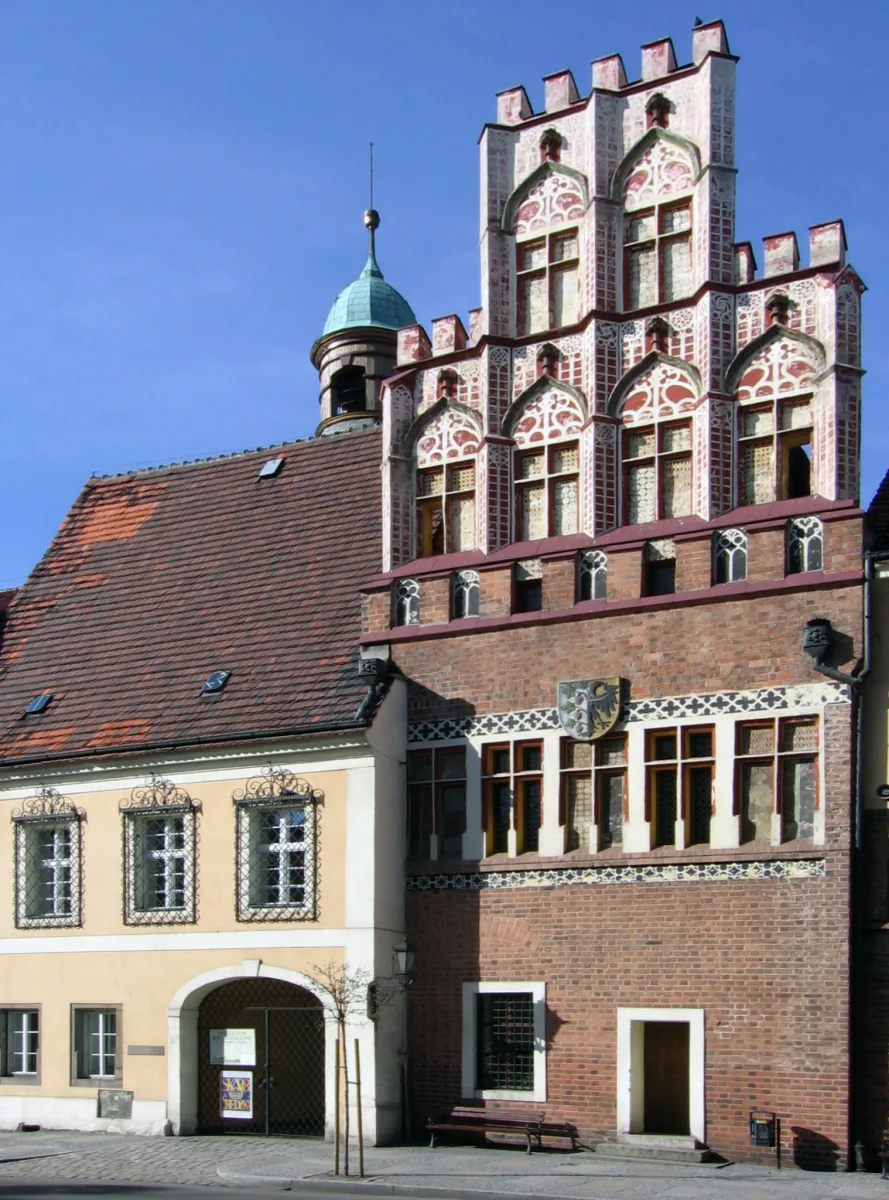
Elements of the Środa Śląska treasure are today scattered among several institutions in Lower Silesia: part of the collection is held by the Archaeological Museum in Wrocław, part went to the National Museum in Wrocław, and a section of the display can be seen at the site of the find, in the Regional Museum in Środa Śląska, housed in the historic Old Town Hall. It is this local display that lets visitors see the treasure in the context of the town where it lay in the ground for more than six centuries, and where questions without a final answer are still not in short supply.
Be the first! Add a comment.
You need to log in to add a comment.
Log in