
Two figures, two elements of the Sudetes
Liczyrzepa and Skarbnik are the most recognisable figures of Silesian and Sudetes folklore, but they rule over different elements. Liczyrzepa, also known as the Spirit of the Mountains, presides over the Karkonosze (Giant Mountains), their forests, rocks and weather. Skarbnik belongs to an entirely different world: the underground of mines, where coal miners had worked for generations. What unites the two figures is that in folk imagination neither was straightforwardly good or evil - both could help, but also punish severely, depending on how the person who met them behaved.
Liczyrzepa: a name meant to offend
The German name of the Spirit of the Mountains, Rübezahl, functions in Polish tradition as Liczyrzepa, but the name itself has long been disputed among researchers. The best-known legend explains it like this: the Spirit of the Mountains, in love with an abducted princess, tried to win her favour by turning the vegetables in a garden into flowers. The girl, looking for a way to escape, asked him to count all the turnips growing in the garden before he proposed to her. Busy counting, the spirit failed to notice the princess slipping away from the underground chamber, and the nickname Liczyrzepa (literally "turnip-counter") was meant to offend and irritate him from then on.
This, however, is a story that - as the authors of the historykon.pl portal point out - arose after the name Rübezahl was already in use in the region, not the other way round. The legend of the turnips was meant to explain an already existing, unclear name, not to be its source. Researchers propose a different etymology: according to them, the German name may have come not from Rübe (turnip) and zählen (to count), but from Rabe (raven) and Zabel or Zagel, meaning devil or tail. In this reading, Liczyrzepa had nothing to do with vegetables, and his name was rather a distorted term for a demonic, animal-like spirit of the mountains. Neither version, however, has the status of an established fact - it remains a dispute between hypotheses in ethnographic literature, not a settled matter.
From fearsome demon to literary hero
Before Liczyrzepa found his way onto tourist souvenirs, for centuries he featured in stories as a figure who commanded respect and fear: a guardian of the mountains and the treasures hidden within them, capable of bringing a storm down on a traveller who disrespected him, but also of helping one who treated him with respect. A turning point in the history of this figure was the literary treatment by Johann Karl August Musäus, who in his collection "Volksmärchen der Deutschen" (1783) made Rübezahl one of the central figures of German folklore. It was from this point that the folk tales began to circulate in written form, further removed from the original oral accounts of the Sudetes highlanders and shepherds.
Skarbnik: the conscience of the mine's depths
In the coal mines of Silesia and Wałbrzych, people told of an entirely different spirit - Skarbnik, depicted as a bearded pit foreman with a miner's lamp on his forehead. Unlike the Spirit of the Mountains, who ruled the open landscape, Skarbnik accompanied miners in the dark galleries, where danger was real and everyday: cave-ins, methane explosions, fires. According to tradition, he warned those who worked honestly of such dangers, while punishing and leading to their doom miners who were lazy, careless or dishonest towards their fellows.
One surviving tale tells of a boy whom Skarbnik is said to have treated with bread that gave strength for work and supported through the hardships of the miner's trade, as a reward for honesty. Skarbnik is not solely a product of the Silesian imagination - similar figures of guardian mine spirits appear in stories from other mining regions too, for example from the Wieliczka salt mine, which shows that belief in a being watching over the safety of the underground accompanied miners regardless of whether they extracted coal, salt or metal ores.
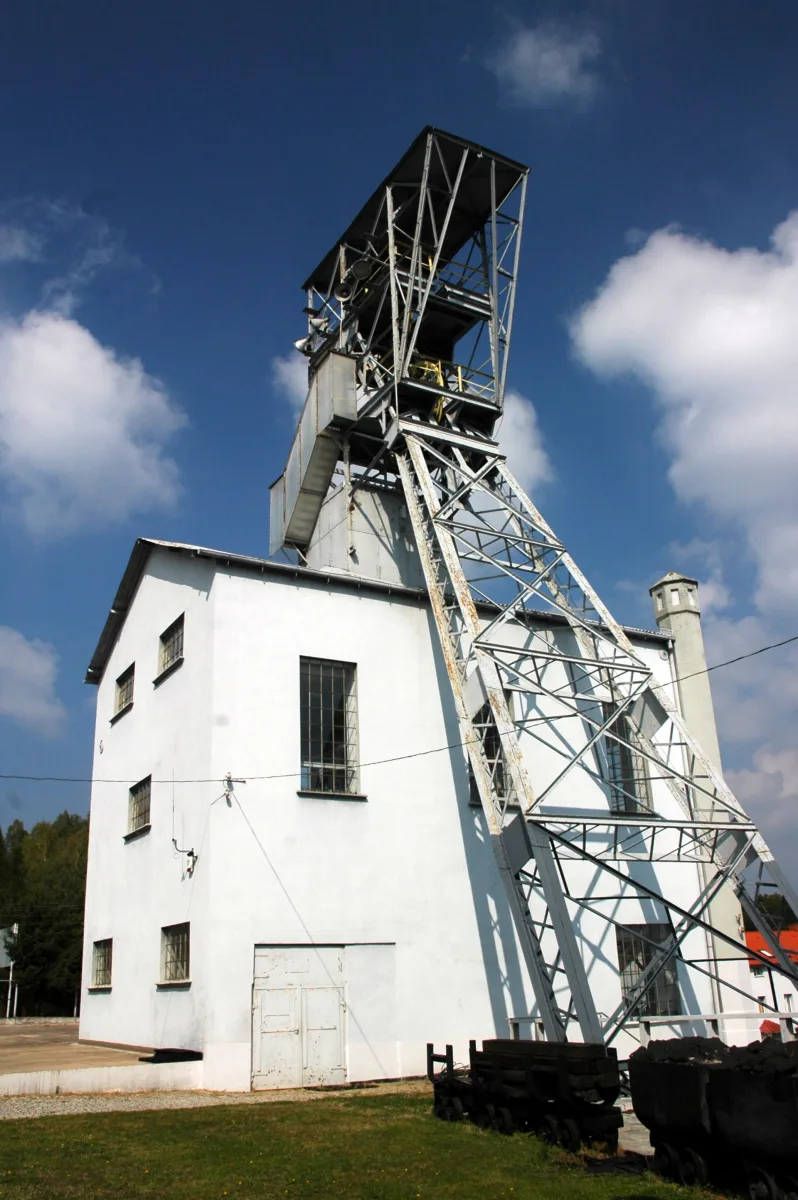
Behind these stories lies a very real world. In the Wałbrzych Mountains and the Owl Mountains, coal mines operated for decades, such as the Teresa Coal Mine in Wałbrzych, working from 1864 to 1991. It was in such workplaces, under difficult and dangerous working conditions, that the need arose to believe in a protective force that understood the underground better than any human could.
The Spirit of the Mountains and Skarbnik in tourism today
Today both figures function mainly as symbols of the region, far removed from the old respect and fear. Liczyrzepa's image appears in mountain shelters, on trail signs and as souvenirs sold in Karpacz or Szklarska Poręba, and monuments to him stand on both sides of the border: in Poland, the Czech Republic and Germany. In 2011, an interactive exhibition devoted to the Spirit of the Mountains and local legends opened in Karpacz, and a permanent display about Liczyrzepa also operates at the Karkonosze Museum in Jelenia Góra. He comes most fully to life at the Castle of Silesian Legends in Pławna Dolna, where a string puppet theatre stages performances based on Karkonosze tales, with the Spirit of the Mountains in the leading role. A former fluorite and uranium mine in Kowary was also named after him, now open as an underground tourist route called the Liczyrzepa Mine.
Skarbnik has a more modest presence in the region's tourism than the Spirit of the Mountains - he has not received his own monuments or museum exhibitions comparable to those in the Karkonosze, and more often remains a character in guides' stories, recalled while visiting old mine workings. Yet both figures share the same phenomenon: Silesian and Sudetes folk tradition, which for centuries explained the dangers of the mountains and mines through the existence of a being watching over human fate, lives on today as an element of the region's identity, drawn on by museums, inns and the creators of local attractions.
Be the first! Add a comment.
You need to log in to add a comment.
Log in