
Monasteries and Guilds: the Beginnings of a Tradition
Brewing in Lower Silesia goes back to the Middle Ages and began mainly in monasteries. Monks brewed beer for their own needs, but also for the local population, using local barley, hops and spring water. Regulations aiming to standardise brewing methods already appeared in the 15th century, and towns set up guilds of maltsters and brewers, which watched over quality and decided who had the right to produce beer for sale. In Jelenia Góra such a guild was founded in 1778, and earlier still, in 1360, Duke Bolko II granted the town a privilege to produce malt and brew beer. Similar municipal privileges, granted together with town charters, were common across the region and went back as far as the 13th century, as in the case of Lwówek Śląski, where brewing traditions at the castle are linked to the year 1209, and, according to a less certain account, even to 1165.
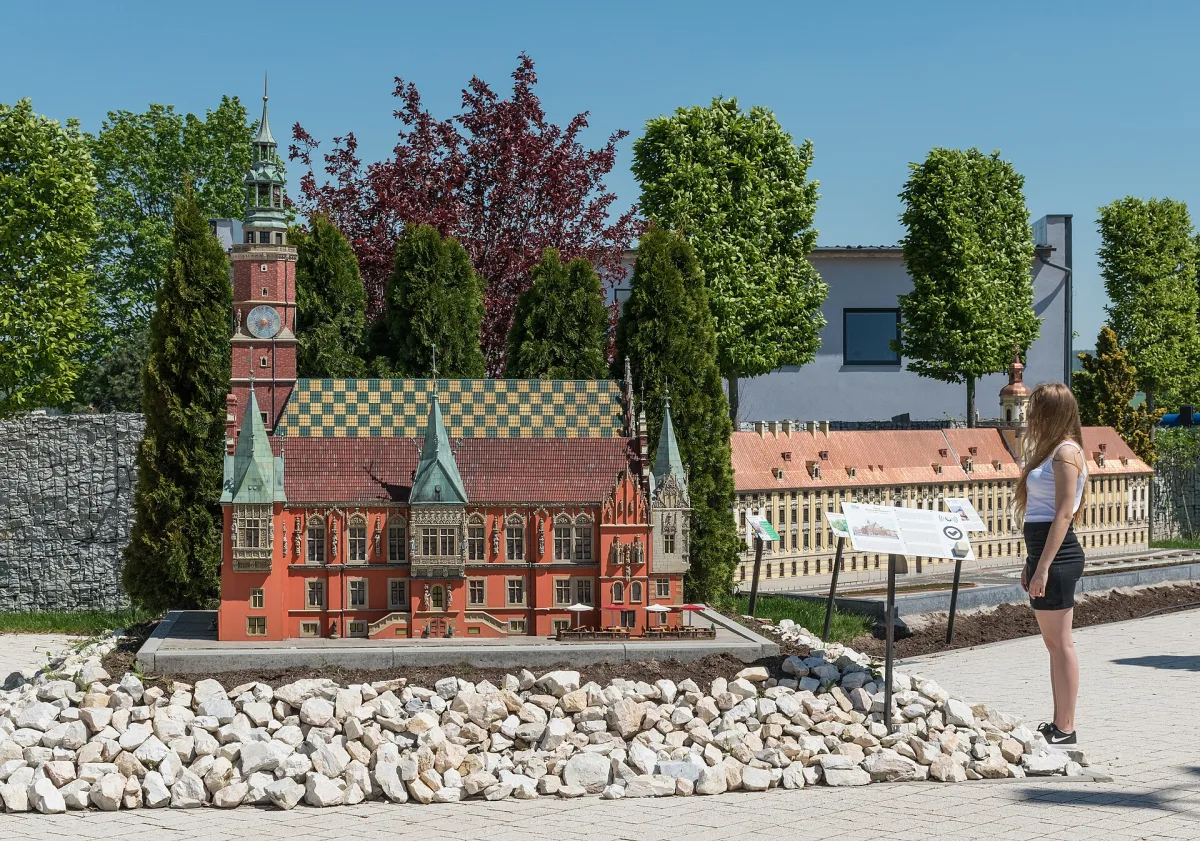
The fame of Świdnica beer, regarded from the 13th to the 15th century as the best drink in Silesia, gave rise to a network of Świdnica beer cellars, set up in towns across the region as outlets for that particular beer. The oldest of them, in the Wrocław town hall, has been operating continuously since 1273.
The 19th Century and the Era of Great Breweries
The industrial revolution changed the scale of production. Towns such as Wrocław, Legnica and Wałbrzych became centres of industrial brewing, and the proximity of the Czech lands encouraged the adoption of Czech bottom-fermentation techniques, characteristic of lager-type beers. Output at the factories grew, but the old, scattered local production and the individual recipes of particular small towns receded into the background.
The scale of this scattered network is well illustrated by pre-war Wałbrzych, where seven breweries operated at the same time. It was similar in Jelenia Góra, where three breweries were active until 1945, and the first private one was opened in 1811 by Gottfried Puschmann, a year after the guild monopoly on beer production was abolished.
After 1945: Nationalisation and Slow Decline
After the Second World War, the state took over most of the small and medium-sized breweries in Lower Silesia. Production was concentrated in a few large plants, and the scattered, local network of brewhouses in smaller towns largely ceased to exist. Traditional, local recipes and beer styles, once known in almost every small town, disappeared as one brewery after another closed.
Wałbrzych is a symbol of this process: of the seven pre-war breweries, only one survived the war, on what is now Aleja Wyzwolenia, brewing beers under the names Jasne Górnicze and Górski Zdrój. This plant was closed in 1978, bringing to an end the town's brewing tradition spanning several centuries. A similar fate, though spread over a longer period, befell other municipal breweries in the region - the large industrial plants survived communist Poland, but after 1989, faced with new competition and industrial restructuring, one after another ceased operating. In Wrocław, two large plants were founded in 1894, Browar Piastowski (the Piast Brewery) and Browar Mieszczański (the Burgher Brewery). The first, after years of exporting beer during the communist period, was closed in 2004 after being taken over by a large brewing group. The second stopped brewing beer at roughly the same time, and its old buildings began a second life as a centre of alternative culture.
Revival: Small Breweries Return to Towns and Villages
From the 1990s, and more clearly from the turn of the century, small-scale beer production began to revive in Lower Silesia. New, small breweries focus on the quality of their ingredients and on locality, often referring directly to the pre-war traditions of the towns where they are set up. This is a reversal of the direction in which brewing had developed throughout the 20th century: instead of further concentrating production in large plants, the region is returning to a scattered model, closer to the one that existed before nationalisation.
Part of this revival is also a return to beer styles associated with the region's old, German brewing tradition before 1945, when Lower Silesia belonged to the German-speaking lands with their own beer-brewing culture. These include wheat beers, drawing on styles typical of old Germany, and local sources also mention the name schöps, which some regional sources link to the Silesian brewing tradition, though the exact brewing method and history of this style are not well documented in the available materials. Drawing on such references is a way for small producers to try to recreate flavours that had practically disappeared from the market during the decades of communist Poland.
Restaurant Breweries
A separate phenomenon accompanying the revival of craft brewing is restaurant breweries: small installations brewing beer on site, at a food and drink venue, from which the drink goes straight to guests. This model combines production with tasting, without middlemen or transport, while also allowing the operators to experiment with small batches of beer and react more quickly to what works. In practice this means that craft beer can increasingly be tasted right at the table, straight from the tank, without buying a bottle to take away.
Beer Festivals and Celebrations
The region also celebrates the revival of small breweries in public. In Świdnica, a town whose beer was famous across all of Silesia centuries ago, a beer festival is held every year at the end of summer, at which craft breweries from all over Poland present themselves, and the drinks brewed on site partly draw on old, traditional recipes. Events of this kind combine tastings with live music and local food products, turning the town's market square for one weekend into a meeting place over beer. Similar, smaller beer events are also held regularly in other towns in the region, usually in the summer and early autumn months, when the weather favours outdoor gatherings.

Be the first! Add a comment.
You need to log in to add a comment.
Log in