

The privileges that gave rise to Silesian brewing
The right to brew beer in Lower Silesia was in the Middle Ages a town privilege, granted by dukes together with town rights. The oldest such case in the region, and according to some sources in the whole of Poland, is considered to be Lwówek Śląski, to which in 1209 Duke Henry the Bearded granted the right to brew beer freely within the town mile. Brewing traditions at the local castle reportedly go back even further, to the year 1165, though this date rests on tradition rather than a document. The town made use of a monopoly on beer sales within a mile of its walls, which in practice eliminated competition from the surrounding villages.
Similar privileges were granted to further towns of the region. In Jelenia Góra a document survives from 1360, in which Duke Bolko II allowed the town to produce malt and brew beer. The right to brew usually went hand in hand with town rights and accounted for a significant part of a town's income, since beer was at the time the basic drink, consumed more often than water.
Świdnica beer and its trading reach
No other Silesian beer achieved the fame of Świdnica beer. From the 13th to the 15th century it was regarded as the best drink in Silesia, and its renown reached far beyond the borders of the Duchy of Świdnica. In Wrocław, a right granted by Duke Henry IV Probus in 1273 reserved the sale of Świdnica beer exclusively to town hall cellars, which gave rise to a network of so-called Świdnica cellars established in towns across the whole region and even beyond it. The trade in Świdnica beer was profitable enough that towns willingly built separate premises under their town halls intended solely for serving it.
The fame of Świdnica beer faded along with the decline of production in Świdnica itself, weakened by wars and changing tastes, and its place among the finest Silesian beers was gradually taken by drinks brewed elsewhere. This history of trade and the old Świdnica merchant class is told today by the Museum of Old Trade in Świdnica.
The Świdnica Cellar in Wrocław
The oldest and longest continuously operating Świdnica cellar is located beneath the Old Town Hall in Wrocław and has existed uninterrupted since 1273, making it one of the oldest continuously running restaurants in Europe. The first surviving bills for beer served there date from 1332. In the 15th century the premises were extended to a shape close to today's, and in 1519 they were connected by a tunnel to a brewery. The cellar covers almost 1,700 square metres, of which around 900 square metres are taken up by nine dining halls.
For centuries strict rules applied there: no card playing, smoking or swearing. Guests over the years included Frédéric Chopin, Johann Wolfgang von Goethe and Juliusz Słowacki, among others. In the 20th century the premises went through various uses, including in the 1960s when part of the rooms were turned into a club and cinema, and in 1997 the millennium flood seriously damaged it. A thorough renovation in 2017-2022 restored the Świdnica Cellar's character as a gastronomic and cultural venue.
Monastery breweries
Before brewing became an urban craft regulated by guilds, monasteries in Silesia also brewed beer. Monks brewed beer for their own needs and for pilgrims, and the standards of its production in the Kłodzko land in the early Middle Ages were set precisely by monastery breweries. Monastic beer production was at the time a phenomenon typical of the whole of central Europe - monastic orders had stable incomes, access to water and grain, and time to perfect recipes, which made them a natural base for the development of local brewing, before it was taken over by towns and brewing guilds.
The industrialisation of brewing in the 19th century
The 19th century turned Silesian brewing from a guild craft into an industry. In Lwówek Śląski, after fires destroyed the old town brewery, the plant was taken over by the Brewers' Brotherhood, and in 1861 it was bought by Julius Hohberg. In 1882-1892 he modernised production, introducing steam machines for making ice, and built one of the largest breweries in Lower Silesia. In Jelenia Góra, then German Hirschberg, the first private brewery was opened in 1811 by Gottfried Puschmann, after the abolition of the guild system of beer production - until 1945 three breweries operated there at the same time.
In Wrocław, the same period saw the emergence of plants that left a lasting mark on the city's landscape. The Piast Brewery began production in 1894 as a brewery-restaurant enterprise, and during the communist era its beer was exported to, among others, the Soviet Union, the USA and Australia. A similar path was followed by the Burgher Brewery, founded in 1894 on the initiative of the restaurateur Robert Hain. The scale of the Silesian brewing industry is well illustrated by Wałbrzych, where seven breweries operated before the Second World War, and after the war, until 1978, only one of them survived.
What remains of these plants today
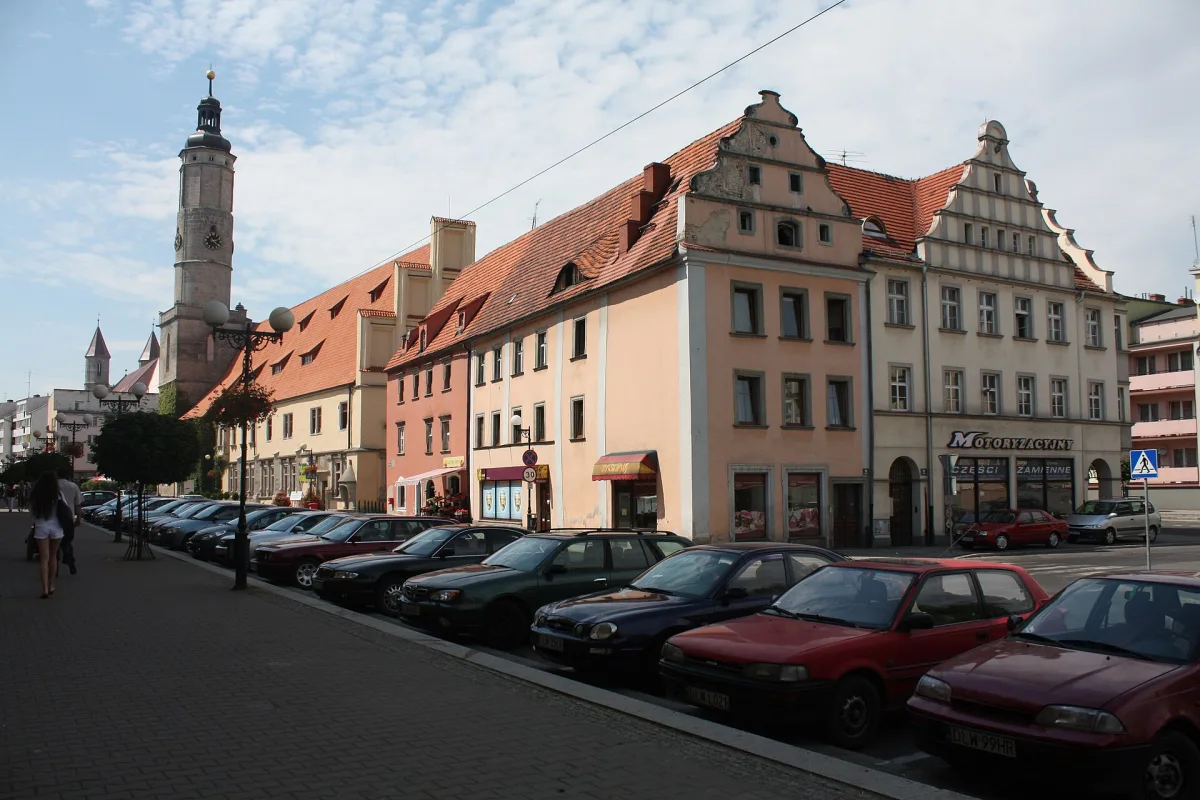
A large part of the former breweries have disappeared from production, but their buildings and history have survived in the region's landscape. In Lwówek Śląski, the historic complex of the former brewery has regained its brewing function and today also houses the Museum of Lower Silesian Brewing with a collection numbering several hundred historic exhibits, close to the near-medieval market square in Lwówek Śląski. In Wrocław, the former Piast Brewery, closed in 2004 after being taken over by the Carlsberg group, was converted into a residential and commercial complex, and the Burgher Brewery has since 2004 operated as a centre for alternative culture with a theatre and galleries. In places where the industry disappeared entirely, such as the declining Miedzianka in the Rudawy Janowickie hills, only ruins remain of the former brewery.
Traces of former brewing can also be seen in place names and local identity: the Świdnica Beer Festival gathers stalls from breweries across Poland every year, and the designated Lower Silesian Beer and Wine Trail leads tourists in the footsteps of past and present drink production. What is today sometimes called a revival of Silesian brewing in fact draws on a tradition more than eight hundred years old.
Be the first! Add a comment.
You need to log in to add a comment.
Log in