
Lower Silesia has more spa towns than any other region of Poland - seven towns with official spa status lie along the belt of the Sudetes, from the Kłodzko Valley to the Izera Mountains. There is no need to come here for a cure, however, to see what makes up the character of such a town. A spa park, a pump room, a promenade and architecture from the turn of the 19th and 20th centuries create a landscape that can be explored in a few hours, and each of the spa towns has its own particular flavour.
What makes up a spa town
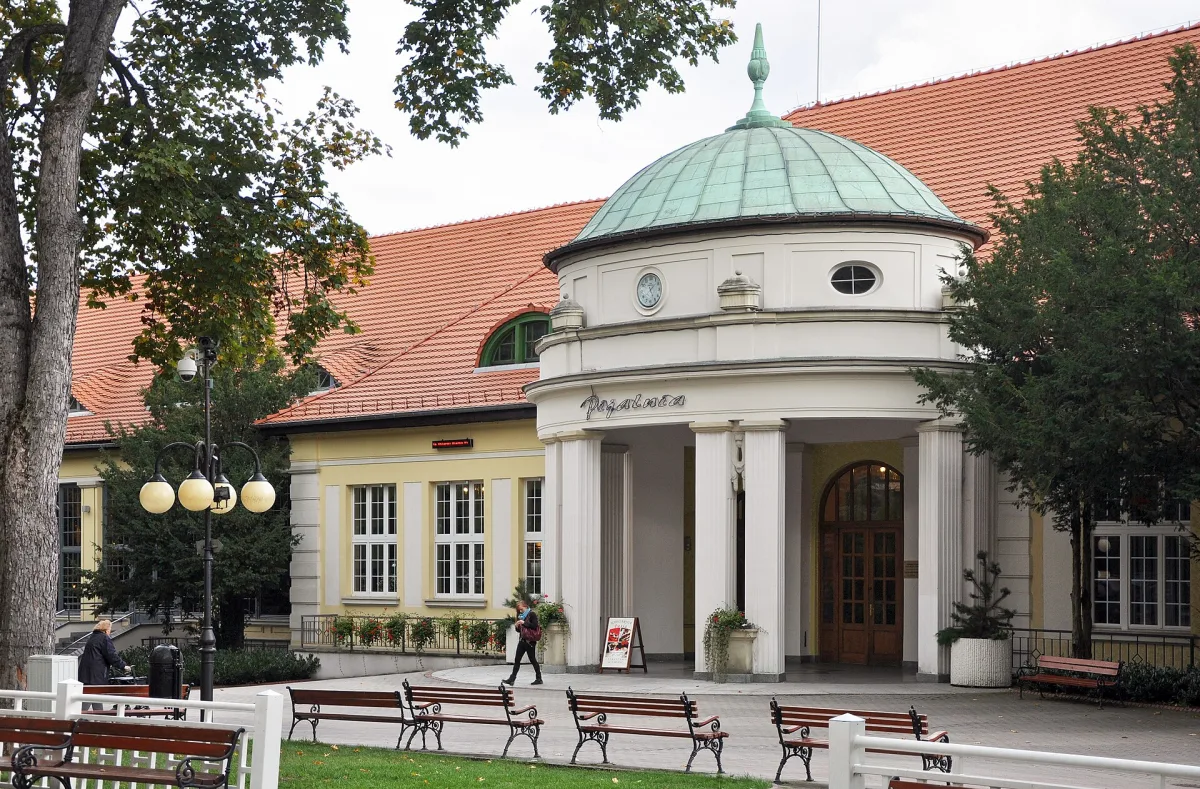
The layout of a Lower Silesian spa town repeats itself from one place to another, though each has different proportions. At its centre lies a spa park, usually laid out in the 19th century and later remodelled in the English style - with winding paths and freely arranged groups of trees instead of geometric flowerbeds. In or right next to the park stands a spa house or spa pavilion, sometimes with a spa theatre beside it. A separate element is the pump room, where patients drink mineral water straight from the spring, sometimes with a saline graduation tower nearby. Added to this are a walking hall for bad weather, sanatoriums from the turn of the century, and a promenade linking these points into a single route. In the Spa Park in Polanica-Zdrój this whole layout can be seen together: the "Wielka Pieniawa" sanatorium, a wooden bandstand, a pump room and a walking hall stand close to one another, with the Spa Theatre operating nearby.
The Kłodzko Valley: four spa towns in one valley
Nowhere else in Poland do spa towns lie as close together as in the Kłodzko Valley. Kudowa-Zdrój is described as one of the oldest spa towns in Europe, and the heart of the town is the Spa Park, with a mineral spring, a saline graduation tower and a pump room. Duszniki-Zdrój owes its fame to a visit by the young Frédéric Chopin - in the local spa park, right in front of the entrance to the Spa Theatre that bears his name, stands a monument to the composer, unveiled in 1976 during the Chopin festival still held in the town today.
In Polanica-Zdrój the Spa Park covers almost 13 hectares and is divided into five parts: Park Centralny, Park Leśny, Park Józefa, Park Szachowy and the area around the cardiology centre. A peat-mud spring has been used here for treatment since 1879, and the resort's growth was accelerated by the construction of the railway line from Kłodzko. The fourth town in the valley, Lądek-Zdrój, is among the oldest spa towns in Poland - a bathing facility already existed here in 1241. The John Paul II Spa Park has the "Wojciech" natural therapy facility, the "Dąbrówka" mineral spring with a temperature of just under 20 degrees, and a larch avenue laid out in 1782 on the initiative of one of the patients taking the cure at the time.
Szczawno-Zdrój and Jedlina-Zdrój at the foot of Chełmiec
The Henryk Wieniawski Spa Park in Szczawno-Zdrój is laid out in the English style and brings together therapeutic, walking and concert facilities in one place. It was founded in 1812 on the initiative of one of the physicians involved in developing the local spa, although as late as the mid-19th century it covered only 3 hectares - it was only later expanded to its present size. The neighbouring town of Jedlina-Zdrój, known until 1946 by its German name Bad Charlottenbrunn, owes its development to spa inspector Carl Beinert, who ran the spa in the first half of the 19th century and founded its spa park. Both towns lie at the foot of the Chełmiec massif in the Wałbrzych Mountains, from where a view stretches as far as Wrocław, 70 kilometres away.
Świeradów-Zdrój and Czerniawa in the Izera Mountains
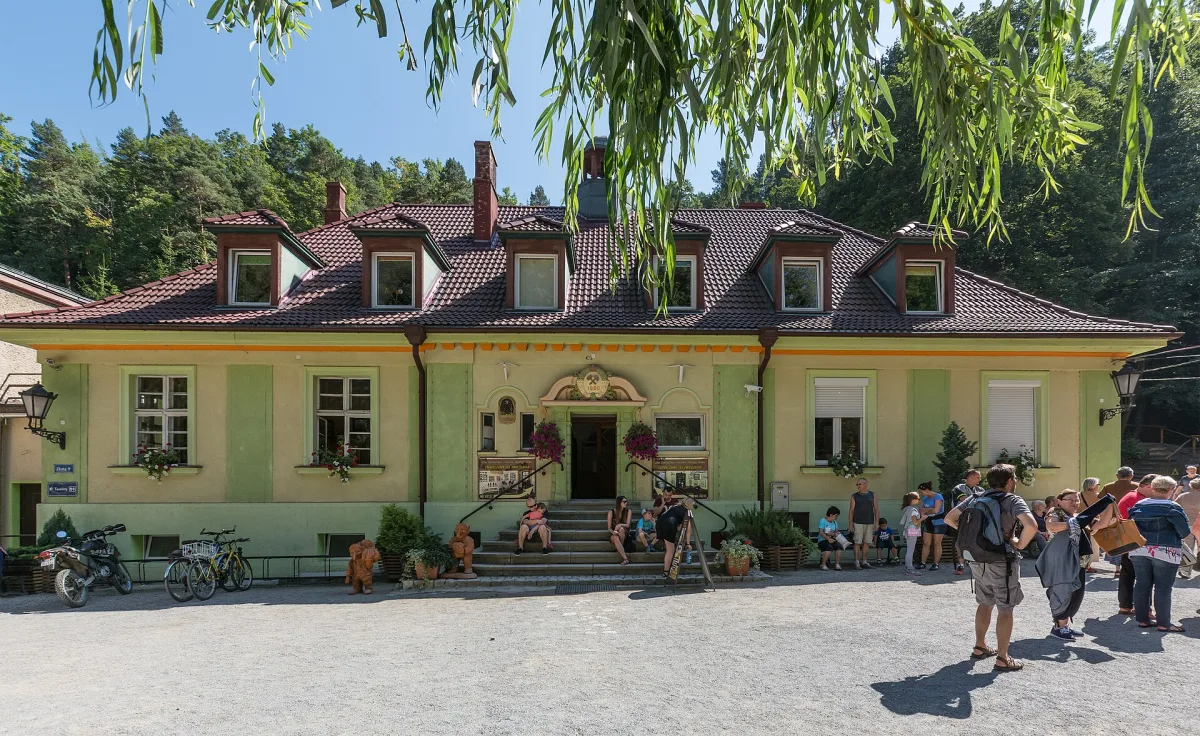
Świeradów-Zdrój is a mountain spa town in Lubań County, with a peat-mud treatment facility and a mineral spring named Dr Adam's Spring. The heart of the town is the Spa Park, laid out in 1898 to a design by the Wrocław architect Karl Grosser, who also designed the Spa House standing in the park. The park also contains a larch walking hall, described as the longest structure of its kind in Lower Silesia, an artificial grotto and a frog monument, a symbol of the discovery of the healing properties of the local springs. The cellars of the Spa House house the Spa Museum, with paintings on spa themes and mining exhibits, since Świeradów also developed as a centre of ore mining. On the other side of the town, in the district of Czerniawa-Zdrój, stands Czarci Młyn (the Devil's Mill) - a former water mill from around 1890, today a museum with an exhibition devoted to bread.
Długopole-Zdrój: the smallest and the most wooded
The Spa Park in Długopole-Zdrój covers as much as 30 hectares in the southern part of the village, considerably more than many an urban spa park, and combines the function of a walking park with a hub of mountain trails. It was laid out in 1819 and later enlarged several times, including with wooded areas on the other side of the Nysa Kłodzka river. The park contains a spa house, an amphitheatre, a pond with a gazebo and a grotto with a mineral spring, while wooden viewing terraces and boardwalks serve walkers.
Cieplice: a spa town absorbed by the city
Cieplice Śląskie-Zdrój is the only Lower Silesian spa town that has ceased to be a separate town - since 1976 it has been a district of Jelenia Góra. Its name and status come from the hot springs discovered there. In the local Spa Park stands a spa pavilion from the late 18th century and a spa theatre from 1836, built on the initiative of the Schaffgotsch family, owners of the Cieplice estate for centuries. The park covers 16.4 hectares, with trees covering two-thirds of its area - 78 species and varieties of trees and shrubs grow here, mainly small-leaved limes, Norway maples and English oaks. It was created on the site of a former vegetable garden recorded as early as 1713, and the park's main avenue was laid out in 1796, at the time the Schaffgotsch palace was being built.
How to visit the spa towns without taking a cure
Each of these towns can be seen in the form of a short walk: a spa park, a pump room or spa house, one or two turn-of-the-century townhouses. The Kłodzko Valley allows two or three spa towns to be visited in a single day, since Kudowa-Zdrój, Duszniki-Zdrój, Polanica-Zdrój and Lądek-Zdrój lie close together along the same valley. Szczawno-Zdrój and Jedlina-Zdrój are best combined with a climb up Chełmiec, from where a view opens out over the whole region. Świeradów-Zdrój and Czerniawa are suited to a longer mountain stay, since besides the spa park they also have trails into the Izera Mountains. Cieplice, in turn, is a spa town that can be seen as part of a walk around Jelenia Góra, with no need to plan a separate trip.
Be the first! Add a comment.
You need to log in to add a comment.
Log in