
Two big markets of the region, and how they differ
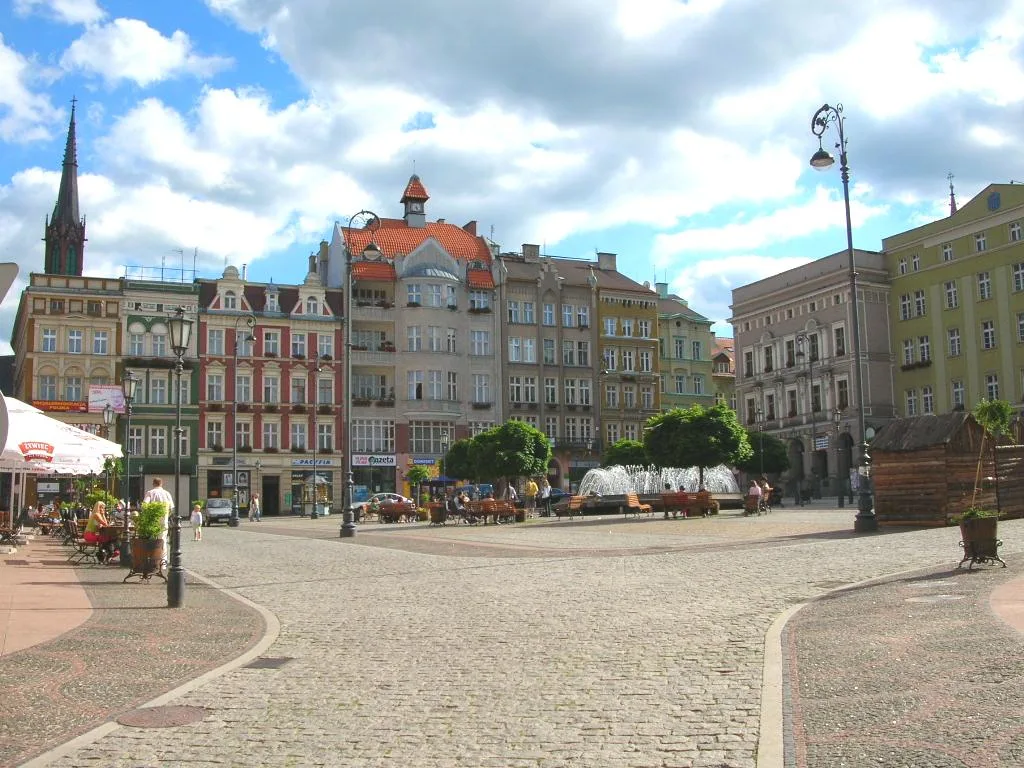
Besides Jelenia Góra, home to the oldest fair of its kind in the region, antiques in Lower Silesia are sought above all in Wałbrzych and Legnica. Both markets take place on the towns' main market squares, but they have different roots. The Market Square in Wałbrzych was a site of weekly markets back when a Baroque town hall still stood on it, so today's antiques exchange fits into the square's centuries-old function as the town's trading centre. The Market Square in Legnica, split into the Duży Rynek and Mały Rynek (Large and Small Market Square), hosts a fair organised since 2003 by the Towarzystwo Miłośników Legnicy Pro Legnica (Friends of Legnica Society) - a much younger and more formalised initiative, with one fixed organiser behind the event.
Sources differ on how often the Wałbrzych exchange takes place: the municipal news service states that it is held every Saturday, while a local portal describes it as an event organised every second Sunday of the month. Regardless of which rhythm is currently accurate, it is worth checking the current date before travelling rather than assuming a fixed day of the week.
A monthly rhythm, not a seasonal one
Unlike Christmas markets or open-air events tied to the season, Lower Silesia's antiques exchanges run all year round, on a fixed weekly or monthly rhythm. The Legnica fair has an established pattern: every second Sunday of the month, regardless of weather or time of year. This same mechanism - regularity instead of seasonality - is what sets antiques exchanges apart from festive markets, which run for only a few weeks a year and have a completely different character, described in a separate piece on seasonal markets.
The region's post-German and post-industrial stock
What ends up on Lower Silesian stalls is largely a product of the region's history. After 1945 the towns of Lower Silesia inherited a huge stock of objects left behind by German residents, and the new settlers brought their own possessions from the Eastern Borderlands and other parts of Poland - these two streams of goods still circulate around the region today, reaching the markets from homes, attics and after the death of relatives. In Wałbrzych there is also a mining and industrial heritage on top of this: the town lived for decades off coal mines and ceramics factories, so mementos of now-defunct plants and mines appear at the local exchange alongside ordinary everyday objects.
Specialist sections within a general exchange
Lower Silesia's antiques exchanges are rarely narrowly specialised - they are above all general markets, though it is still possible to find particular categories of items there in larger quantities. At the Wałbrzych exchange, alongside furniture and everyday objects, books, coins and postage stamps, medals and decorations, paintings and militaria - bayonets from various armies and military equipment - regularly appear. It is precisely these categories that attract collectors looking for a specific subject: numismatists, philatelists and military history enthusiasts, who treat a weekly or monthly trip to the market as a routine browse through the offer rather than a one-off event.
The source material does not confirm the existence of separate, dedicated mineralogical or book fairs in Lower Silesia, even though the region has a strong mining and geological tradition that could justify such specialisation. Anyone specifically looking for minerals or old prints should expect to find them as part of a broader general exchange rather than at a dedicated event.
Buying rules and what to watch out for
Antiques exchanges follow their own rules, unlike a shop or an antiques dealer with a fixed premises. It is worth examining an item thoroughly on the spot - cracks in porcelain, signs of restoration on furniture or missing pieces in cutlery sets are easy to overlook in a hurry, and once back home there is no one left to clarify it with. Sellers at this kind of market usually do not issue receipts or guarantees, so the transaction rests on mutual trust and the buyer's own experience, not on formal consumer protection.
The category of militaria calls for particular caution. Items such as bayonets, helmets or decorations are legal to trade among collectors, but any firearm or firearm component is subject to weapons and ammunition regulations - before buying anything whose legal status might be in doubt, it is better to ask the seller directly about its origin and documentation than to assume that, because it is lying on a stall, it can certainly be bought without restriction. The same caution is worth applying to items bearing symbols associated with totalitarian regimes - their possession and trade are also subject to separate regulations.
Where to look further
Anyone with a deeper interest in antiques will find separate pieces on the portal about the fair in Jelenia Góra, regarded as the oldest of its kind in Poland, and about the antiques shops and markets of Wrocław, where this kind of trading has an entirely different, urban scale and fixed addresses. This piece deliberately leaves those two towns aside and focuses on the region's other centres, where the exchanges operate more quietly, but just as regularly.
Be the first! Add a comment.
You need to log in to add a comment.
Log in