
Ponds full of birds in the heart of the region
The Barycz Valley was shaped by water. The River Barycz flows here through a network of fish ponds established since the Middle Ages, surrounded by wet meadows and forests - it is this trio of habitats that turns the region into one of the more important bird refuges in Europe. The whole area is protected by the Barycz Valley Landscape Park, one of the largest landscape parks in Poland - it covers 87,040 hectares between Żmigród and Przygodzice, most of which lies on the Lower Silesian side of the border with Greater Poland. The park was established in 1996 and, unlike many others, has no buffer zone, that is no additional protective zone around its borders.
The oldest and most strictly protected part of the complex is the Milicz Ponds reserve, created in 1963 over an area of about 5,300 hectares. It comprises five separate pond complexes: Stawno, Potasznia, Ruda Sułowska, Radziądz and Jamnik. This is today the largest complex of fish ponds in Europe, and the river feeding it has its own hydrological curiosity: between Ostrów and Kotłów the Barycz shows the rare phenomenon of bifurcation, flowing simultaneously in two directions - to the Oder via Milicz and to the Prosna via Ołobok.
The best place to understand how this water and fishery management works is the NATURUM Education and Tourism Centre in Ruda Sułowska. It is an open-air museum of fishing traditions with a Fisherman's House and a display of pond fishery, complemented by a mini zoo, a sensory trail and a show pond - a good introduction to the region for children and adults alike, before heading further among the ponds and observation towers.
Milicz and Żmigród - two towns on the water
Milicz, the region's main town, has centuries of disputes over the surrounding land and waters behind it. As early as 18 May 1282 the so-called Milicz Agreement was concluded at the local castle between Duke Mestwin II of Pomerania and the Teutonic Order, ending a dispute over the Gniew land. The medieval castle itself had three storeys and, luxurious for its time and rarely found elsewhere, toilet facilities on every floor. The town's coat of arms, showing Saint George slaying the dragon, has existed in unchanged form since at least the 15th century. In modern Milicz it is worth visiting the Bauble Museum, which shows the history and patterns of the region's traditional Christmas baubles, including the Lower Silesian Bauble, and runs workshops for visitors.
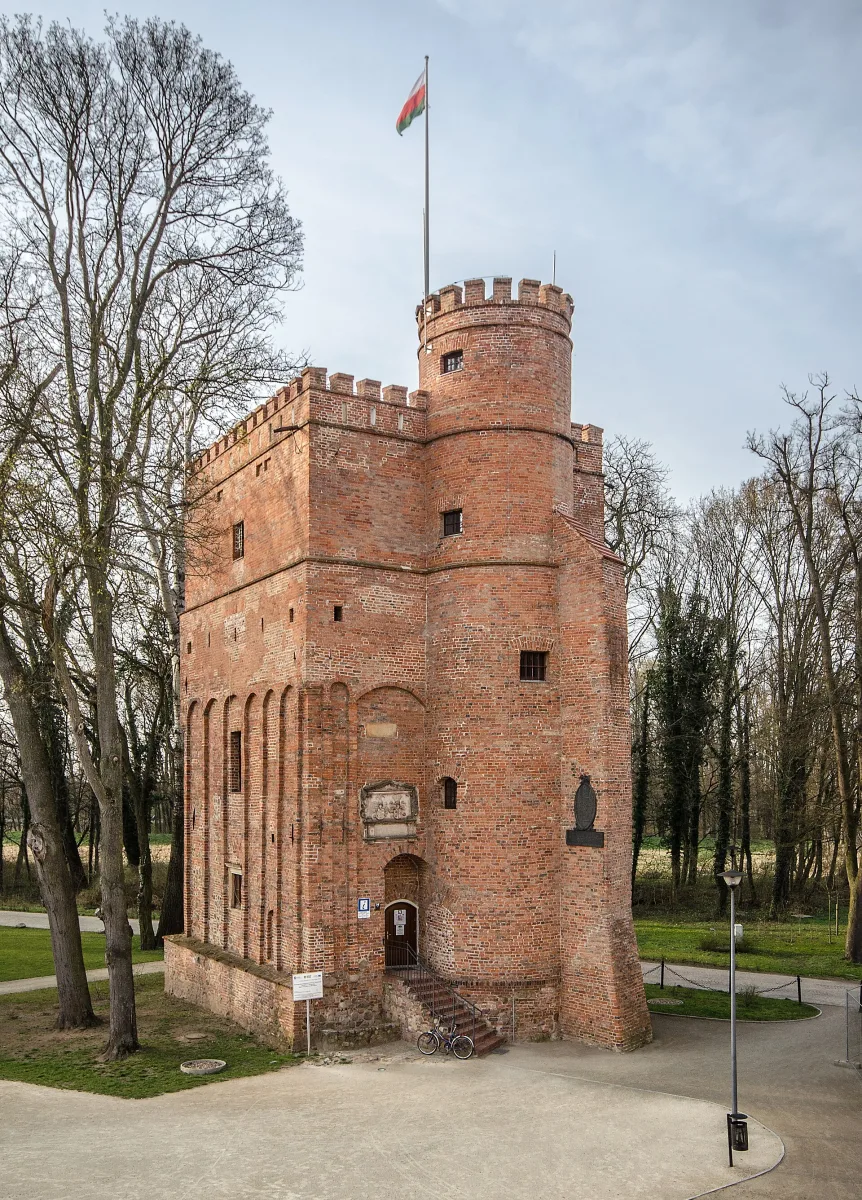
A dozen or so kilometres away, right on the Barycz, lies Żmigród. The local Castle in Żmigród is today a baroque ruin and a well-preserved Gothic residential tower, standing in a park - but the history of this place is far more turbulent than the quiet landscape suggests today. In 1640, during the Swedish siege, the defenders broke through the enemy lines and opened the sluices of the nearby ponds, flooding the Swedish cannons positioned on the frozen water. Not quite two centuries later, on 9 July 1813, at the palace in Żmigród, Tsar Alexander I of Russia and King Frederick William III of Prussia agreed on a plan for the final defeat of Napoleon, known as the Żmigród Protocol. Local legend adds to this a tale of a giant serpent that first lived in a cave beneath the town and later took up residence in the castle, devouring everything in its path - hence, according to tradition, the name of Żmigród is said to derive. A few hundred metres from the castle, the seasonal Aquagród outdoor pool with a water slide operates, so after visiting the ruins it is easy to combine history with relaxing by the water.
Castles and monasteries on the edge of the park
Trzebnica, lying on the eastern edge of the region, has one of the most important sanctuaries in Lower Silesia. The St Hedwig's Sanctuary grew out of a monastery founded in 1202 by Duke Henry the Bearded, creating the first female religious community in Poland - the foundation was confirmed by a papal bull of Pope Innocent III, and nuns from Bamberg arrived in Trzebnica in January 1203. Duchess Hedwig of Silesia settled permanently in the monastery from 1238, and in 1267 Pope Clement IV declared her a saint. The basilica, built in 1208-1219 as one of the first brick churches in Poland, in time became a mausoleum for twenty-two members of the Silesian Piast dynasty. In the town itself, on a hill, lies the Trzebnica Winna Góra Park - an exhibition devoted to the geology of the hill and to research carried out here in 1988-1992, during which traces of settlement from around 500,000 years ago were discovered, left by Homo erectus. These are among the oldest traces of human presence on Polish soil.
On the western edge of the region, in Oleśnica, stands the Ducal Castle - a Renaissance residence built on the site of a Gothic stronghold first mentioned in 1239. Its status grew over the centuries: from 1885 the castle served as the official seat of every successive heir to the throne of the German Empire and the Kingdom of Prussia. An architectural curiosity has survived here to this day - the former bathroom of Prince Wilhelm, hidden inside an ordinary wardrobe. Local legend also speaks of a treasure hidden within the castle walls that no one has managed to find so far.
At the opposite, western end of the region, in Wołów, the historic Castle today houses the seat of the county administration, and its tower, open during office hours, offers a view of the town and surroundings - one of the few viewpoints in the region that can be climbed without any special preparation.
Active on the water and in the saddle
Besides history and nature, the region also has an active side. In Krośnice, one of the municipalities lying right at the heart of the landscape park, the indoor Krośnicka Przystań Water Park operates with swimming pools, a sauna and a gym - a place that combines swimming training with family relaxation and works well as a stop on the route when the weather is not good for walks among the ponds. For horse lovers, in Henrykowice the Kociołki Stable offers riding lessons, cross-country riding and jumping training - the region, flat and criss-crossed with dirt roads between the ponds, is well suited to such trips.
Trails and when to come here
The Barycz Valley has no single, obvious viewpoint from which the whole region can be seen at once - its appeal lies rather in a network of dykes, dirt roads and educational trails running between the various pond complexes, where waterfowl can be observed up close. In spring, during the breeding season, and in autumn, when some of the ponds are drained before the harvesting season, bird activity here is at its highest - the best times for a trip for nature observers. In summer the region attracts families looking for swimming and activities by the water, and in winter, when the ponds freeze over, it becomes very quiet here, which is appreciated by those who enjoy walks without crowds. Whatever the season, it is worth planning a route that combines a walk among the ponds with one of the nearby small towns - Milicz, Żmigród, Trzebnica, Oleśnica and Wołów lie close enough to each other and to the park itself that in a single day it is possible to see both nature and a slice of the region's Piast and baroque history.
Be the first! Add a comment.
You need to log in to add a comment.
Log in