
Where the tradition comes from
The custom of setting up December stalls on town market squares has its roots in medieval Central Europe, in the area of today's Germany, Austria and the Czech Republic. The oldest documented privileges for this kind of trade date back to the late 13th and 14th centuries: in 1296 Duke Albrecht I allowed Viennese merchants to hold a December market where townspeople could stock up on meat and winter supplies, Munich's Nikolausmarkt was first recorded in 1310, and in 1384 King Wenceslaus granted Bautzen the right to a free meat market running from Michaelmas all the way to Christmas. In time, food stalls were joined by craftsmen - toymakers, basket weavers, confectioners - offering small gifts for under the Christmas tree, and the custom itself spread across the whole German-speaking area.
Lower Silesia belonged to the same cultural sphere until 1945, so the Advent markets on local market squares are not a phenomenon imported from outside but part of that same centuries-old tradition, which also shaped Wrocław's Christmas market - that one already has its own separate piece on the portal and is not repeated here. The region, however, has many more places where wooden stalls return every year during Advent, and each of them has its own rhythm and scale.
Świdnicka Kolęda on the town market square
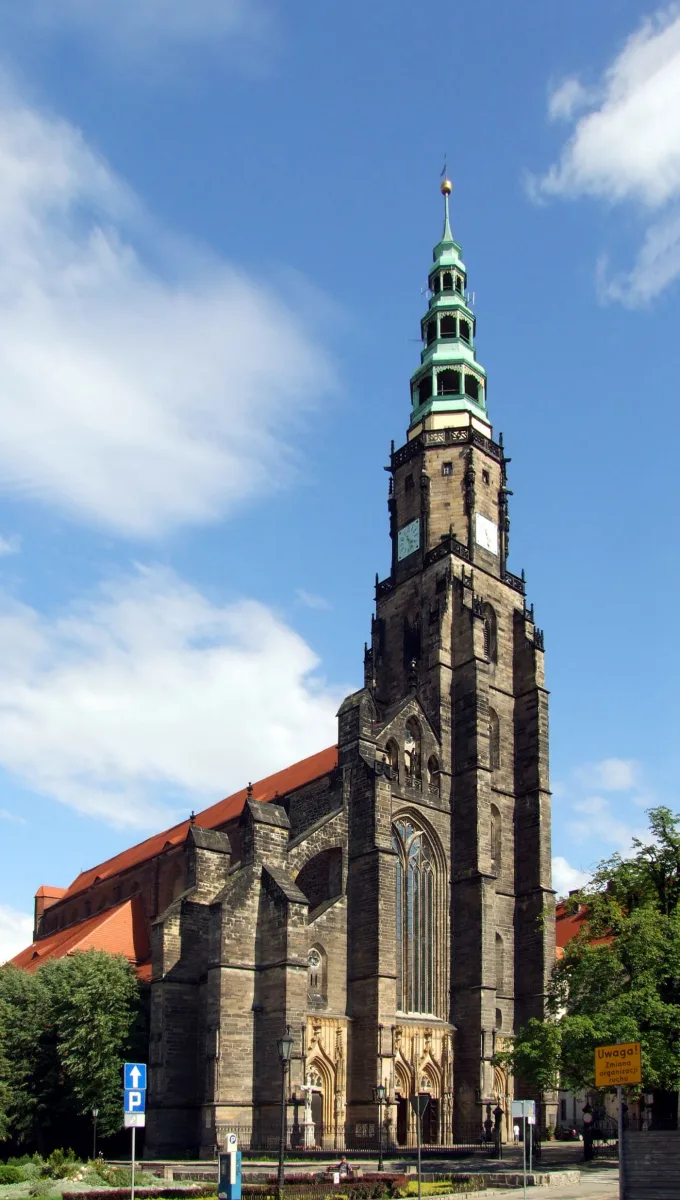
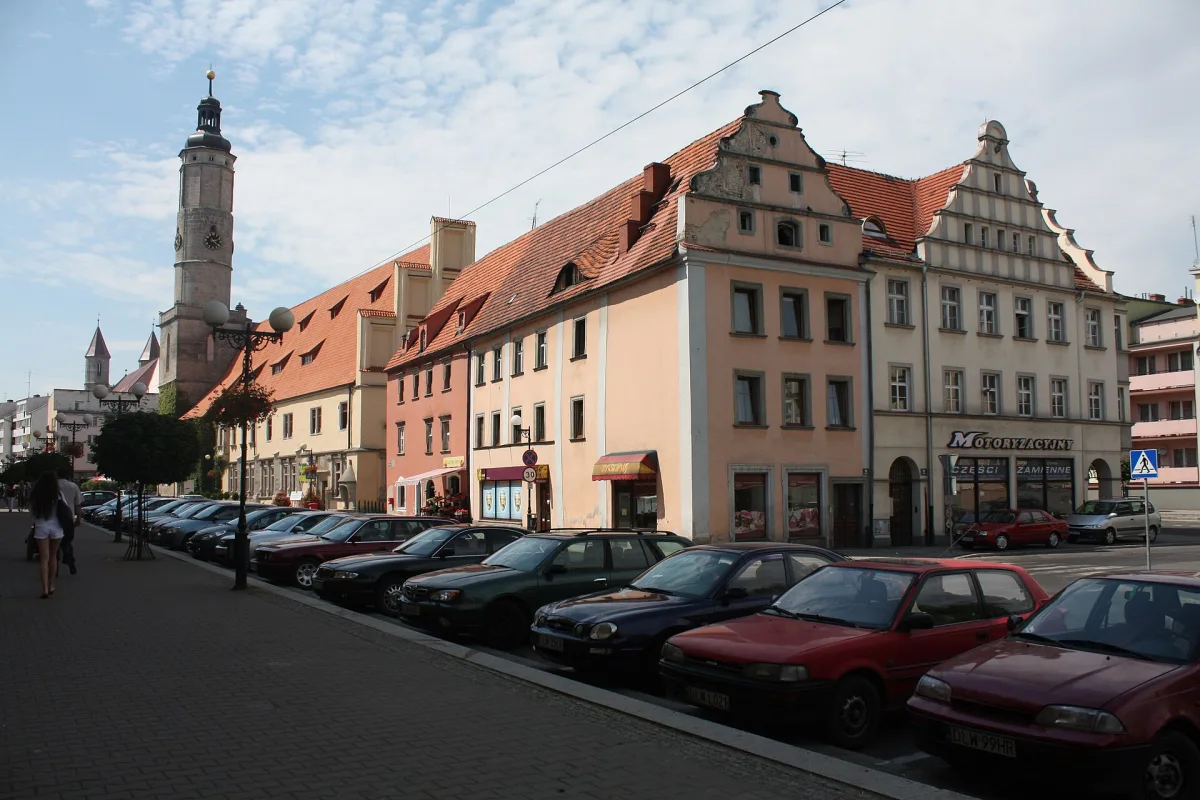
In Świdnica the fair is held on the Rynek (Market Square) as part of a cyclical programme of municipal Advent celebrations known as Świdnicka Kolęda. Exhibitors are given several dozen wooden trading huts, and the whole event has a noticeably more intimate character than the Wrocław edition - this is the fair of a medium-sized town, not a metropolis. Świdnica's market square neighbours the town's two most important churches: the Gothic Cathedral of St Stanislaus and St Wenceslaus, with the tallest tower in the whole of Silesia, and the UNESCO-listed Church of Peace, the largest timber-framed Baroque church in Europe. It is this neighbourhood, rather than the number of stalls, that sets the Świdnica fair apart from the Wrocław one - the festive trading here takes place surrounded by monuments that are themselves a destination worth travelling to at any time of year.
The Legnica bomba and other regional flavours
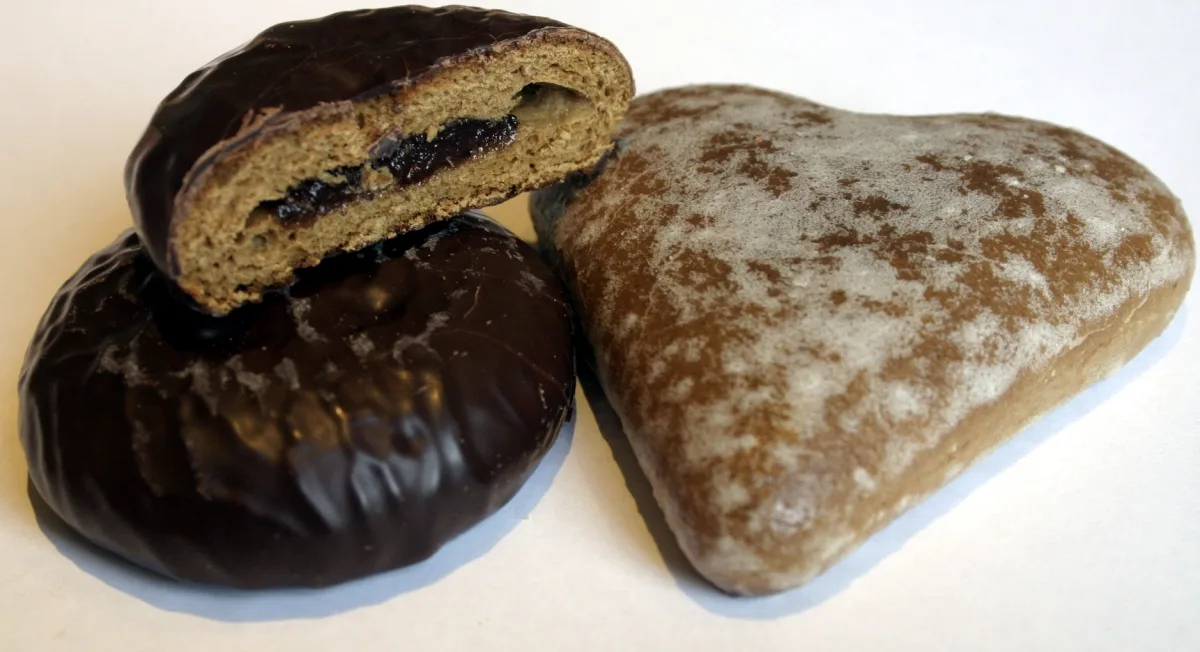
The region also has its own sweet speciality linked to winter trading: the Legnica bomba, a combination of gingerbread and honey cake known as a high-calorie treat for the winter season. This item travelled between Silesian towns together with the merchants, so it also found its way onto stalls beyond Legnica itself. As in the German tradition from which the whole custom derives, the region's fairs traditionally feature gingerbread, roasted almonds and nuts, and mulled wine, the local version of the German Glühwein - a drink that warms you up and has at the same time become one of the recognisable symbols of this season across Central Europe.
Jelenia Góra, Kłodzko and the spa towns - a different rhythm
Not every town in the region runs a Christmas fair on the scale of Wrocław or Świdnica. Jelenia Góra, the gateway to the Karkonosze (Giant Mountains) and a town joined since 1976 with the spa town of Cieplice, is known above all for a completely different trading tradition: twice a year, on Plac Ratuszowy and the surrounding streets of the old town, it hosts the Antiques and Curiosities Fair, held without a break since 1973 and regarded as one of the largest antiques fairs in Poland. This is a collectors' event, not a festive one, but it shows that the town has a strong, well-established culture of large-scale trading on its market square - just at a different time of year and with a different range of goods.
Kłodzko, in turn, is above all a fortress town: Kłodzko Fortress, an extensive system of fortifications built from the Middle Ages to the 18th century, with kilometres of underground corridors, is the main draw here throughout the year, and the market square beneath the stronghold provides a natural backdrop for winter walks around the Old Town. The material available in this session, however, does not allow us to confirm the details of how the local Christmas fair works there, or of similar events in the spa towns of the Kłodzko Valley - this is one of the gaps in this article, worth checking directly on site or in local sources.
Just over the border: the German side within walking distance
Anyone looking for a Christmas-market atmosphere outside Poland does not need to travel far. Zgorzelec and the German town of Görlitz are essentially one town divided by the Lusatian Neisse - a border river since 1945 - and linked by the Old Town Bridge. Görlitz has one of the best-preserved, large-scale historic centres in the whole of Germany, with more than four thousand restored historic buildings, and since 1998 it has formed, together with Zgorzelec, a joint urban organism known as Europastadt. A walk across the bridge to the other side of the Neisse, right into the heart of the German old town, is one of the simplest one-day cross-border trips in the region - although the details of the Christmas market there, like those of the markets on the Czech side, could not be verified from sources in this session, so this thread remains open.
How to avoid the crowds
Wrocław's Market Square in the middle of a December weekend can get very crowded. Fairs in the region's smaller towns - Świdnica, and to some extent also the market squares of Legnica or Jelenia Góra - naturally attract fewer people than the capital's sprawling, multi-street edition, so it is easier to find a calm walk between the stalls there without queuing at every stand. A simple rule also works well: weekdays and morning hours are quieter than weekend afternoons, and choosing a fair in a small town instead of a big city often means the same atmosphere without the crowds typical of the largest centres.
Be the first! Add a comment.
You need to log in to add a comment.
Log in