
A city built on other people's belongings
The trade in antiques and old objects in Wrocław has its roots in post-war events. During the Second World War around 70 percent of the city's buildings were destroyed or damaged, and in January 1945 the authorities of Festung Breslau carried out a forced evacuation of civilians in frost reaching minus 20 degrees. After the fighting ended, the expulsion of the German population began - the process started on 1 October 1945 in the Kowale district, and in October alone more than 12,500 people left the city, followed by nearly a further 29,600 by 3 December. By the end of the year around 600,000 Germans from the whole region had crossed the western border.
In the abandoned flats and houses the previous residents' entire belongings remained - furniture, crockery, books, everyday odds and ends. Meanwhile Polish settlers, later called "pioneers", moved into the city, mostly from the Eastern Borderlands around Lwów and Stanisławów, as well as from the Vilnius region and Greater Poland. For a long time they had no certainty whether they would stay for good, which encouraged treating the city as a source of makeshift supplies. Former German objects left behind and taken over without any formalities entered local circulation and in time became the foundation of the trade in antiques and old objects that still goes on today in Wrocław's squares and marketplaces.
Market Hall - a century of trade under concrete arches
The most recognisable place for everyday trade in the Old Town is the Market Hall on Piaskowa Street. It was built in 1906-1908 to a design by Richard Plüddemann and Heinrich Küster, on the site of the former residence of the bishops of Lubusz, earlier converted into the Piaskowy Arsenal. The hall was raised on parabolic reinforced-concrete arches with a span of 20.65 metres, which at the time of construction was regarded as an engineering achievement on a world scale, and its neo-Gothic facade echoes the stock exchange building in Amsterdam. The building survived the war in relatively good condition, underwent thorough renovation in 1980-1983 after makeshift repairs in 1947-1948, and today has the status of a historic monument.
The hall is open Monday to Saturday and closed on Sundays. Besides vegetables, dairy and cured meats, it also has stalls selling handicrafts, jewellery and ceramics, which makes it a natural starting point for anyone doing the rounds of the city in search of old objects.
Flea markets and exchanges in different districts
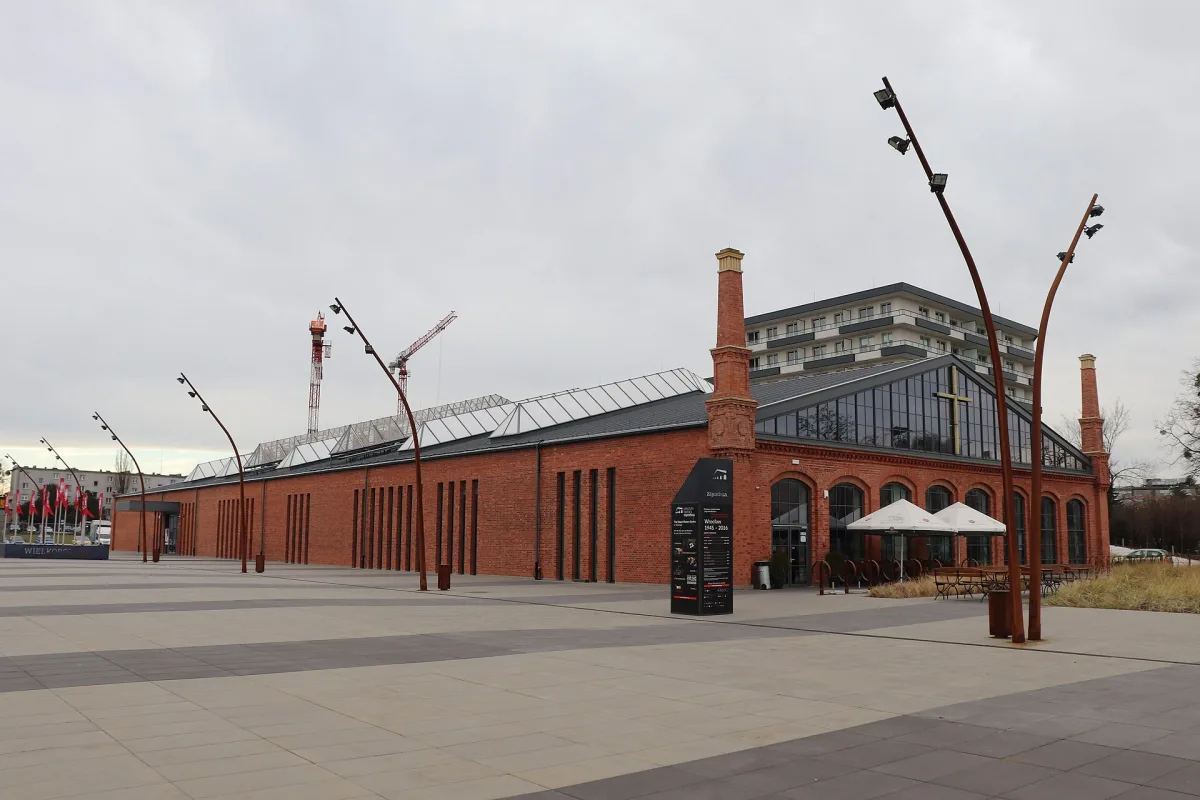
Besides the hall, Wrocław has a network of recurring flea markets scattered across different parts of the city. Every month, on the second Sunday, a flea market is held at the Depot History Centre in Kozanów - a museum devoted to the post-war history of the city and region, which adds a certain symbolism to the place. On the third Sunday of the month the market moves to the square on Aleja Damiana De Veuster in Szczepin, as part of the Serce Szczepina (Heart of Szczepin) initiative. A similar, though less formalised, event takes place on the third weekend of the month at the marketplace on Niedźwiedzia Street.
In addition there are Sunday markets with a longer local tradition - at the former Wrocław Świebodzki station, known for the variety of goods on display, and the "Na Młynie" market, where stalls with antiques and second-hand objects appear alongside local produce and food. Each of these places has its own rhythm and its own crowd, so collectors after a particular type of object usually make the rounds of several of them one after another.
Flea market, antique shop and second-hand clothing store - not the same thing
These three forms of trade are often confused, though each follows different rules. A flea market or antique exchange is ad hoc trade, usually outdoors or under a makeshift roof, where a valuable object and an ordinary piece of junk may lie side by side on the same table - the buyer does the sorting, and prices are the result of haggling on the spot. An antique shop is a permanent premises where the owner usually specialises in one category, most often books or a specific type of object, and does the initial sorting and pricing of the goods themselves.
A second-hand clothing store, or lumpeks, is a completely different business - reclaimed clothing brought in wholesale, with no pretence to the collectable value of a single piece. Wrocław has 61 outlets of this kind scattered across the whole city, which shows the scale of this trade, but it should not be confused with the flea market for old objects - it is different goods, different sellers and a different way of setting prices.
What collectors are looking for
The stalls of Wrocław mainly circulate everyday objects from decades past - furniture, household equipment, small accessories, books, postcards and keepsake trinkets. Some of them trace their origin back to the city's history described above, though for a single object this is generally hard to prove without documentation. Ceramics and glass, crafts and small artistic wares are also a regular part of the offer, such as those found at the Market Hall alongside its main, food-focused section.
The exact categories most sought after by Wrocław's collecting community are not clearly documented - so it is worth treating a tour of the markets as an open-minded search, not the execution of a ready-made shopping list.
How not to get taken for a ride
At a flea market for old objects, nobody formally guarantees the authenticity of the goods, so caution lies with the buyer. Before an object changes hands, it is worth asking the seller to explain where it comes from - a sensible, consistent story is a better signal than a maker's mark or a signature on the bottom of a vessel, which is easy to fake. With porcelain and glass, it helps to compare several pieces of the same type side by side, because differences in finish or weight give away a copy. It is worth comparing prices between several stalls on the same day rather than settling for the first offer, and for more expensive purchases it is a good idea to ask whether the seller will issue a written confirmation of the transaction. Antique shops, unlike flea markets, usually issue such confirmation on the spot, which can matter for objects of higher value.
Be the first! Add a comment.
You need to log in to add a comment.
Log in