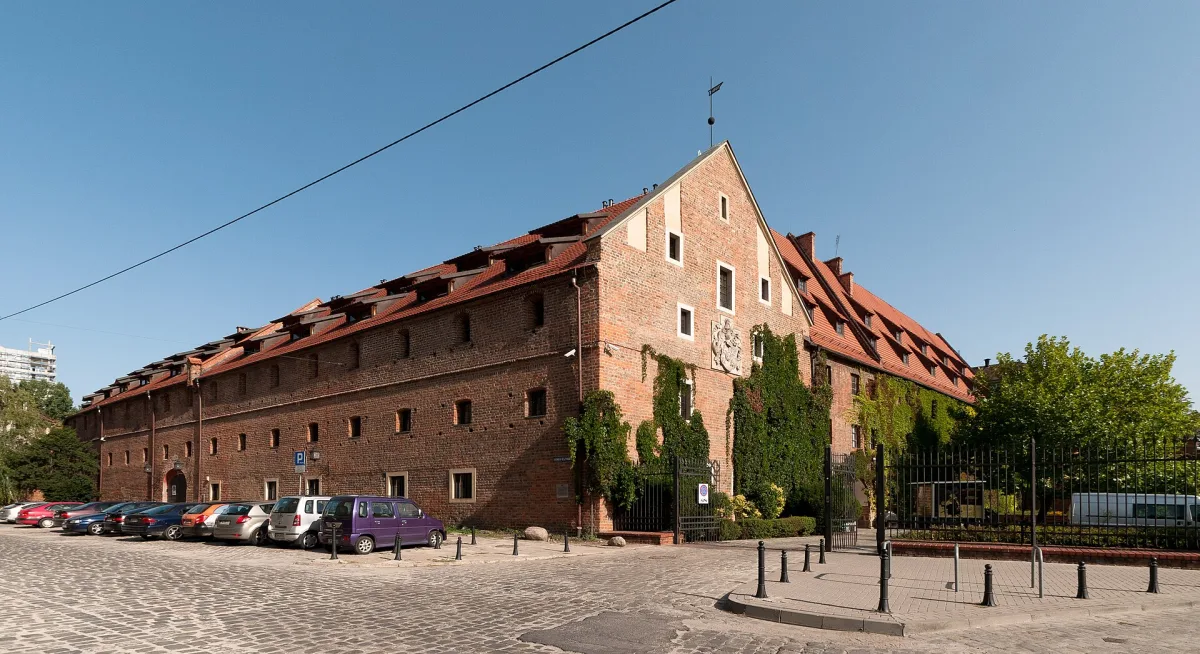
A branch of the Museum of Wrocław in the historic Municipal Arsenal, with archaeological collections from the Palaeolithic to the Middle Ages.
The Archaeological Museum in Wrocław is one of seven branches of the Museum of Wrocław, specialising in the archaeology of Silesia. It is housed in the Arsenał Miejski (Municipal Arsenal), a building of Gothic origin and one of the few medieval buildings in the city preserved in their entirety.
The museum was founded in 1815 as the Royal Museum of Art and Antiquities. As an independent institution or a branch of other museums, it has existed continuously to this day, making it one of the oldest institutions of its kind in Europe. It operated without interruption despite turbulent wartime events and political changes, although in the past it changed locations, housed at the end of the 20th century, among others, in the Royal Palace.
The permanent exhibition is spread across three floors of the building. The ground floor covers the Stone Age to the early Bronze Age, with bones of mammoths and woolly rhinoceroses, flint tools and reconstructed shelters. The second floor holds material from the Bronze and Iron Ages, objects of Celtic and Przeworsk culture, burial reconstructions and a replica of an ancient smelting furnace. The third floor is devoted to medieval Silesia, with everyday objects, jewellery, clothing and a full-scale model of a wooden house from towns of the 10th-13th centuries. Among the exhibits are fragments of the amber deposit from Partynice, the Zakrzów hoard, the Kotowice hoard and a ram figurine from Jordanów Śląski connected with rituals.
The museum shares the Municipal Arsenal building with the Museum of Militaria. The Arsenal is one of the few medieval buildings of Wrocław preserved in their entirety, with a distinctly Gothic character. Since 1959 the museum has published the archaeological yearbook "Silesia Antiqua", aimed both at specialists and at people interested in the history of Silesia.
Every year the museum organises the "Ludzie Ognia" ("People of Fire") archaeological festival, with demonstrations of old crafts, iron smelting in reconstructed furnaces and historical re-enactments. The calendar also includes temporary exhibitions of contemporary art, concerts in the courtyard, theatre performances and other festivals.
Right next door is the Museum of Militaria, which shares the Arsenal building with the Archaeological Museum. Nearby it is also worth visiting the Basilica of St Elizabeth of Hungary as well as the Market Square and the Town Hall.

Be the first! Add a comment.
You need to log in to add a comment.
Log in