Nature in Piechowice means glacial traces, Karkonosze granite, montane forests and a waterfall. See where to find them up close.
What did the glacier shape around Piechowice?
The clearest trace was left by the Snowy Cirques, two glacial cirques between Wielki Szyszak and Łabski Szczyt. They formed in the Ice Age, most likely during the last glaciation, when ice carved the rock walls. The small cirque has walls reaching 100 metres, and its floor lies at about 1,175 m. The large cirque is a little shallower, but its walls are higher, up to 150 metres. Both forms are strictly protected within the Karkonosze National Park.
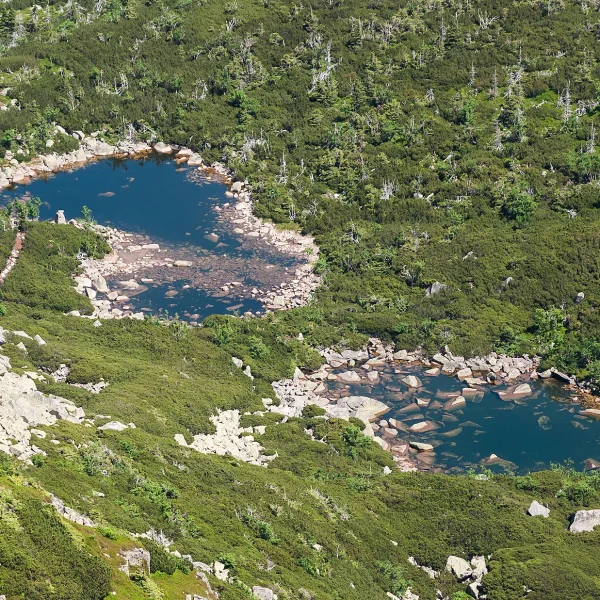
On the cirque floors lie the Snowy Tarns, eight closed-basin lakes at roughly 1,250 to 1,350 m above sea level. They fill hollows between moraine ridges left when the glacier retreated. It is one of few places in the Polish mountains where glacial lakes can be seen up close, surrounded by rock walls.
How did water carve the Szklarka Waterfall?
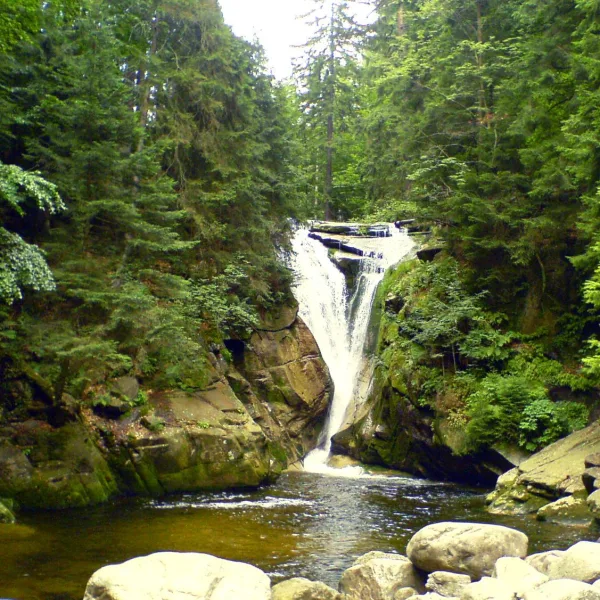
The Szklarka Waterfall is 13.3 metres high and lies at 525 m above sea level. On the left side you can see potholes, hollows carved by swirling water, and at the base of the cascade a plunge pool. The water falls wide, narrows towards the bottom and twists in a spiral. The Szklarka stream cut a gorge here on the south-eastern side of Szklarz. The first descriptions of the waterfall date back to the Middle Ages. The site is accessible for wheelchair users too.
What are the peaks of Piechowice made of?
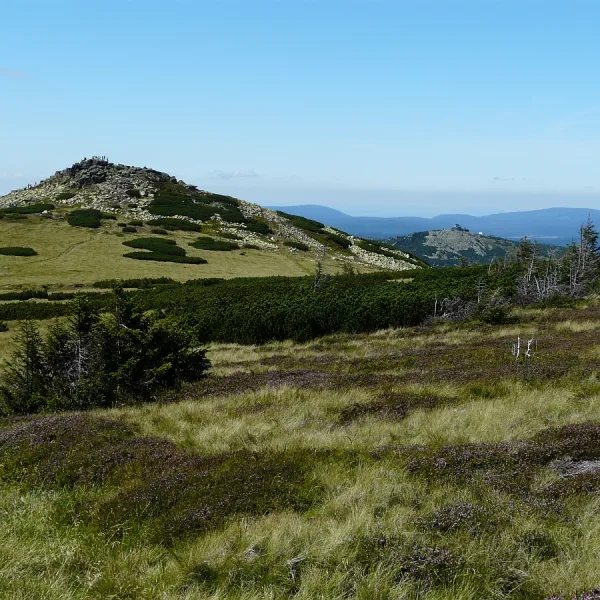
Mostly Karkonosze granite. Granite forms Grzybowiec (751 m), where rocks stick out of the massif, as well as Płoszczań (747 m), Łagodna (676 m), Bucznik and Sośnik. On Ostroga (1,090 m) the granite forms a field of boulders. Mały Ciemniak (578 m) in the Izera Mountains looks different, built of gneisses and granite-gneisses of the Karkonosze-Izera block, the same one that formed the neighbouring Karkonosze.
What kind of forest covers the slopes?
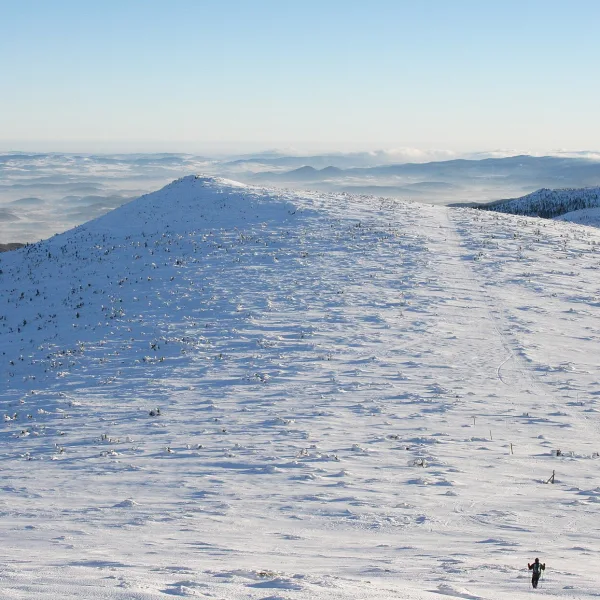
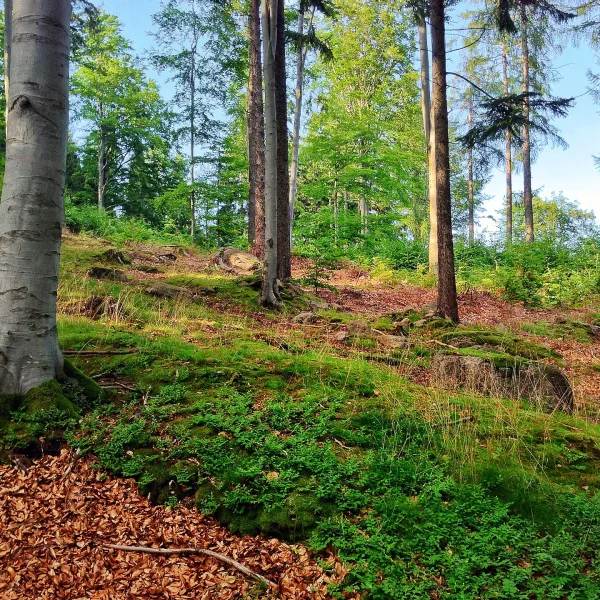
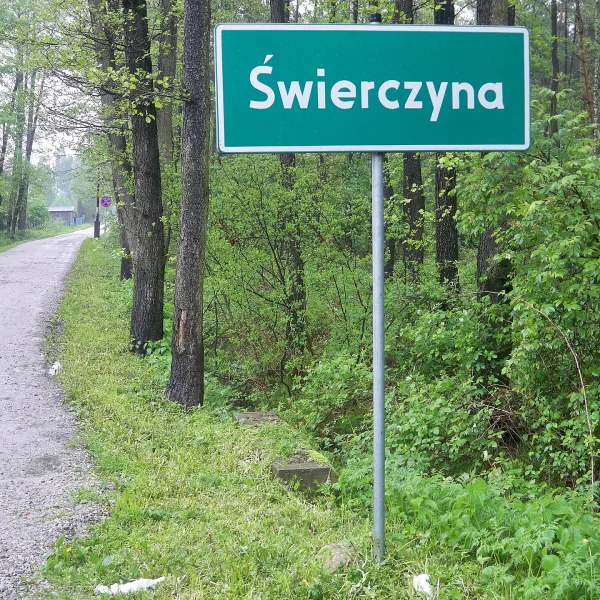
The foothills carry mainly lower montane forest. It covers Płoszczań, Piechowicka Góra, Sobiesz and Sośnik. Świerczyna (665 m) is covered in spruce forest, as are the slopes of Ostroga. Clearings spread across the north-eastern slope of Płoszczań, and four watercourses flow around the massif. Higher up, on the Silesian Ridge, lie Wielki Szyszak (1,509 m) and Łabski Szczyt (1,471 m), an area that belongs to the Karkonosze National Park and the Czech Krkonoše National Park.
What traces of people can you see in the nature of Piechowice?
They are small but interesting. Under Sośnik, uranium ore was prospected in 1954, and the mine was marked OP-7 Jagniątków. Mining was abandoned after a few months, and the adits stayed closed. On the top of Grzybowiec stands a guesthouse, the former seat of Otto von Bismarck, and on Wielki Szyszak lie the ruins of the Wilhelm I monument from 1888. A road tunnel to Michałowice runs under Piechowicka Góra.
Want everything in one list? Go to the Piechowice attractions page. The peaks are described on mountains in Piechowice, and free places are gathered in free attractions. Nature in other towns is in the Nature section, and for another day head to Szklarska Poręba.
Frequently asked questions
What are the Snowy Cirques?
They are two glacial cirques in the Karkonosze, carved by ice in the Ice Age and strictly protected. The floor of one of them holds small lakes called the Snowy Tarns.
How many lakes are in the Snowy Tarns?
Eight, according to the listing. All are closed-basin and lie in hollows between moraine ridges.
What rock are the mountains of Piechowice made of?
Mostly Karkonosze granite. The exception is Mały Ciemniak, built of gneisses and granite-gneisses.
Can you reach the waterfall in a wheelchair?
According to the listing, the waterfall is accessible for wheelchair users too. Check the rules for entering the national park before you travel.

 Parks and nature