Things to do in Grzmiąca include Waligóra, the highest peak of the Stone Mountains, the ruins of Rogowiec Castle and a viewpoint on Gomólnik Mały.
What should you see first in Grzmiąca?
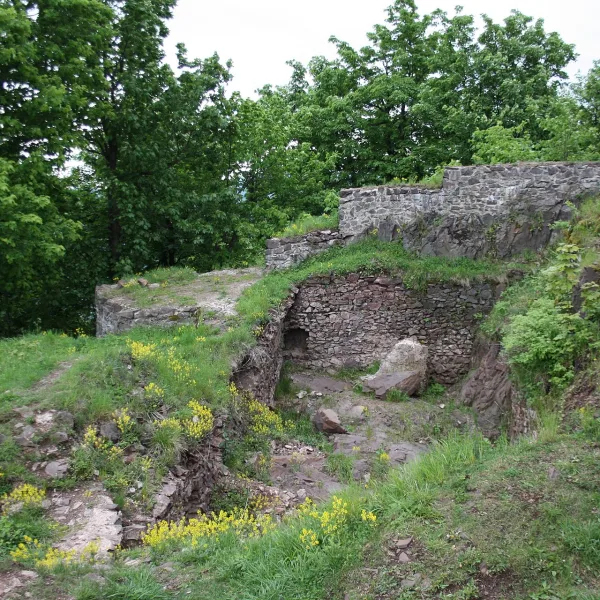
Start at Rogowiec hill (870 m above sea level), where Rogowiec Castle stands. In the 12th century Duke Bolesław the Tall built a wooden stronghold here, and around 1292 Bolko I of Świdnica ordered a stone castle. In the 14th century a residential tower and a semicircular bastion were added. The upper castle had an irregular, roughly triangular shape covering about 700 square metres. The former border fortress was destroyed in 1482 and never rebuilt, so today you see a ruin.
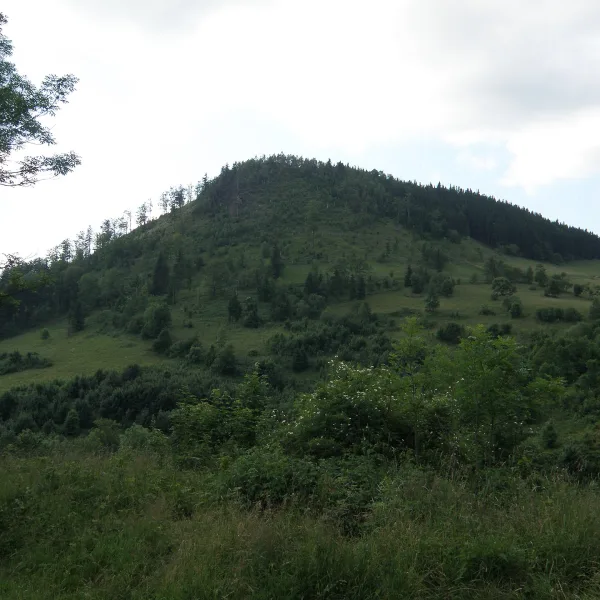
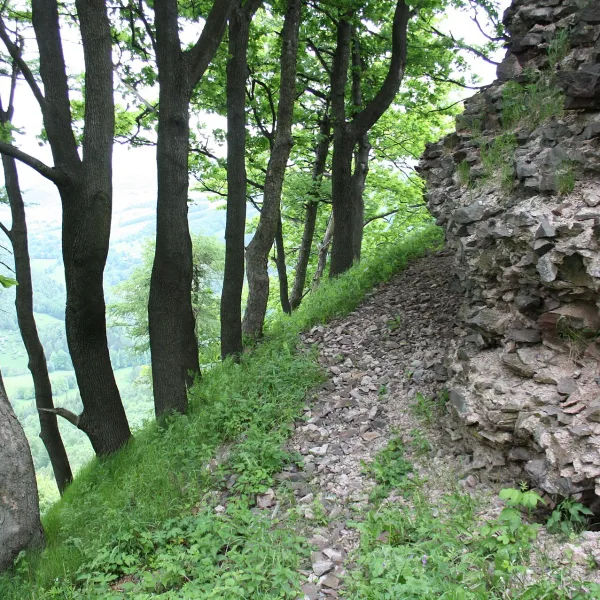
The mountain itself, Rogowiec, lies about 3.3 kilometres south-west of Głuszyca. It has a conical shape, steep slopes cut by small valleys and rocky outcrops, and old landslides on the eastern side. Red, blue and yellow trails lead up it. Together with the neighbouring Skalne Bramy rocks, the mountain is built of Permian melaphyre. The castle and the summit make one trip, so set aside a separate part of the day for it.
Which peak near Grzmiąca is the highest?
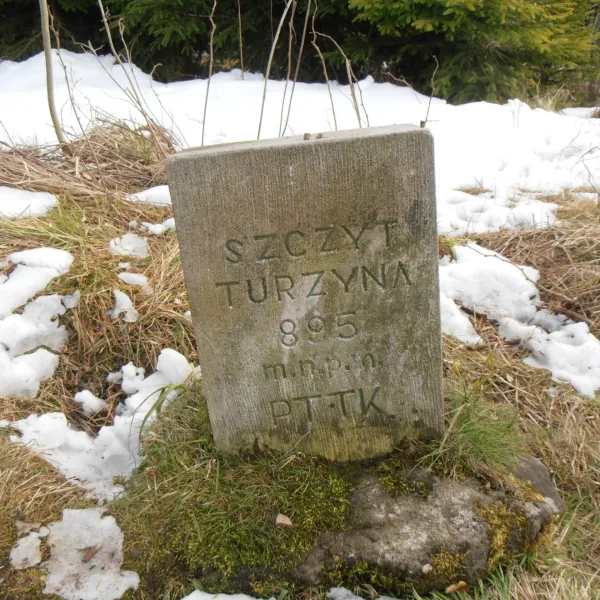
Waligóra is the highest peak of the Suche Mountains and of the whole Stone Mountains range: sources give 933.88 or 936 metres above sea level. The massif is built of Permian quartz porphyry, and the ridge runs north to south, falling gently on the southern side and much more steeply to the north and east. Walking and cycling trails lead to the summit. Mixed beech and spruce forest covers the slopes of Waligóra. Not much lower are Jeleniec (902 m) and Turzyna (895 m). Jeleniec is built of Karkonosze granite and lies in the western part of the Karkonosze Foothills, within the Stone Mountains. A few kilometres away is the entrance to the Riese Włodarz underground complex. Further from Turzyna, towards Jedlina-Zdrój, trails lead to Borowa with its lookout tower.
Where to look for views and quieter hills?
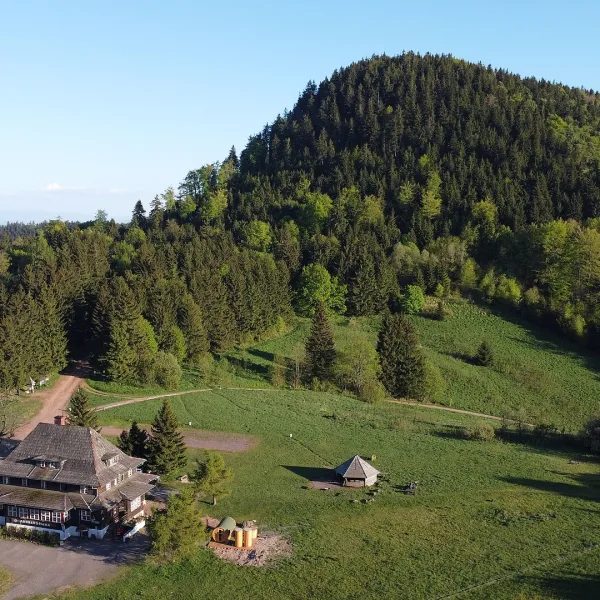
On the north-eastern slope of Gomólnik Mały (807 m according to Wikipedia) there is a viewpoint opened in 2023. Next to it rises Gomólnik (826 m), covered with spruce forest, and Warzecha (793 m) on a side ridge of Jeleniec, with small rock formations on its western slopes. Gomólnik is built of Permian melaphyre, or trachybasalt, as are Warzecha and Rogowiec. All three hills lie in the Wałbrzych Sudetes Landscape Park.
What else can you plan nearby?
A well-built day is Rogowiec with the castle, and separately Waligóra or the viewpoint on Gomólnik Mały. The descriptions give no access routes or walking times, so check the trails and marking before you set out. The full selection of summits is under mountains in Grzmiąca, and a day without spending is easier to build with free attractions in Grzmiąca. Landscape lovers should look at beautiful views in Grzmiąca. If you travel further, Głuszyca and Jedlina-Zdrój lie nearby.

 Mountains