Nature in Wojcieszów means the Góra Miłek reserve, schist of the Kaczawa metamorphic complex and spruce forest on the peaks above the town.
What does the Góra Miłek reserve protect?
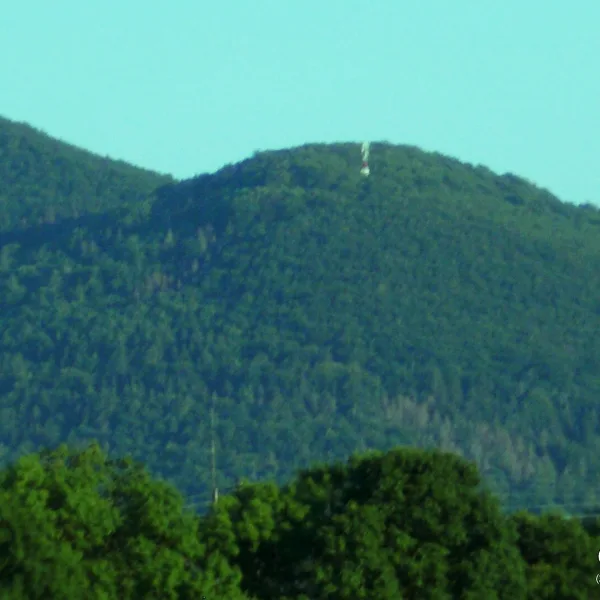
The Góra Miłek reserve covers almost the whole hill above Wojcieszów Górny. It was established by ministerial order on 26 January 1994 and covers 141.35 ha. Its aim is to protect a fragment of the lower montane belt on limestone, typical of the Sudetes, with natural plant communities and a rich invertebrate fauna of snails and spiders. This is where the only site of purple cyclamen in Poland grows.
What rock are the peaks made of?
Most belong to the Kaczawa metamorphic complex, that is, old volcanic and sedimentary rock. Marciniec (624 m) consists of greenstones, greenschists and phyllites, as well as albite-sericite and quartz-sericite schists with graphite, called the Radzimowice schists. Chmielarz (585 m) has a similar make-up. Zadora (454 m) is early Palaeozoic metamorphic rock of volcanic origin plus sedimentary rock, and quartzite as well. In Trzciniec (484 m) there are marble layers: calcite and dolomite limestone. Polanka (546.6 m) also formed in the Palaeozoic, in metamorphic and sedimentary rock.
Where do you see the nature of the summits?
Spruce forest covers the slopes of Marciniec and Chmielarz, and farmland stretches below Chmielarz. On Połom (667 m), in the heart of the Kaczawskie Mountains, the sources give no marked trail, so take a tourist map. Remember that the reserve is protected: stay on the paths and do not pick plants. The Kaczawskie Mountains are one of the lower ranges of the Western Sudetes, so even modest hills show a full cross-section of rock here. Skopiec also rises near Połom, and the Miłek hill itself has a limestone base.
See also nature across the region, things to do in Wojcieszów and the pages for mountains and free attractions. In the area lies Rząśnik.

 Parks and nature