Cemeteries and monuments in Głogów are places of memory: the war, the townspeople and what no longer stands. Start at John Paul II Square.
Which Głogów monument should you see first?
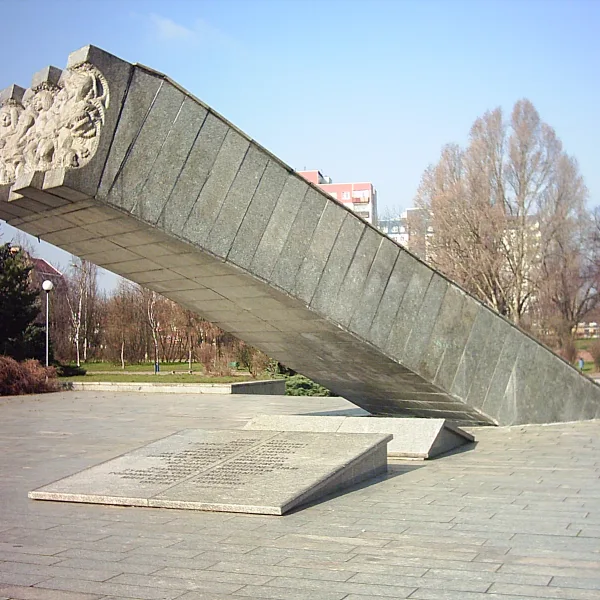
Start at John Paul II Square, right next to the Castle of the Dukes of Głogów. The Monument to the Children of Głogów is the biggest and best known memorial in town, facing Brama Brzostowska street. The idea came in 1966 from the Głogów Cultural Society, during the celebrations of Poland's millennium, and residents paid for it themselves. The sculptor was Dymitr Vacev.
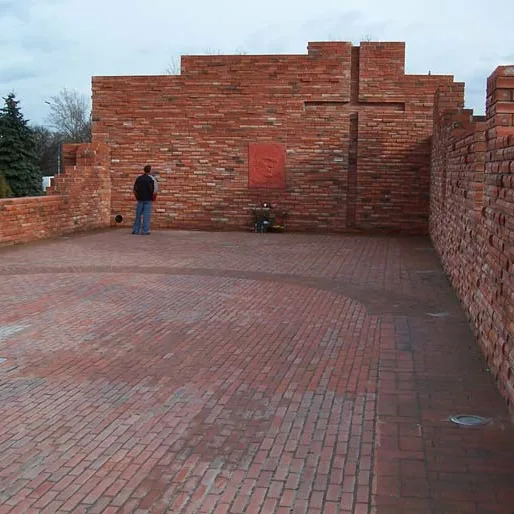
On the same square is the Library of the Holy Pilgrim. Despite the name it is not a building with books but a stone monument to Pope John Paul II, unveiled on 11 November 2006. It also works as a lapidarium, showing fragments of the medieval church of St Peter that once stood here.
How does Głogów remember the war?
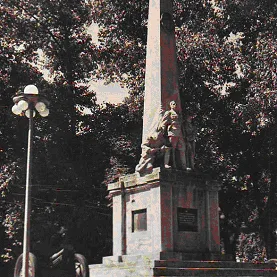
With two separate monuments in two parts of town. The Anti-Hitler Coalition Monument on Plac Słowiański was raised in 1948 for the soldiers of the 3rd Guards Army who died fighting for the town in February and March 1945. In 1995 it was rebuilt: the sculptures of three soldiers and the Soviet symbols were removed, and plaques in four languages were added.
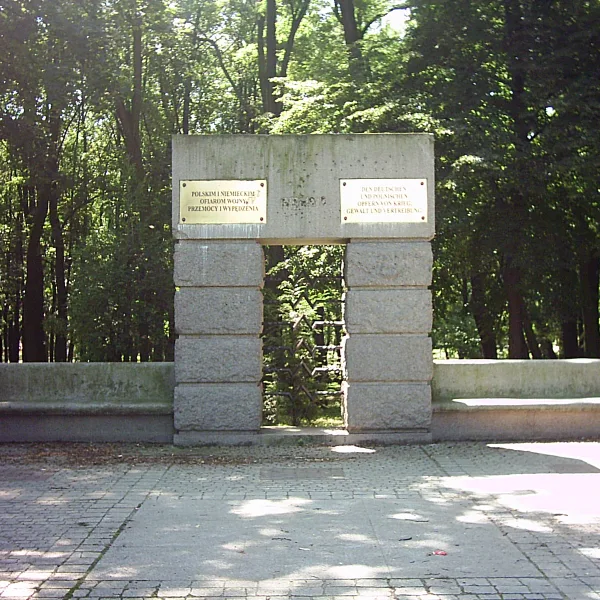
The Monument to the Victims of War stands in Forest Park (Park Leśny), at the crossing of Bolesława Krzywoustego and Staromiejska streets. It is a plain granite form of two upright blocks under a horizontal one, with no decoration. It was unveiled on 27 May 2000. Do not mix the two up: they stand in different places and commemorate different events.
What is left of the old cemeteries, and who was Jan of Głogów?
The Jewish cemetery in Głogów no longer exists as a burial ground. The community had at least two necropolises from the 17th century on. The newer one was closed in 1937 and by 1943 the Germans had rebuilt the site. Today a primary school stands on Sienkiewicza street. Go knowing you will not see graves, only a place that was deliberately erased.
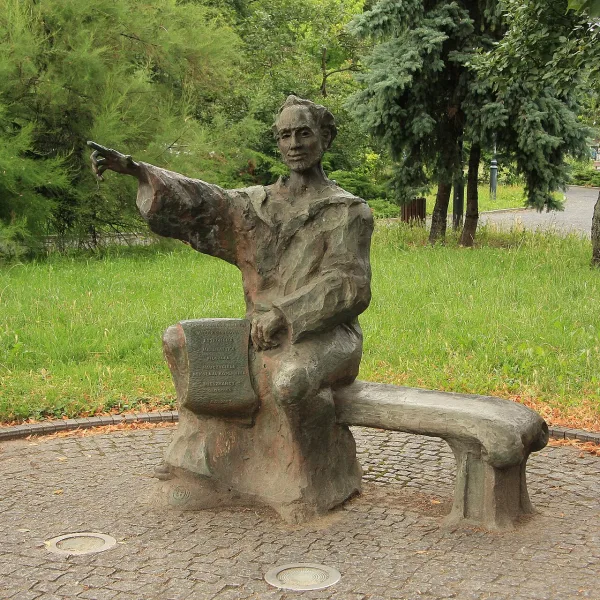
A lighter note ends the route: the Jan of Głogów bench from 2007. The astronomer, mathematician and teacher of Nicolaus Copernicus sits at one end of the bench, as if inviting you to sit down beside him.
To widen the route, see churches and monasteries in Głogów, the list of free places in Głogów or cemeteries and monuments across the region. The whole town is on the Głogów attractions page.

 Cemeteries and monuments