Śródmieście attractions in Wrocław: the Centennial Hall, the zoo with the Afrykarium, the Japanese Garden and the parks. Plan a day east of the Oder.
This page covers the neighbourhoods of Biskupin-Sępolno-Dąbie-Bartoszowice, Zacisze-Zalesie-Szczytniki, Plac Grunwaldzki, Ołbin and Nadodrze. It is the green, exhibition-ground part of the city, with a great hall, gardens and a large zoo. The Market Square and Ostrów Tumski are covered on the Old Town page, and the whole city on the Wrocław attractions page.
How do you plan a day around the Centennial Hall?
Begin at the Centennial Hall, then follow the paths to the Japanese Garden, the fountain and the park. The main sights lie close together, so you need no transport between them. Keep the zoo and the Afrykarium for a separate part of the day, because they take several hours and you should not have to rush.
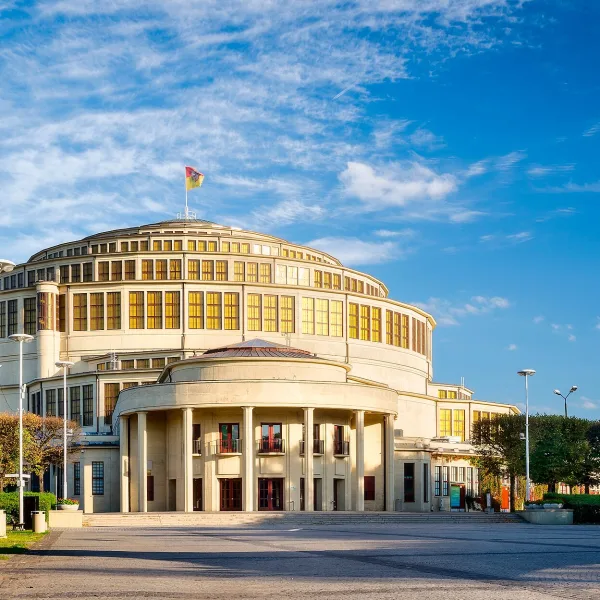
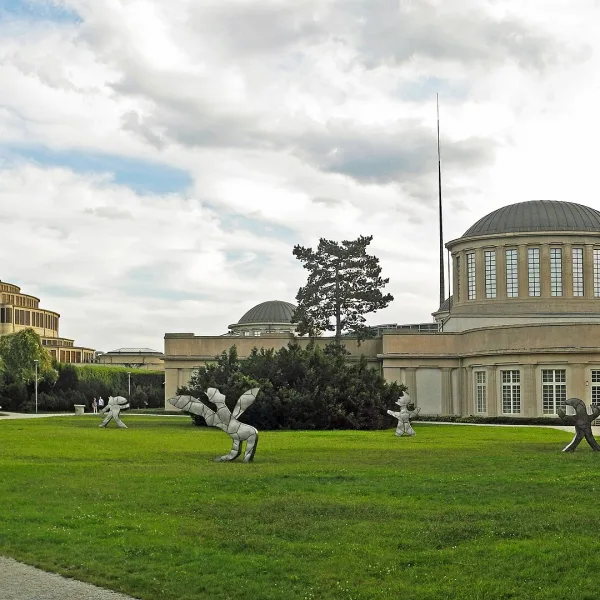
The Centennial Hall is an expressionist concert and sports hall from 1911 to 1913, designed by Max Berg, one of the most recognisable buildings in Wrocław and a UNESCO site. Its dome is 67 metres across, and when it was built it was the largest reinforced concrete dome in the world.
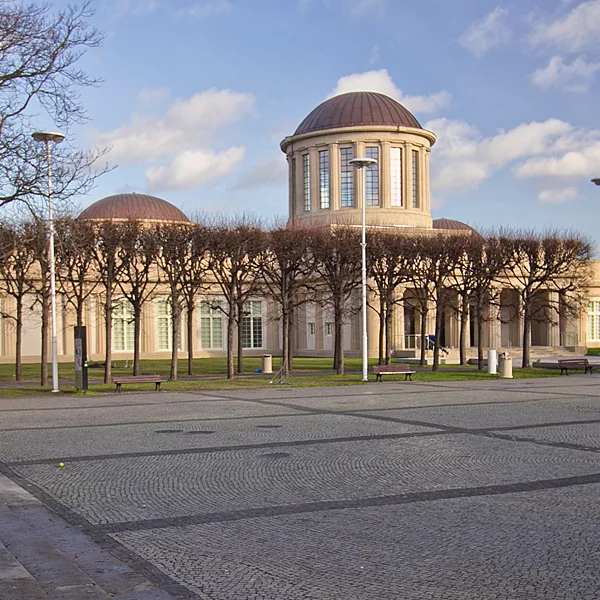
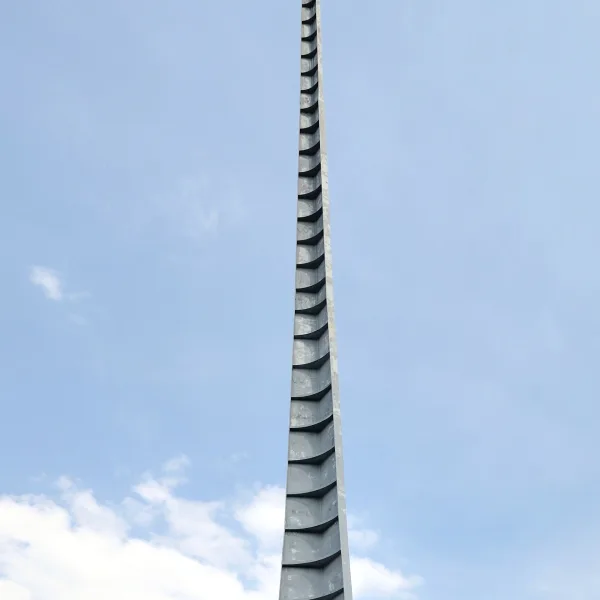
Next to it stands the Four Domes Pavilion, an exhibition building from 1912 to 1913 and now a branch of the National Museum devoted to contemporary art. Close by rises the Spire, a steel tower raised in 1948 for the Recovered Territories Exhibition, now 90.3 metres tall. The exhibition grounds lie in Zalesie, and beside the pond stands the Wrocław Fountain, the largest in Poland, with seasonal shows of water, light and music.
What is there to see at the zoo and the Afrykarium with children?
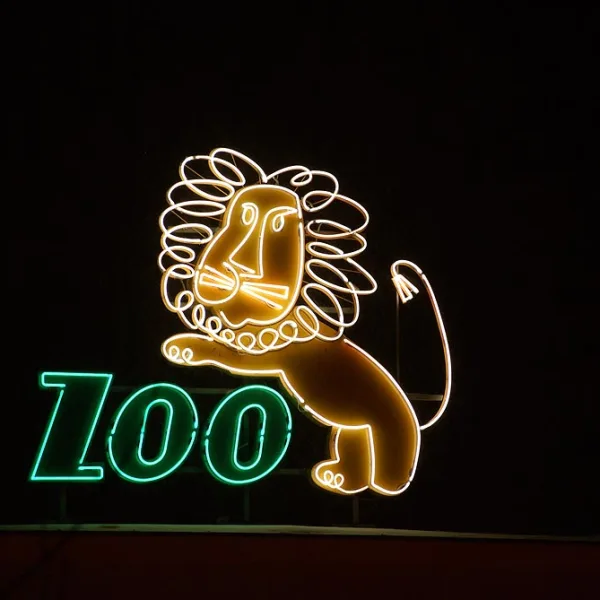
For families this is the main target in Śródmieście. The zoo has operated since 1865, and the Afrykarium stands on its grounds. Check tickets and opening hours on the pages of the places themselves, and plan the visit for several hours, with a break in the nearby park.
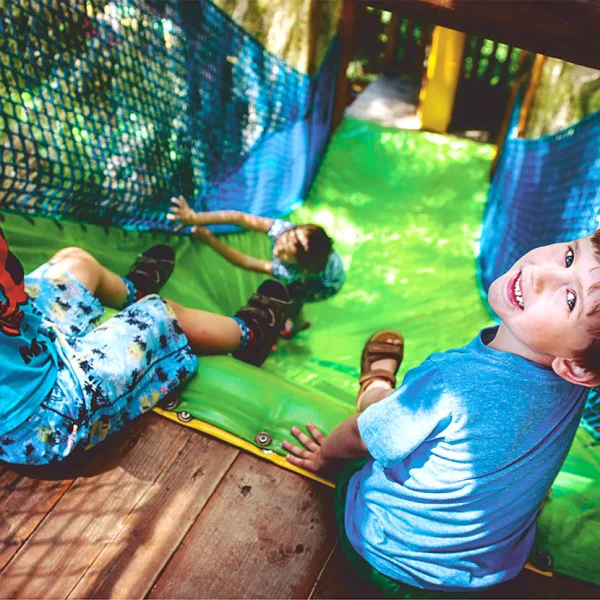
The Wrocław Zoo is the oldest zoo within today's Polish borders, with historic 19th-century buildings, and it lies next to Szczytnicki Park. The Afrykarium is the first oceanarium in Poland devoted to African ecosystems. The zoo grounds also hold the Zoolandia mini rope park, with routes for children from the age of three and for adults, on a separate ticket.
In Ołbin you will find Zoo Team, a pet shop with an exhibition of exotic animals, educational activities and children's birthday parties. If the children want to run around, rest in Dąbski Park on the Great Island, right beside the zoo, or in Biskupin Park with its playground. More ideas are listed under attractions for children.
Which park or hill should you choose for a walk?
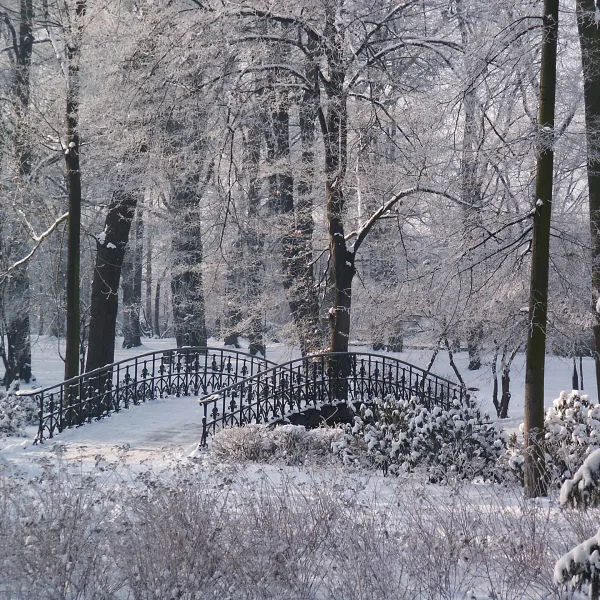
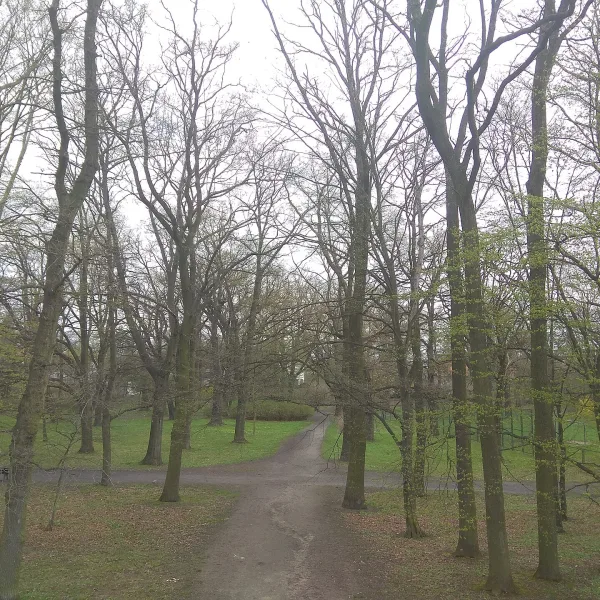
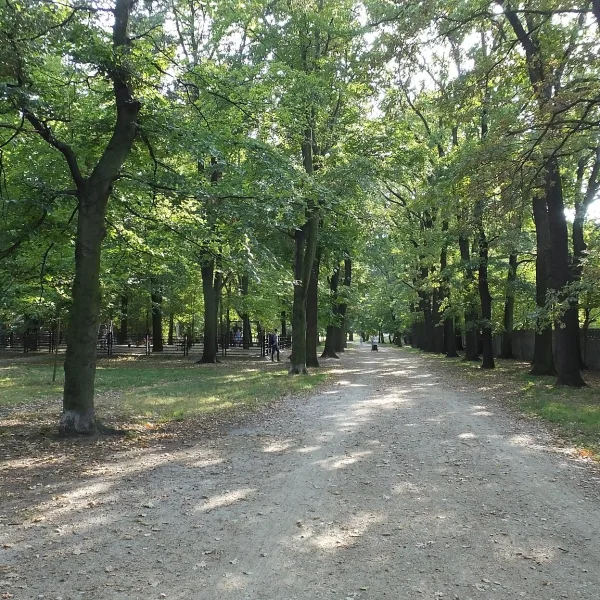
If you have just an hour, go to Szczytnicki Park. It is one of the largest parks in Wrocław, and on the way you pass the Japanese Garden and several monuments. For a longer walk choose Dąbski Park, Staszic Park or one of the artificial hills described below.
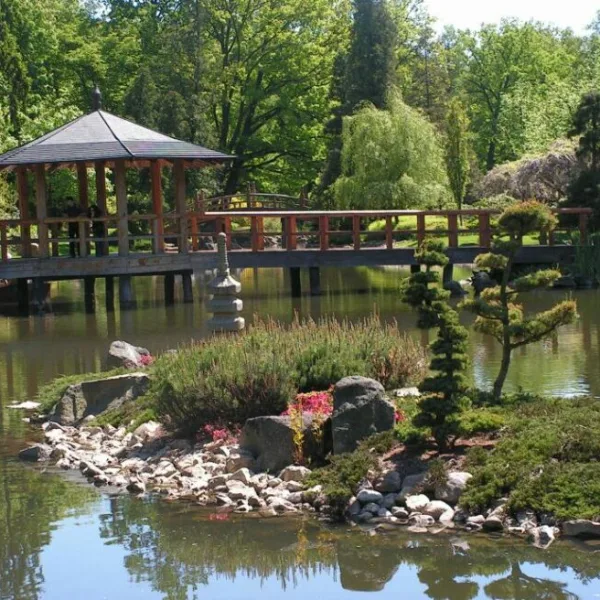
Szczytnicki Park is a landscape park with rich tree stock and a wooden church. Inside lies the Japanese Garden from 1909 to 1913, with cascades, small bridges and a pond with koi carp. You will also see the Column of Frederick William II from 1806, modelled on Trajan's Column, and the reconstructed statue of Diana.
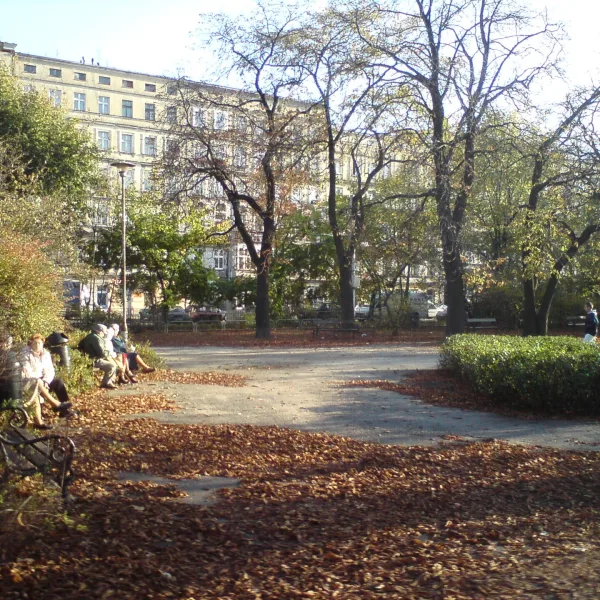
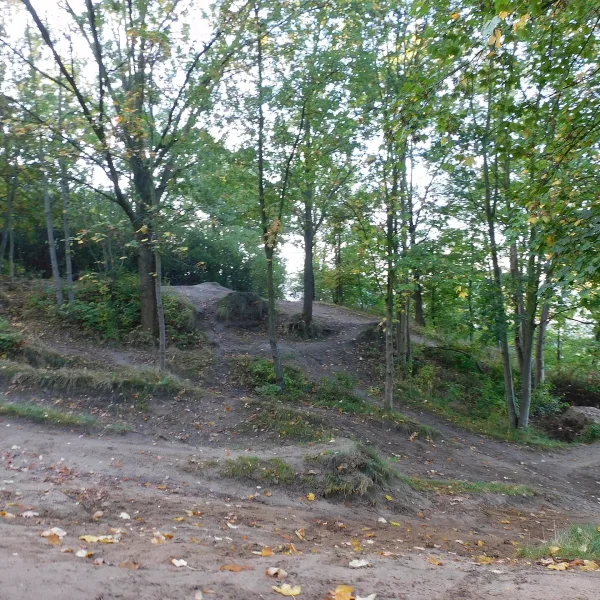
In Nadodrze there is Stanisław Staszic Park, laid out on the site of an old horse market, and Słowiański Hill with a sledging run and a monument shaped like a burning flame. In Ołbin you will find Stanisław Tołpa Park with a pond and a dog run, and the quiet St Edith Stein Park. Kilimanjaro Hill in the Zalesie area stands 134 metres above sea level, was made of earth dug for the Flood Canal, and is now wooded and crossed by bike trails. A full list is under parks and nature.
Which bridges, estates and museums are worth seeing besides the parks?
Śródmieście also has architecture worth seeing between the parks. Start with the bridges over the Oder, then go to the WUWA estate from the late 1920s and to the stadium from 1926 to 1928. If you want an indoor stop, there are two exhibition venues as well.
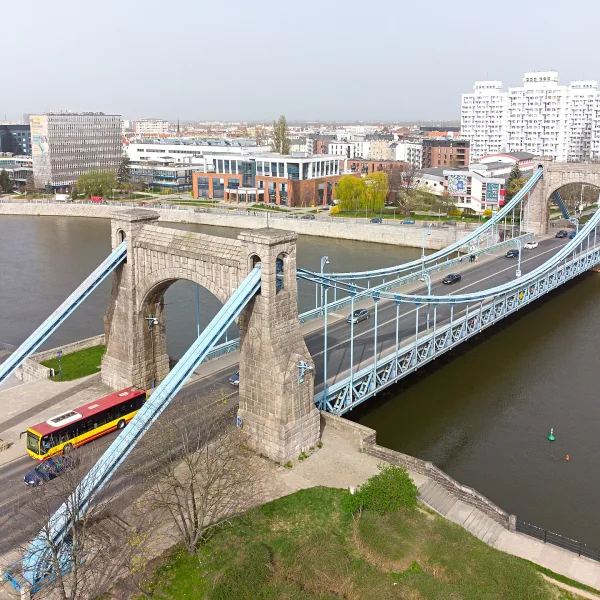
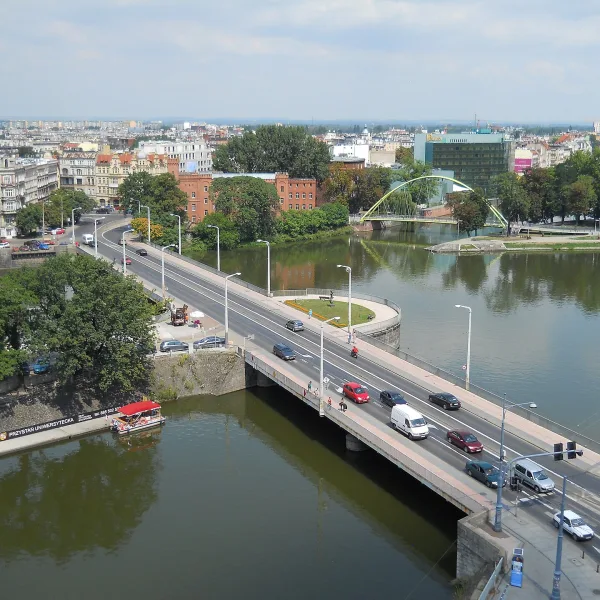
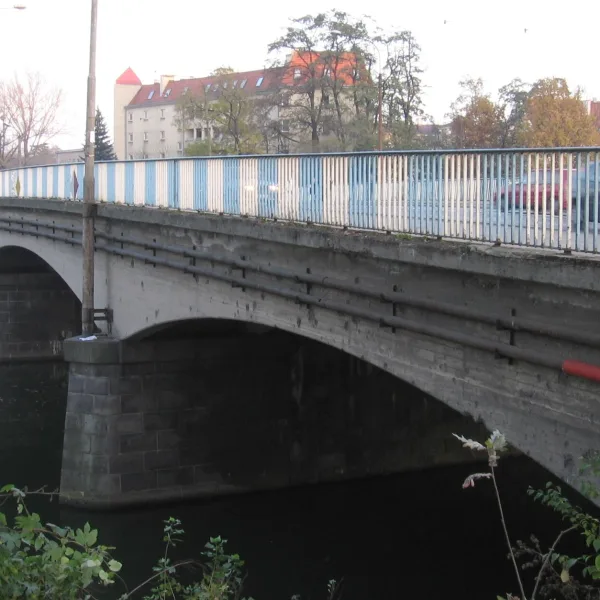
The Grunwaldzki Bridge is a historic suspension bridge from 1910 that links the centre with Grunwaldzki Square. The University Bridges are two steel bridges next to the University of Wrocław, and the Żabia Footbridge from 1975 leads from Nadodrze to Bielarska Island. Szczytnicki Bridge from 1888 to 1890 joins the square with the park.
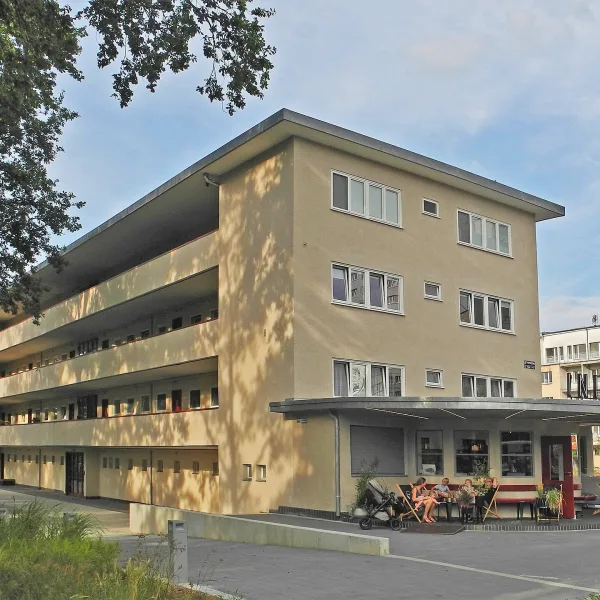
WUWA is the estate built for the 1929 Werkbund exhibition in Dąbie, listed as a monument, with a reconstructed kindergarten. The Olympic Stadium in the Zacisze-Zalesie-Szczytniki area was designed by Richard Konwiarz and today is home to a speedway club. The Geological Museum on Cybulskiego Street has more than twenty thousand specimens and displays on the geology of the Sudetes. Bulvary in Nadodrze is a private exhibition and event space.
Cemeteries and monuments in Śródmieście
Śródmieście has memorial places and historic cemeteries, from Ołbin to Sępolno and Kępa Mieszczańska. Visit them quietly and with respect, because they are places of mourning, not ordinary tourist attractions. Below is a short overview of what you may meet there, arranged by neighbourhood.
St Lawrence's Cemetery in Ołbin, from 1866, covers 4.3 hectares and has a brick gate and the graves of notable people. The Holy Family Cemetery in Sępolno was founded in 1928. In Ołbin stands the People with the Letter P Square with a memorial to civilian victims of the Second World War. The Flood Girl monument on Kępa Mieszczańska commemorates the residents' struggle with the 1997 flood, and the Atom on Grunwaldzki Square is a white sculpture by Roman Pawelski from 1974.
Frequently asked questions
How much time should I give to the Centennial Hall and the Japanese Garden?
Give the hall, the fountain and the Japanese Garden a few hours. The zoo and the Afrykarium need a separate day or half a day. If you want everything in one day, stick to the main points.
Are there attractions for children in Śródmieście other than the zoo?
Yes. There is the Zoolandia mini rope park, Zoo Team in Ołbin, playgrounds in Biskupin Park and Tołpa Park, and a sledging run on Słowiański Hill.
Which places are free?
Parks such as Szczytnicki, Tołpa and Staszic are marked as free. Ticketed places such as the zoo, the hall and the museums publish their entry rules on their own pages, so check them before you go.
How is Śródmieście different from the Old Town?
The Old Town means the Market Square, Ostrów Tumski and the museums of the strict centre. Śródmieście means the hall, the zoo, the gardens and the parks across the Oder. The Grunwaldzki Bridge links the centre with this part of the city, so the two plans are easy to combine.

 For children