Theatres and opera in Wrocław and Lower Silesia: the Wrocław Opera, the National Forum of Music, puppets, mime and regional stages.
This category gathers theatre, opera and concert venues. You will find historic buildings, private and municipal theatres, a stage for the youngest audience and a concert hall with an organ. Each venue has a listing with an address and a description, while the current programme is in the events calendar.
Where to start when planning an evening at the theatre or opera?
Start with the question of what you feel like seeing: opera and ballet, a concert, drama, comedy or puppets. Wrocław has an address for each. The opera plays on Świdnicka Street, concerts take place on Plac Wolności, and lighter shows are staged around Teatralny Square.
Then choose the time and the company. The listings carry tags such as for couples, solo or rainy day, which help narrow the choice. Theatres are indoor venues, so a show works whatever the weather. If you are looking for a particular week, open the theatre events calendar.
Beyond the stages, other cultural venues are in the category culture, which covers libraries and cultural centres.
What is there around Teatralny Square in Wrocław?
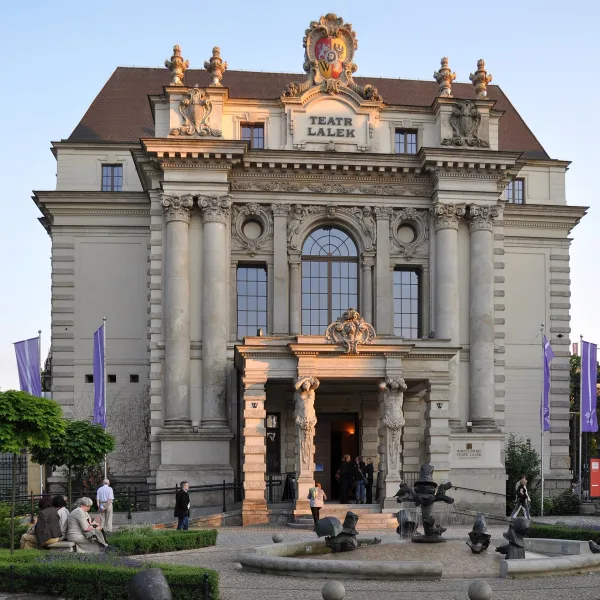
Three stages stand side by side at Teatralny Square: the Wrocław Opera, the Wrocław Puppet Theatre and the Wrocław Komedia Theatre. You can have dinner nearby and pick a show on the spot. The square links Świdnicka Street with Teatralna and Widok streets and was once called Zwingerplatz in German.
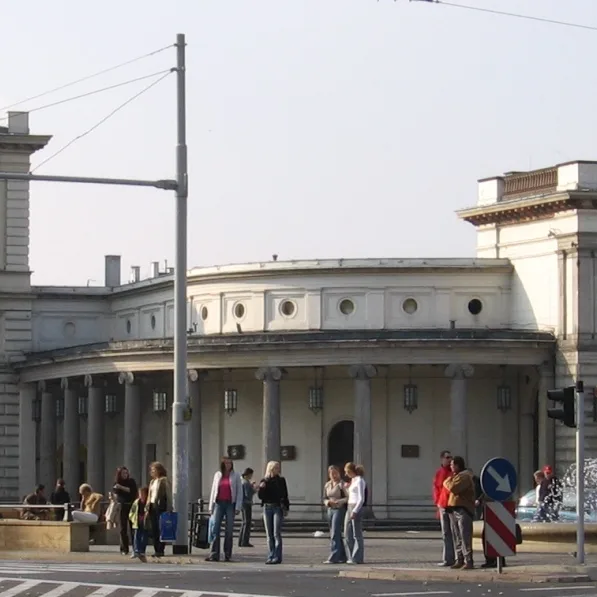
The Wrocław Opera occupies a historic building on Świdnicka Street, listed on the register of monuments. It was built between 1839 and 1841 as the Municipal Theatre, designed by Carl Ferdinand Langhans, with an auditorium for around 1600 people. The building burned twice, in 1865 and in 1871, and was rebuilt each time. During the second reconstruction the auditorium was raised, the stage house and portico were enlarged, and sculptures of the muses were placed on the roof. The theatre is adapted mainly for opera and ballet.
The Wrocław Komedia Theatre is a private stage founded in 1997. Comedies dominate the bill, so it suits a light evening. The programme changes with the season, so check a specific title before you buy a ticket. Tickets can be bought through the theatre's online booking system or at the box office.
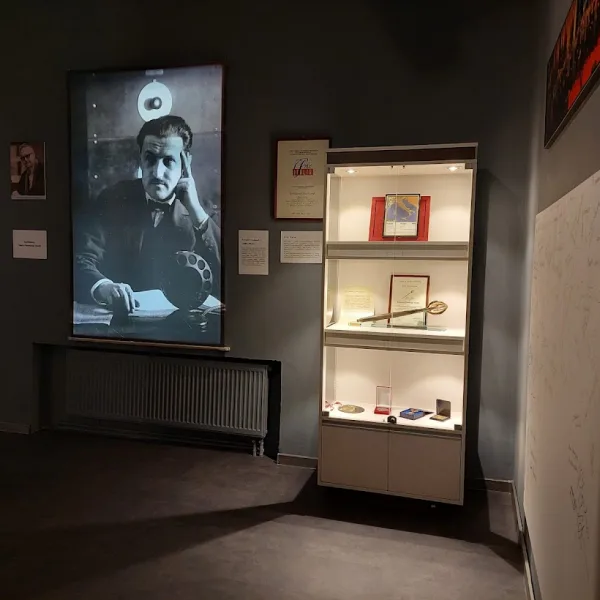
Next door, look into the Theatre Museum, a branch of the Museum of the City of Wrocław. It occupies the former south wing of the Royal Palace on Plac Wolności. You will see the restored apartment of Henryk Tomaszewski and a collection of theatre puppets from around the world, including Japan, Mexico and Australia.
Where to go for a concert in Wrocław?
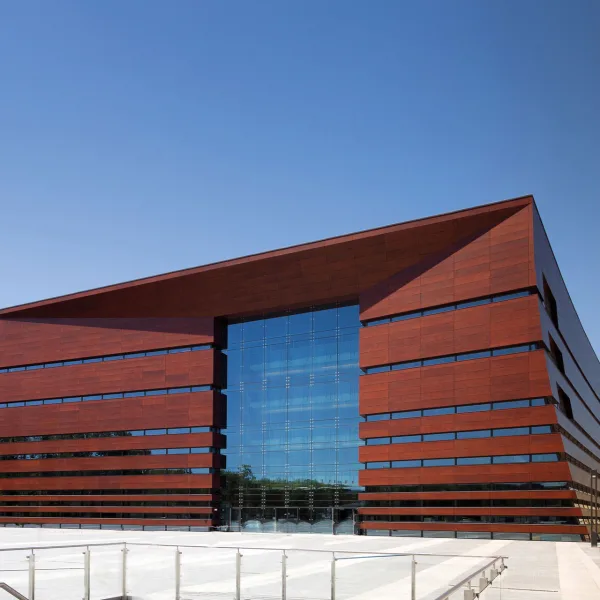
For a concert, go to the National Forum of Music on Plac Wolności. It is one of the largest concert venues in Europe and a cultural institution with its own orchestras and choirs. It has an organ and several halls.
The building opened in September 2015. Its construction was turbulent: a consortium stopped work in 2012 and the building stood unfinished for a time. A new consortium completed it. The studio Kuryłowicz & Associates designed the form, and the acoustics were the work of Artec Consultants, now operating as Arup. The building has six storeys above ground. In 2023 an international jury recognised it with an award for architecture and acoustics.
If you like classical music, combine an evening at the Forum with the opera from the previous section. Concert programmes are in the calendar under music.
Which theatre to choose with children?
With children, choose the Wrocław Puppet Theatre on Teatralny Square. Its repertoire is aimed at children, teenagers and adults, so a family can see one show together or pick separate ones. The theatre plays on several stages.
The Theatre of Puppet and Actor was launched in Wrocław on 18 October 1946 by Zenona and Elżbieta Kalinowicz. At first the stage was on Rzeźnicza Street, and later the theatre worked as Chochlik on Świdnicka Street. It took its present name in the 1963/1964 season. The home is a former club building of the Christian Merchants' Association, and since 1993 the whole building has belonged to the theatre alone.
The second option is the Arka Theatre on Mennicza Street. It is a professional inclusive theatre where actors with intellectual disabilities perform alongside professionals. It was founded in 1993, and since 2002 it has been run by the Association of Friends of the Arka Theatre. Check the programme and dates with the theatre directly. More ideas for the youngest are under events for children.
What other stages are there in Wrocław beyond Teatralny Square?
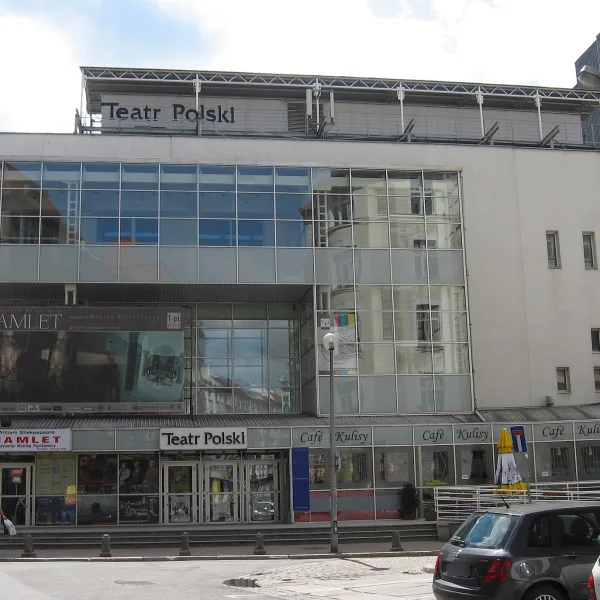
The Polish Theatre is a municipal cultural institution that has operated since 1949 and has carried its present name since 1969. It plays on three stages. The main seat is in a building from 1906 on Zapolskiej Street, built for the merchant Paul Auerbach and designed by Walter Hentschel. The building was innovative because it used reinforced concrete, and its solutions later influenced the construction of the Centennial Hall. Originally it held 1736 seats and served musicals and operettas.
The Henryk Tomaszewski Wrocław Pantomime Theatre works on Dębowa Avenue in Borek. Henryk Tomaszewski founded it in 1956, and the company has performed on every continent except Antarctica. It is theatre without words, built on gesture, expression and choreography. It also runs the Pantomime Studio, workshops for young audiences, open rehearsals and discussion meetings.
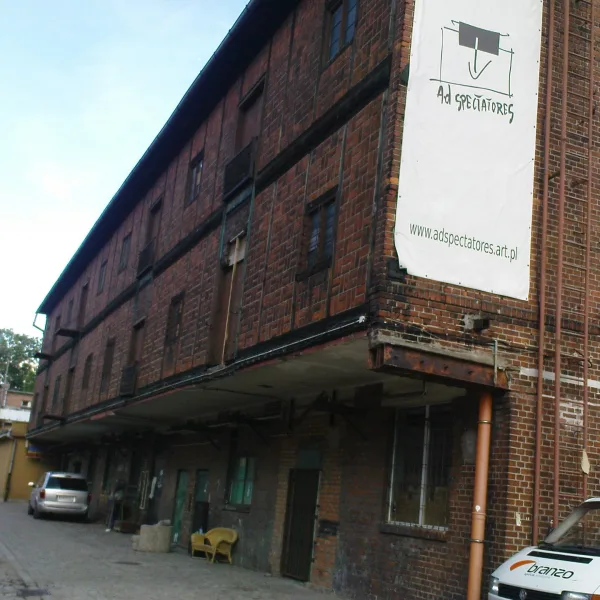
For smaller stages there is Ad Spectatores, a private theatre registered in 2000. It performs in several places in the city, including the Browar Mieszczański and the Attic Stage on Ruska Street. It also sells theatre vouchers, which make a good gift for a chosen show.
The former railway station Wrocław Świebodzki appears in this category as the seat of a theatre. It is the oldest surviving passenger station in the city, and train traffic stopped there in 1991. The building has kept its tracks, platforms and switches.
Which theatres work in Jelenia Góra, Wałbrzych and Świdnica?
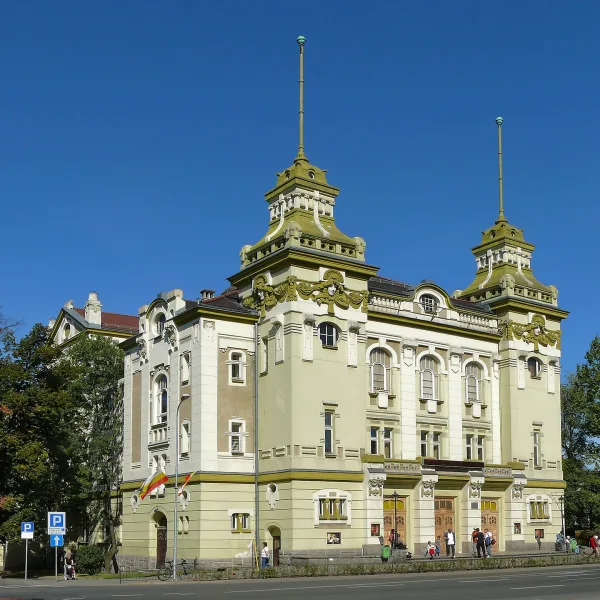
In Jelenia Góra stands the Cyprian Kamil Norwid Theatre, one of the oldest working drama theatres in Lower Silesia. The building on Aleja Wojska Polskiego went up in 1904 as the House of Art and Associations, designed by Alfred Daehmel. It follows the local variant of Art Nouveau called the Jelenia Góra Secession, and the decorative detail on the facade is still visible. The theatre has carried Norwid's name since 1974.
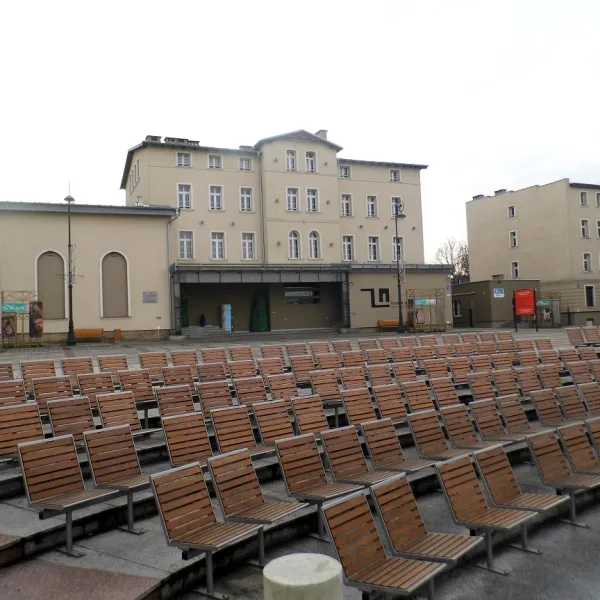
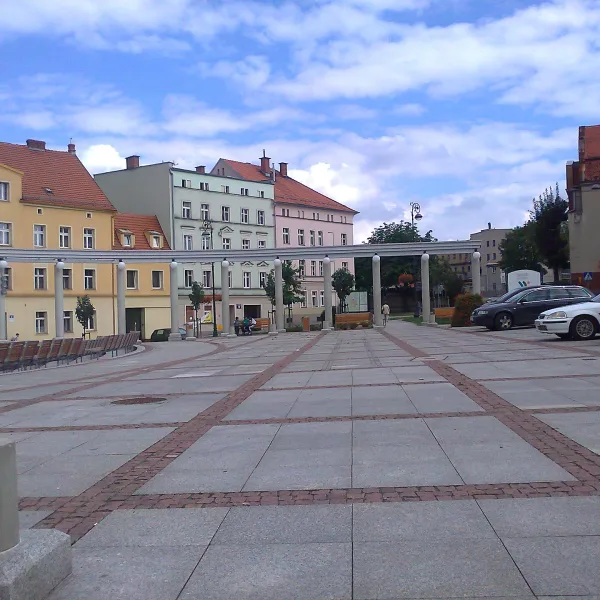
In Wałbrzych, the Jerzy Szaniawski Drama Theatre plays on Teatralny Square. It has a current repertoire for audiences of different ages, online tickets and a separate Accessible Theatre section with information for people with disabilities. The same square holds a sports hall and a municipal amphitheatre known locally as the Acropolis, with twenty-nine columns set in an arc. Near the theatre are the Old Mine Science and Art Centre, the Stary Książ castle and the Góra Parkowa viewpoint, so a whole day is easy to plan.
In Świdnica, shows and concerts are organised by the Świdnica Centre of Culture, the largest cultural institution in town. The theatre hall on the Market Square has three hundred and fifteen seats, and the Bolko Club on Plac Grunwaldzki has a hall for three hundred. Ensembles named Jubilat, Krąg and Czas work at the centre, together with theatre groups.
How to find the programme and buy a ticket?
The programme changes every season, which is why listings do not name titles. You can check current shows in the events calendar, separately for theatre, cabaret and children's events. The general calendar for the whole region is on the page events.
At an event, click the Buy ticket button. It leads to the ticket service KupBilecik or Bilety24, where you choose the date and your seat. Some theatres, such as Komedia and the Szaniawski Theatre, have their own online booking and sales. Always check the date and price with the seller who issues the ticket.
You can start a theatre evening with dinner or a stroll. The venues around Teatralny Square are close to the Market Square and the Town Hall, about four hundred metres away.
Frequently asked questions
Where can I see an opera in Wrocław?
At the Wrocław Opera on Świdnicka Street. The building from 1839 to 1841 is a listed monument and serves mainly opera and ballet. Check the current programme on the opera's website or in the events calendar.
Where to go for an organ or symphonic concert?
To the National Forum of Music on Plac Wolności. It has an organ and several halls and runs its own orchestras and choirs. The programme depends on the season.
Which theatre is best with children?
The Wrocław Puppet Theatre on Teatralny Square has a repertoire for children, teenagers and adults. There are also workshops for young audiences at the Tomaszewski Pantomime Theatre.
Are there theatres accessible to people with disabilities?
The Arka Theatre is inclusive, with actors who have intellectual disabilities. The Drama Theatre in Wałbrzych has an Accessible Theatre section with information for visitors. The Theatre Museum is adapted for people with disabilities.
How do I buy a ticket?
Open the events calendar, choose a show and click Buy ticket. The button leads to KupBilecik or Bilety24. Some theatres also sell tickets on their own website or at the box office.
Are there good theatres outside Wrocław?
Yes. Jelenia Góra has a drama theatre in an Art Nouveau building, Wałbrzych has the Szaniawski Theatre, and Świdnica has a cultural centre with a theatre hall. Each of these towns has its own page in the attractions section.

 Theatre and opera