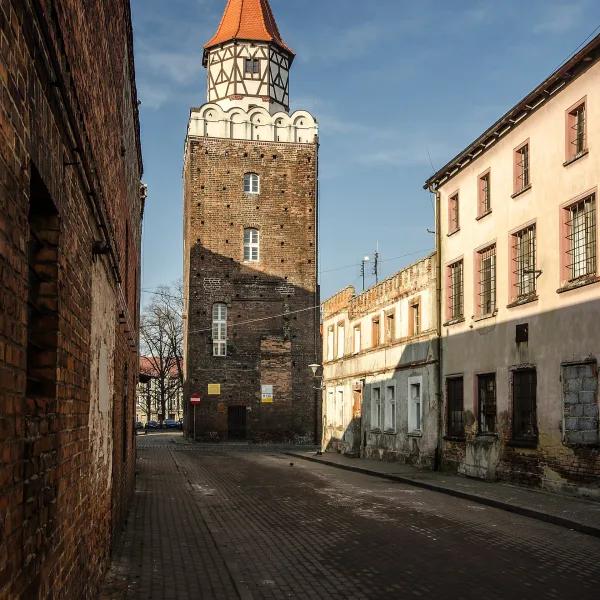
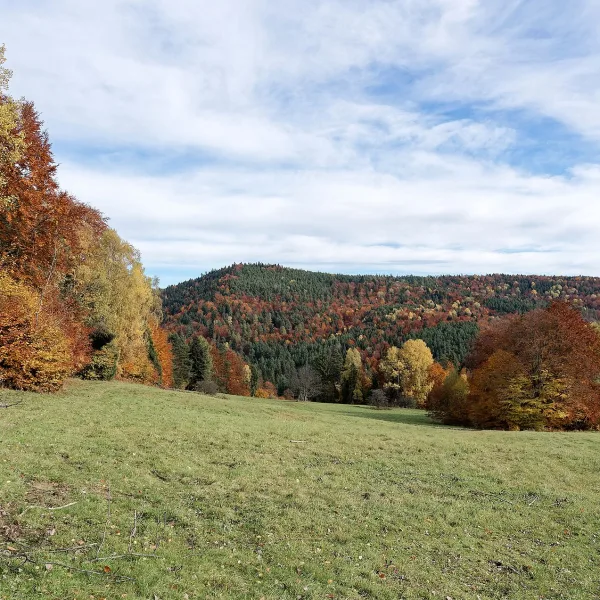
Viewpoints in Lower Silesia: observation towers, platforms and rock ledges with Sudeten panoramas. Find out where to climb and what you will see.
This list brings together places built for looking down on the landscape: steel and stone towers on summits, wooden platforms by forest roads, terraces on town halls and sandstone rock ledges. Besides the mountain panoramas you will find a few unusual spots, such as a hill for watching planes and a tower that stands only about 20 centimetres tall. If you want summits and trails rather than lookouts, head to the mountains category.
Which observation towers should you start with?
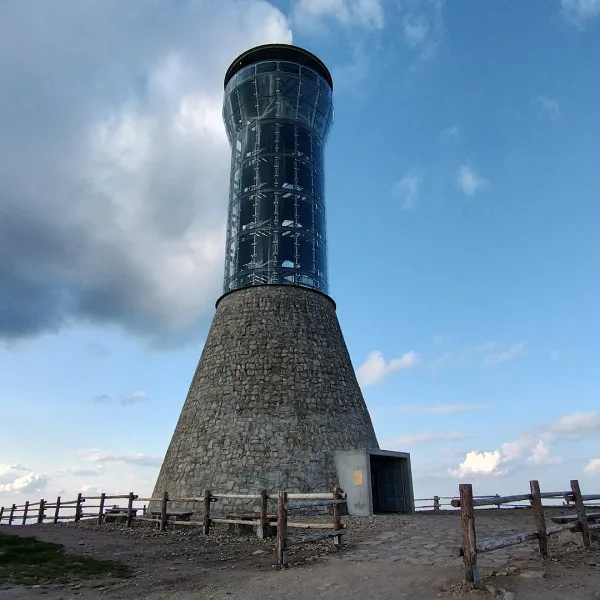
Start with three towers on the best-known summits: the concrete one on Wielka Sowa, the steel and glass one on Śnieżnik and the wooden one on Trójmorski Wierch. Each stands in a different range, so together they give a good sense of the Sudetes.
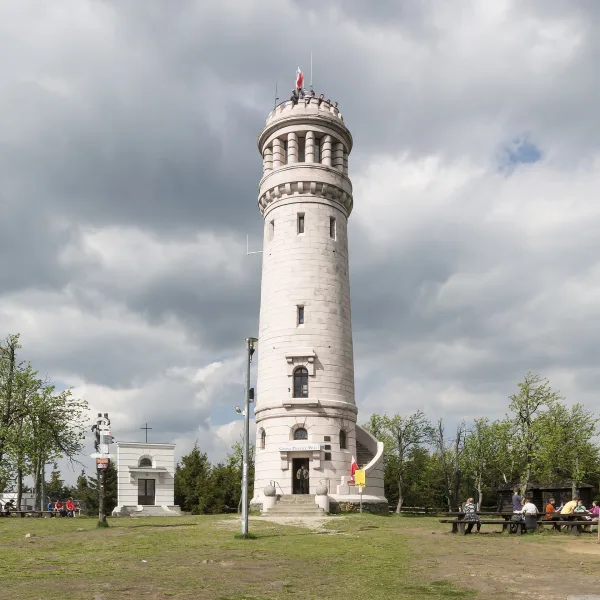
The tower on Wielka Sowa crowns the highest hill of the Owl Mountains, 1015 metres above sea level. It was built from concrete blocks in 1905-1906, and hiking trails reach it from several directions. Śnieżnik is the highest mountain of the Eastern Sudetes, and its new tower opened in 2022. It replaced a stone predecessor from the end of the 19th century, blown up in 1973. The summit lies at 1425 metres.
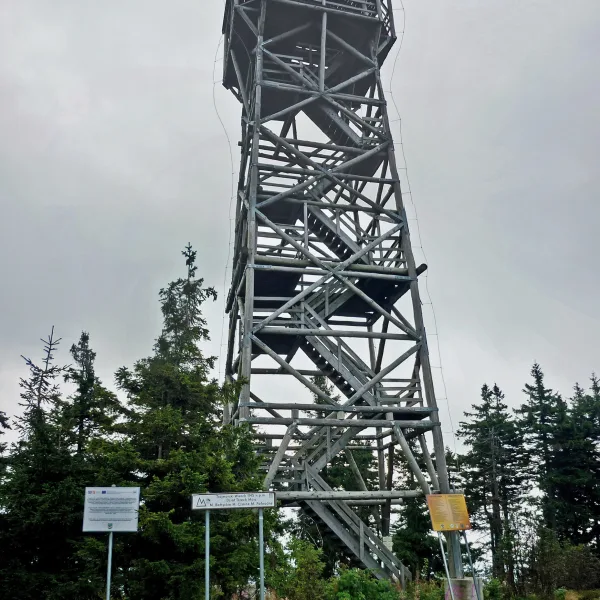
On Trójmorski Wierch, in the Śnieżnik Massif, stands a wooden tower 25 metres high, opened to visitors in 2010. It doubles as a fire lookout, and the summit rises to 1145 metres, close to the Polish-Czech border.
Where can you get a good view without a long hike?
Viewpoints in towns and by roads ask for the least effort. The terrace on the town hall tower in Świdnica, the gallery of the town hall in Dzierżoniów and Death Bend on the Sudeten Road can all be visited on a short stop, with no mountain climb.
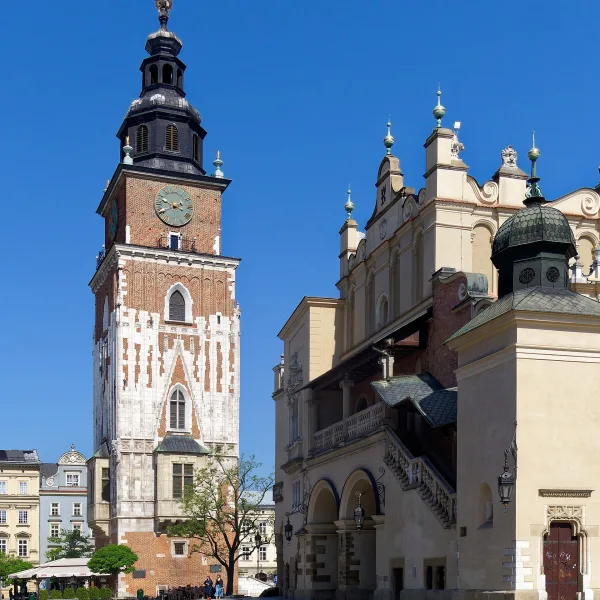
The town hall tower in Świdnica is 58 metres tall, and the viewing terrace is at 38 metres. A lift takes you most of the way, but the last two levels are climbed on foot. In Dzierżoniów the tower belongs to a town hall from the second half of the 13th century, and from the gallery you can see the Dzierżoniów Basin, the Owl Mountains and the Ślęża Massif.
Death Bend (Zakręt Śmierci) is a sharp bend on road number 358 between Szklarska Poręba and Świeradów-Zdrój. It was built in 1935-1937 as part of the Sudeten Road and opens a view of the Karkonosze and the Jelenia Góra Basin. Mining tunnels run under the road, a trace of pre-war defence plans. In Jelenia Góra you can also climb Krzywoustego Hill: it is 375 metres high, has a tower from 1911 nicknamed the Mushroom and free entry to the terrace.
Near Bolków, stop at the Stary Kamieniołom viewpoint. An avenue of lime trees leads from the car park, the walk takes about 10 minutes, and on the terrace stands a free telescope. In good visibility it shows Bolków Castle.
Which viewpoints suit the Owl Mountains and the Wałbrzych Mountains?
In the Owl Mountains choose Kalenica, Włodzicka Góra or the wooden platforms near Ostroszowice. In the Wałbrzych Mountains the best are the towers on Chełmiec, Borowa and Trójgarb, plus Góra Parkowa above Wałbrzych. They differ in age, material and height.
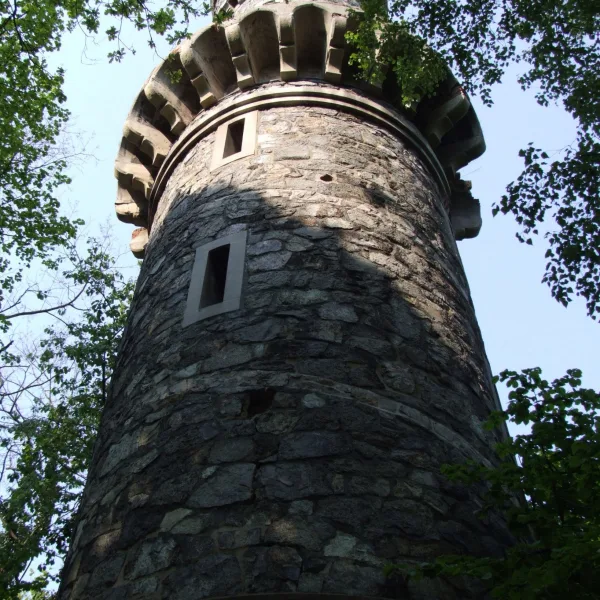
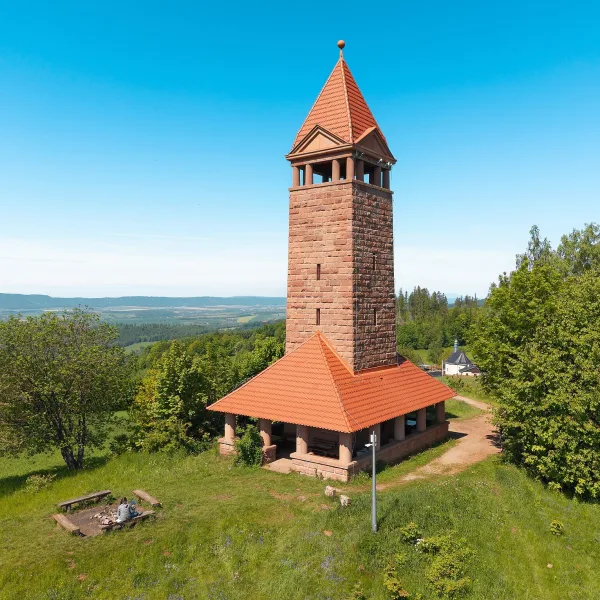
The tower on Kalenica is a steel structure from 1932-1933 on a summit of 964 metres, with two terraces and a view across the Central Sudetes. The tower on Włodzicka Góra dates from 1927 and was rebuilt after years of decay. Above Wałbrzych stands the stone Chełmiec tower from 1888. It is 22 metres tall and built of Permian porphyry, the same rock as the summit itself.
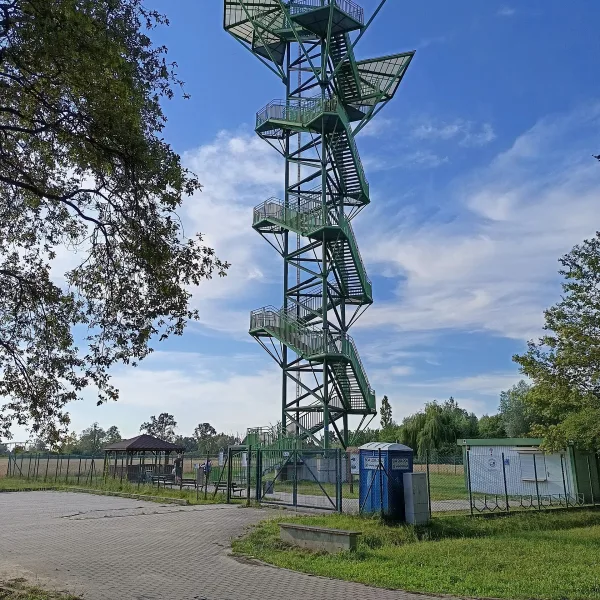
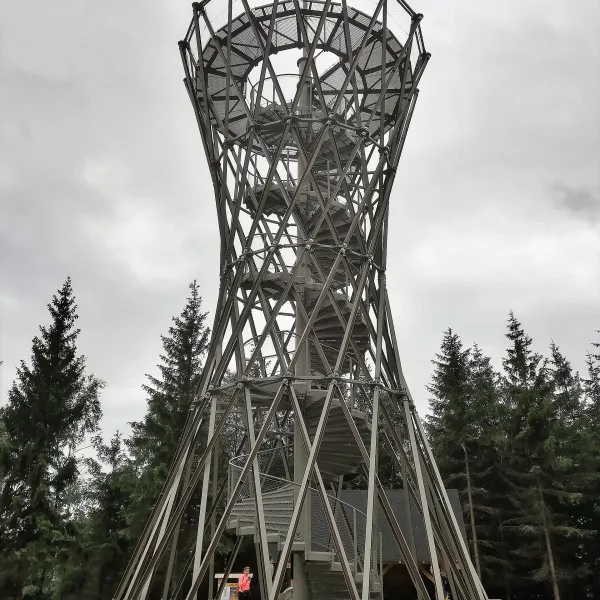
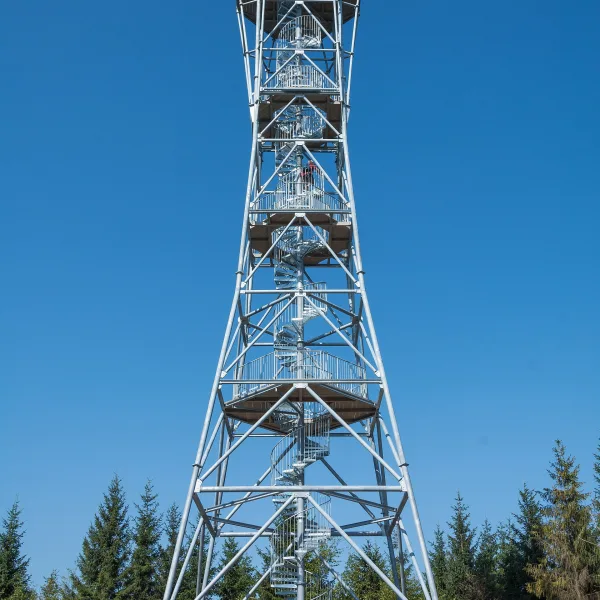
The Borowa tower, opened in 2017, has the shape of a hyperboloid: 32 steel columns narrow towards the middle. A spiral staircase of 90 steps leads to the terrace at 15.3 metres. Trójgarb is a triangular tower with five terraces at heights from 17 to 23 metres, reached by 160 steps. In clear weather you can see the Ślęża Massif, the Karkonosze and even Wrocław.
Above Wałbrzych there is also Góra Parkowa, the highest hill in the park, with a view of the Stary Zdrój district and the towers of Książ Castle. The platforms Pod Wroną and Niebiańskie Widoki are small wooden terraces by the road from Myśliszów to Ostroszowice. The first, built in 2017, is adapted for wheelchair users and opens a panorama of the Owl Mountains.
What can you see in the Kłodzko Valley and the Table Mountains?
The Kłodzko county has the most viewpoints on the list. Combine the towers in Nowa Ruda, the tower on Kłodzka Góra, the platform above Lądek-Zdrój and the rock lookouts of the Table Mountains, because they lie fairly close to each other.
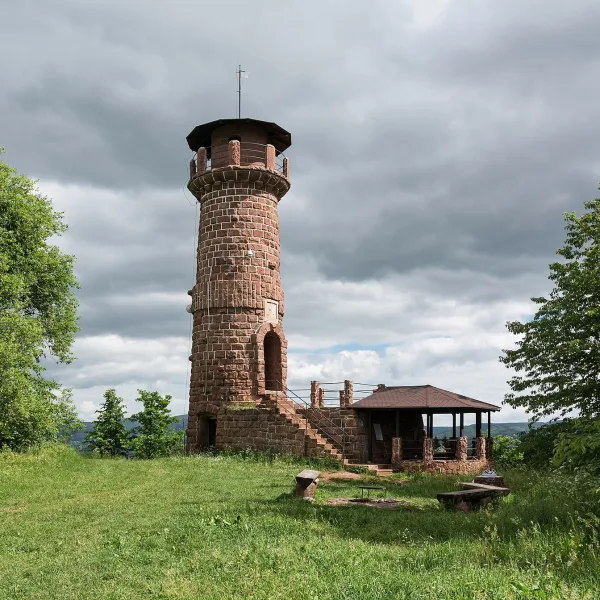
Nowa Ruda has two stone towers of red sandstone: on All Saints Hill (648 metres, a tower from 1913, about 15 metres tall) and one on St Anne's Hill, listed as a monument. See the full list of the town's sights on the Nowa Ruda page. The tower on Kłodzka Góra is free and has four platforms, the highest at 30.5 metres, and information boards help you identify the ranges in view.
The steel Trojak platform above Lądek-Zdrój has three arms, and part of it juts out beyond the edge of the rock. It overlooks the town, the Śnieżnik range, Czarna Góra and the Golden Mountains. In Suszyna near Radków stands a reinforced concrete tower from 2014, 27 metres tall and clad in light sandstone, with a platform at 22 metres.
Among the rocks of the Table Mountains, pick Ochota Magdaleńska, a sandstone tower above the Road of a Hundred Bends, at around 670 metres. Railings secure the top, and the view reaches the Broumov Basin and the Suche, Sowie and Bardzkie mountains. The second stop is Puchacza Rocks at 730 metres, traces of an old quarry within the Table Mountains National Park. In the Śnieżnik Massif, the yellow trail from Krosnowice leads to the Kapelusz viewpoint: 2.9 km and about 55 minutes one way.
Where to find towers with a history?
For history, look for Bismarck towers and 19th-century structures. Lower Silesia has two Bismarck towers in very different condition, plus a neo-Gothic tower on another Wieżyca hill and an artificial castle ruin at Grodziszcze.
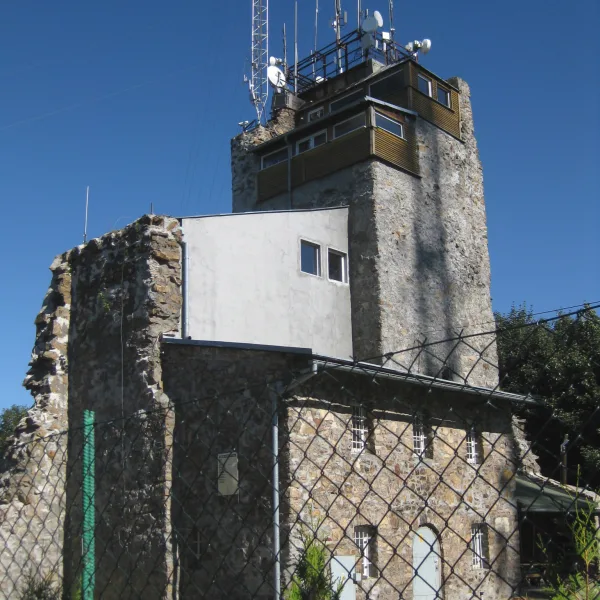
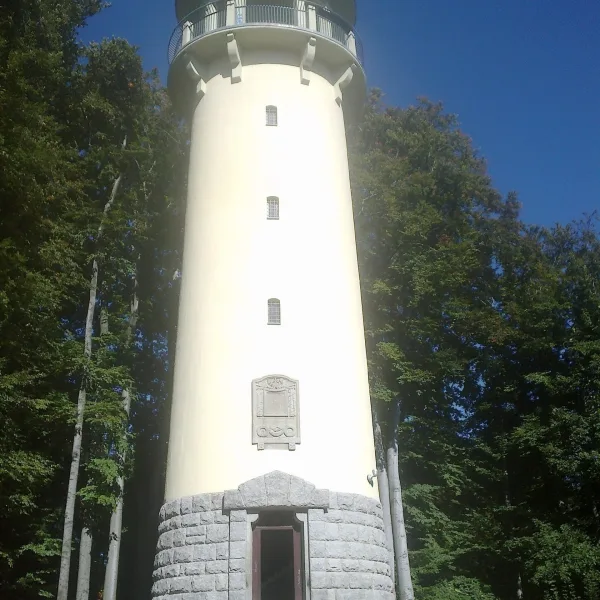
The Bismarck Tower on Wieżyca in the Ślęża massif is open to visitors. Its foundation stone was laid in 1906 and it opened in 1907. The design, titled "Twilight of the Gods", was by Wilhelm Kreis, and the project was started by the Wrocław Students' Association. It is one of 172 Bismarck towers that survive in the world. The tower on Jańska Góra in Sokolniki looks very different: built in 1869, it is the oldest, about 23 metres tall, but today it is a ruin behind a fence, with no access to the platform.
Near Dobromierz, another Wieżyca carries a neo-Gothic tower from 1852, built as a monument to the battle of Dobromierz and as a lookout at once. The tower on Grodziszcze, from 1813, imitates the ruin of a medieval castle but is neglected today.
Which places are unusual or good for families?
Józkowa Góra and the tower in Kotowice are the easiest with children. Kids will also enjoy places with an odd idea: a tower only about 20 centimetres tall in Łężyce and Spotter Hill by Wrocław airport.
On Józkowa Góra above Nowe Rochowice you will find rotating deckchairs, a free telescope, a board naming the summits in view and an official fire pit. The walk from the bus stop takes about 15 minutes, and the track is open to cyclists, wheelchairs and families. The tower in Kotowice is 40 metres tall with three covered platforms, and entry is free. In good weather you can pick out the Ślęża Massif and the Sudetes, and cycling trails run nearby.
The tower in Łężyce was built in July 2021 on the model of a Czech original and is a joke about viewing towers. Spotter Hill has benches and steps, and you watch planes take off and land. For more ideas for a day with little ones see the for children category.
How to plan a trip to a viewpoint?
Plan around the weather and the time of day. The view depends on visibility, and many towers stand on summits that you reach by trail. In the list, each place shows its town and a short description.
- Pick one range per day, for example the Owl Mountains or the Wałbrzych Mountains, and combine two towers.
- Check the description for easy access: wheelchairs can reach the Pod Wroną platform and Józkowa Góra.
- Remember that some places are ruins or have no entry: the Jańska Góra tower and the working quarry in Rybnica Leśna are seen from outside only.
If you want to combine viewpoints with water, see lakes and bathing areas. Parks and reserves are collected in parks and nature, and the surroundings of Jelenia Góra are on the Jelenia Góra attractions page.
Frequently asked questions
Which observation towers in Lower Silesia are free?
Most places on the list are marked as free, and descriptions confirm free entry for the Kłodzka Góra tower, the Kotowice tower and the terrace on Krzywoustego Hill. Check the description of the tower you choose before you go, as rules can change.
Where can you see a panorama of the Owl Mountains?
The best places are the towers on Kalenica and Wielka Sowa. Closer to the valley, try the Pod Wroną and Niebiańskie Widoki platforms near Ostroszowice. From Józkowa Góra you can see the Owl Mountains, the Wałbrzych Mountains and Ślęża.
Can you go up a tower with a child or a wheelchair?
A dirt track to Józkowa Góra is open to wheelchairs and families. The Pod Wroną platform is adapted for wheelchair users. Summit towers are climbed by stairs, so with small children choose lower ones, such as the tower in Kotowice.
Which tower is best for one short trip?
With a few hours, pick the tower in Świdnica, the tower in Kotowice or the Stary Kamieniołom viewpoint near Bolków. With a full day, drive to the Wałbrzych Mountains and combine Chełmiec, Borowa and Trójgarb.
What about places with no details in the description?
For a few places, such as the platform in Mysłakowice, sources only confirm that a viewpoint exists. Treat them as ideas to check on site, not as ready-made destinations for a trip.

 Viewpoints