Culture in Wrocław and Lower Silesia: libraries, cultural centres and concert halls, with many good options for a rainy day.
This page covers cultural venues that are neither museums nor theatres: city and university libraries, cultural centres with stages and galleries, and a former coal mine turned into a community hub. Many offer multimedia collections, discussion clubs and meetings for readers. They are a sensible plan B when the weather ruins an outdoor walk.
Where to start if you want culture beyond museums and theatres?
Start with the library closest to your route. Most of them work as small cultural centres, with a reading room, multimedia shelves, book clubs and author meetings. In Wrocław, Teatralny Square is a good starting point. In smaller towns, look near the market square or the local cultural centre.
The list combines two kinds of places. The first are public libraries: city, municipal and county ones, often with a network of branches in housing estates and villages. The second are cultural centres with a concert hall, a gallery and art studios. Each listing gives a street address, so you can fit a visit into a sightseeing day.
If you want an evening programme, go to theatre and opera. Historical exhibitions are under museums, and heritage buildings are under historic sites.
Where to spend a rainy day with a book in Wrocław?
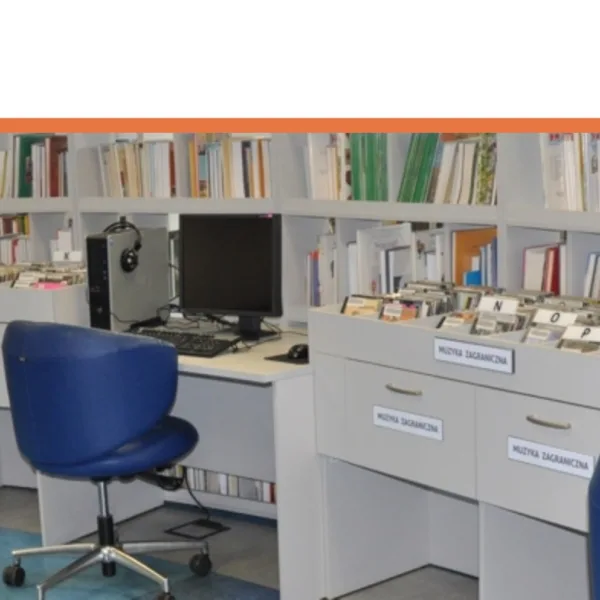
In the centre, head to the Mediateka on Teatralny Square. It is a branch of the city library focused on multimedia: audiobooks, films, music, board games and books in foreign languages.
The Mediateka offers e-ink readers and a virtual reality goggles station. Self-service machines handle loans and returns. On Fridays there are computer consultations, and Language Cafe is a series of meetings for conversation in foreign languages. The library also runs book clubs and author meetings. If you like to practise English, French or Spanish in conversation, this is a good address.
A short walk away, on the Market Square, stands the Tadeusz Mikulski Lower Silesian Public Library. It is the regional public library, with digital resources including e-books and academic databases, interlibrary loans, lectures and book club meetings.
Which Wrocław branches have an unusual profile?
The neighbourhood branches of the city library differ in character. It pays to choose the one that matches your interests. Here are a few examples taken from the listings.
- In the Nowy Dwór district, Branch No. 22 on Chociebuska Street holds the biggest fantasy collection in the city, with separate corners for children, teenagers and adults, and a reading room in a garden.
- Branch No. 45 on Traugutta Street, in Przedmieście Oławskie, focuses on contemporary novels, crime fiction and fantasy, plus self-help guides, biographies and reportage.
- Branch No. 55 in Przedmieście Świdnickie has separate shelves for crime, romance, horror and fantasy, and reading about the Second World War. It delivers books to the homes of people who are ill.
- Branch No. 46 in Księże keeps a collection about Wrocław and Lower Silesia and runs a programme that promotes local artists.
- Branch No. 15 in Lipa Piotrowska sits in a residents' council building from the early twentieth century. It stocks comics, young adult titles and books in Ukrainian.
- Branch No. 23 stands by the Ikar boulevard. It has an art gallery, books in foreign languages and weekly technical help for seniors.
Several branches, including those in Maślice, Ołtaszyn and Huby, are marked as accessible for people with reduced mobility, and some are friendly to people on the autism spectrum.
Where are the university libraries and historic collections in Wrocław?
On Grunwaldzki Square stands the University Library, on Joliot-Curie Street. It was formed between 1811 and 1815 from the collections of the Jesuit Leopoldina university, founded in 1702, the Viadrina university, secularised monastery libraries and school collections.
The same part of town has faculty and specialist libraries. The library of the Medical University holds literature on medicine and pharmacy. The Main Reading Room in the Wrocław University of Science and Technology library building offers on-site collections, interlibrary loans and electronic resources, including e-journals. The library of the Faculty of Law, Administration and Economics is on Uniwersytecka Street, in building D.
On Ostrów Tumski, the cathedral island, the Archdiocesan Library stands on Cathedral Square. It was founded in 1947 and since October 2020 has occupied a new building shared with the Chapter Library and the Archdiocesan Archive. Before visiting an academic or church library, check the entry rules on the institution's website, because the listings do not give them.
What culture can you find in Głogów, Świdnica and Legnica?
In Głogów the largest cultural institution is the Municipal Cultural Centre, active since 1977. It includes a Culture Centre with a concert hall, a Concert Club Stage for smaller events and a Creative Education Gallery. There is also a theatre and art studios. The city library has neighbourhood branches. One is called BLOG, short for the Local Library of the Głogów Estate, and Branch No. 1 on Budowlanych Street has a virtual tour of its interior on the library website. Other places are on the page attractions in Głogów.
In Świdnica the Norwid Municipal Public Library has its main seat in a historic building on Franciszkańska Street, with three branches in town. For an evening, the Świdnica Centre of Culture has a theatre hall on the Market Square. More about the town is on attractions in Świdnica.
In Legnica the public library has its main seat on Piastowska Street and over a dozen branches. The Ecolibrary on Łukasińskiego Street stands out, with a nature and environment collection and ecology classes for children. Other places in town are on attractions in Legnica.
Is it worth looking for libraries and cultural centres in small towns?
Yes, because libraries in smaller places often act as the local meeting point. They run discussion clubs, digital collections and board game libraries, and their buildings can be interesting in themselves.
- The County and Municipal Public Library in Lwówek Śląski sits in the historic town hall on the market square and has operated since 1946.
- The library in Jawor, on Seniora Square, gives access to Legimi, Polona and Academica, and runs a series of walks around town.
- In Kudowa-Zdrój the library on Zdrojowa Street lends board games and Albik pens. Residents, spa guests and tourists all use it.
- The library in Sobótka works inside the Regional Centre of Slavic Culture, which also runs a cinema and a theatre stage.
- The library in Bielawa has a Regional Research Department with materials on the history of the town and its surroundings, and a round-the-clock book drop.
- In Bolesławiec the Knowledge Centre combines lending with a digital catalogue and discussion clubs for different groups of readers.
Around Wrocław, municipal libraries run networks of branches. The library in Długołęka has a Wandering Library programme and e-book access. The library in Strzegom runs branches in six villages and a digital archive of local chronicles. The library in Kąty Wrocławskie, on the Market Square, was founded around the turn of 1946 and 1947 as the first public library in the Wrocław county. The branch in Nadolice Wielkie has a discussion club for adults.
How to build culture into a full day out?
The easiest way is in central Wrocław. Visit the Mediateka on Teatralny Square in the morning, then walk to the Lower Silesian Public Library on the Market Square. Spend the afternoon sightseeing and the evening at a show or concert. The district with the densest cluster of places is described on attractions in the Old Town.
Outside Wrocław, pair a library or cultural centre with a local landmark. In Boguszów-Gorce, see Witold Shaft, a former coal mine shaft where mining continued until 1993. The head-frame buildings are on the register of monuments, and today they house a cultural centre with a library, a memorial room and a viewing tower.
For the current programme of meetings, concerts and exhibitions, use the events calendar. Libraries and cultural centres also publish their own schedules, so it helps to check their websites before you travel.
Frequently asked questions
Which library in Wrocław is best on a rainy day?
The Mediateka on Teatralny Square offers the most to do. It has VR goggles, e-ink readers, board games and Language Cafe meetings. If you prefer quiet and a reading room, choose the branch in Nowy Dwór, which has a reading room in a garden.
Can I find books in foreign languages?
Yes. The Mediateka holds books in English, French, German, Spanish, Italian, Russian and Ukrainian. The branch in Lipa Piotrowska also stocks books in Ukrainian, and the branch by the Ikar boulevard offers books in foreign languages and technical help for seniors.
Where can I find culture outside Wrocław?
Good addresses include the Municipal Cultural Centre in Głogów, the Świdnica Centre of Culture, the Regional Centre of Slavic Culture in Sobótka and the libraries in Jawor, Bolesławiec and Lwówek Śląski. Each town has its own page in the attractions section, and we link to several above.
Are there libraries adapted for people with disabilities?
Several Wrocław branches are described as adapted for people with reduced mobility, and some are friendly to people on the autism spectrum. The branch in Maślice also delivers books. Confirm the details with the library before you go.
Where do I check current cultural events?
Use the portal's events calendar. It lists shows, concerts and other events, and the Buy ticket button leads to the ticket service KupBilecik or Bilety24.