Mountains of Lower Silesia: Śnieżka, Szrenica, Szczeliniec Wielki, Wielka Sowa, Ślęża and more Sudeten peaks. Choose your hike.
This list gathers peaks and hills from across the region, from the Karkonosze to the Sudeten Foreland, along with the hills heaped up in Wrocław. It helps you choose a goal by range, height and whether a viewing tower waits at the top. Below we suggest which summit to start with, what lies in the same area and how to build a route.
Which peak should you pick for a first hike in the Sudetes?
Start with Śnieżka, the highest peak of the Karkonosze, the Sudetes and Silesia, with an official height of 1,603.30 metres above sea level. It stands on the Polish-Czech border, and in good visibility the panorama reaches over 200 kilometres. If you prefer a gentler start, choose Szrenica above Szklarska Poręba: it is 1,362 metres high, has a viewpoint and a mountain hut on the summit, and you can ride up by cable car.
For a shorter trip from Wrocław, Ślęża above Sobótka fits well. Despite a modest 717.5 metres it feels impressive, because its relative height exceeds 500 metres. It is a former centre of pagan worship, and carved stone sculptures survive there.
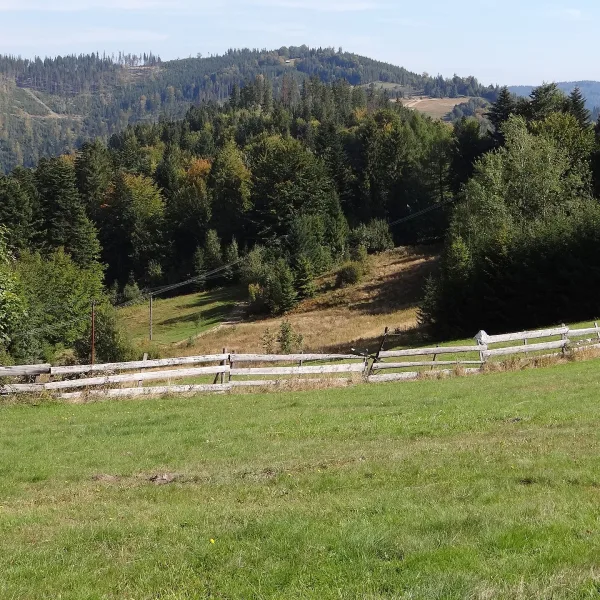
Before you decide, look at the height and the description on the card. Peaks differ in character: some have marked trails and huts, others lie in the forest and few people go there. Brusek in the Bialskie Mountains stands at 1,115.9 metres, and its description calls it a forested area with little foot traffic.
What to see in the Karkonosze?
The Karkonosze are the range of the highest peaks in the region. After Śnieżka and Szrenica look at Wielki Szyszak, the fourth highest peak of the Karkonosze and of the whole Sudetes, at 1,509 metres. The border with Czechia runs across its summit, and no marked trail leads to the top. There you can see the ruins of a monument to Wilhelm I from 1888.
On the ridge you will also find Łabski Szczyt (1,471 m), the fourth highest in the Polish Karkonosze, between Szrenica and the Śnieżne Kotły, with a PTTK mountain hut on its slope. Śląskie Kamienie (1,413 m) is a summit on the Silesian Ridge with a group of rocks and a view of the Czech Kamienie.
In Karpacz, notice Kopa, about 1,377 metres, on the route to Śnieżka. A chairlift and the Karpacz Ski Arena ski complex operate there. You can explore the area further on the page of attractions in Karpacz, and the foothills of Szrenica on the page of attractions in Szklarska Poręba.
Where to go in the Izera, Kaczawa and Janowice Mountains?
The highest peak of the Izera Mountains is Wysoka Kopa, 1,127.6 metres. After the ecological disaster of the 1980s it is treeless, and subalpine meadows grow on its top. The Main Sudeten Trail crosses it. Nearby, above Szklarska Poręba, stands Wysoki Kamień (1,058 m), with a panorama over the Karkonosze, the Izera, Kaczawa and Janowice ranges, part of the Crown of the Lower Silesian Mountains.
Near Świeradów-Zdrój climb Czerniawska Kopa, with a wooden viewing tower of two terraces. In the Janowice Mountains the highest is Skalnik (945 m), with a viewpoint on the Ostra Mała rocks. Lwia Góra (718 m) lies in the Strużnica Mountains near Karpniki.
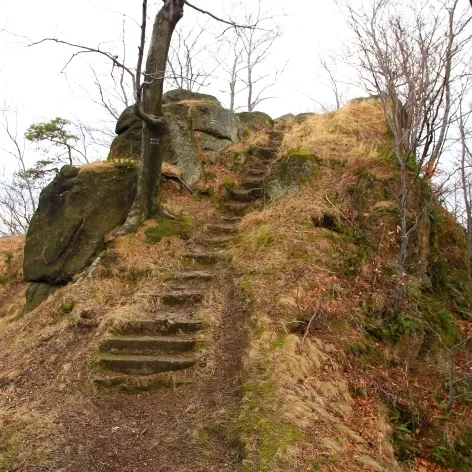
In the Kaczawa Foothills Ostrzyca Proboszczowicka stands out, a cone-shaped peak of an old volcano, 501 metres high, nicknamed the Silesian Mount Fuji. It has a basalt neck, a nature reserve and a trail over stone steps. In the Kaczawa Mountains there is Skopiec, 720.7 metres, the third highest in the range.
What to see in the Table Mountains and the Kłodzko Land?
Start with Szczeliniec Wielki, the highest peak of the Table Mountains at 922 metres, in the Table Mountains National Park near Karłów. The summit is made of cracked Late Cretaceous sandstone and has viewing terraces, and the trail dates from 1814.
On the border with Czechia rises Śnieżnik, 1,425 metres, the highest border peak on the Polish side of the Eastern Sudetes, with a viewing tower. The European watershed between the Baltic and Black Seas runs along it. The same massif holds Mały Śnieżnik (1,326 m), inside a nature reserve, and Igliczna (845 m), with a late Baroque chapel and a shrine on top, reached by three marked trails.
In the Bystrzyckie Mountains climb Jagodna, 985 metres, with two summits, a viewing tower and a PTTK hut on the trail to Międzylesie. In the Golden Mountains look for Jawornik Wielki (872 m) with its tower, and the border peak Kowadło, from which you can see the Golden Mountains and the Czech Hrubý Jeseník. At Nowa Ruda go up All Saints Hill (648 m), which has a viewpoint, and above Świerki climb Włodzicka Góra (757 m), whose tower opened in 2018.
Above Zieleniec rises the border peak Šerlich, 1,025 metres, on the main ridge of the Orlické Mountains. The summit itself lies on the Czech side, but the slopes facing Zieleniec are already Polish, and the ridge follows part of the European watershed.
What does a trip to the Owl and Wałbrzych Mountains look like?
The highest peak of the Owl Mountains is Wielka Sowa, 1,015 metres, with a viewing tower. It belongs to the Crown of Polish Mountains and the Crown of the Lower Silesian Mountains. Nearby lies Kalenica, the third highest peak in the range (964 m), with a tower, a beech forest reserve and the rock formations called the Wild Rocks. Kozia Równia (930 m) has a flat top and lies in the Owl Mountains Landscape Park.
Waligóra, in the Dry Mountains, at 933.88 or 936 metres depending on the source, is the highest of the Stone Mountains. Walking and cycling trails lead to it. In the Wałbrzych Mountains see Trójgarb, with three summits and a tower, built of red rhyolites, and Chełmiec (850 m) with a tower and a millennium cross.
Zamkowa Góra (618 m) above Wałbrzych has the ruins of the medieval Nowy Dwór castle. Lisi Kamień (613 m) bears traces of old silver ore mining. For the surrounding area see the page of attractions in Wałbrzych.
Which hill is closest to Wrocław?
In the Ślęża massif, in the Sobótka commune, lies also Wieżyca (415 m). It has a viewing tower from the early twentieth century and can be reached by the yellow trail from Sobótka. In Trzebnica you will find Winna Góra (219 m), with a landscape and recreation park on its slopes.
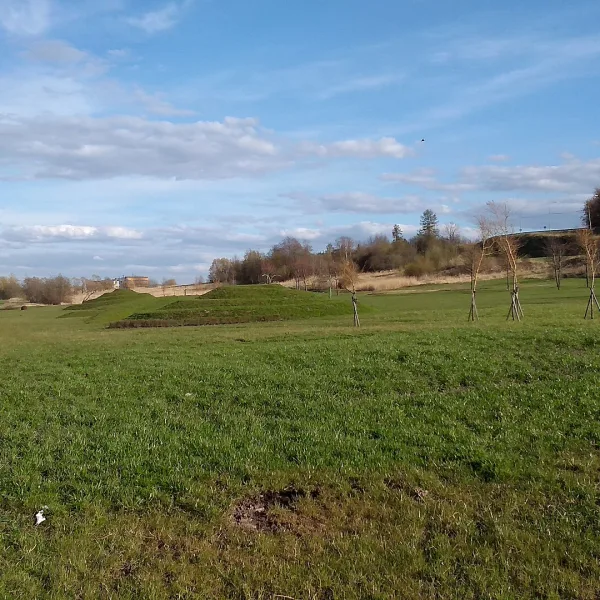
Wrocław itself has hills heaped up by people. Wzgórze Gajowe in the Gaj district reaches 155.4 metres above sea level, the second highest natural-height point in the city. It was built from the rubble of wartime destruction. Wzgórze Gajowickie arose from the reclamation of a former landfill and has an outdoor gym and a view over the city. Wzgórze Tarnogajskie is 133 metres high. These are not mountains, of course, but with a free hour they give you a view and some exercise.
Where to look for towers and panoramas?
Many peaks in the region have viewing towers that lift the view above the trees: Wielka Sowa, Jagodna, Trójgarb, Kalenica, Czerniawska Kopa, Włodzicka Góra and Chełmiec. Śnieżnik has a tower, and Szrenica a viewpoint by the mountain hut.
Góra Szybowcowa in Jeżów Sudecki is a viewpoint tied to the history of Polish gliding, with a panorama over the Karkonosze and the Jelenia Góra Basin. The famous Grunau Baby glider was built here, and the pilot Hanna Reitsch began her flying career here. For the full list of places with a view see viewpoints. Waterfalls, caves and rocks wait under parks and nature.
How to plan a hike and use the list?
Choose the range first, then the peak. In the Karkonosze link neighbouring summits along the ridge, in the Table Mountains build a day around Szczeliniec Wielki, and in the Owl Mountains start with Wielka Sowa. Pay attention to hints on the cards: access by cable car, a hut on the summit, no marked trail.
The list also shows the town and tags. Most peaks carry the tags “Bezpłatne” (free), “Piękne widoki” (beautiful views) and “Przyroda” (nature) on the portal. Still, check current entry rules, cable car hours and the weather, because they change more often than descriptions.
Frequently asked questions
What is the highest peak in Lower Silesia?
Śnieżka in the Karkonosze, at 1,603.30 metres above sea level. It stands on the Polish-Czech border. It is the highest peak of the Karkonosze, the Sudetes and Silesia, and also the highest mountain in Czechia.
Which peaks have viewing towers?
Towers stand on Wielka Sowa, Jagodna, Trójgarb, Kalenica, Czerniawska Kopa, Włodzicka Góra and Chełmiec, among others. Szrenica has a viewpoint and a hut, and Śnieżnik a viewing tower.
Which mountain should I pick if I do not want a long climb?
Szrenica, which you can ride up by cable car from Szklarska Poręba. You can also choose Kopa in Karpacz, where a chairlift operates.
Which mountain is closest to Wrocław?
Ślęża above Sobótka. It is 717.5 metres high, with a relative height of over 500 metres. The smaller Wieżyca in the same massif has a viewing tower and can be reached by the yellow trail from Sobótka.
Is there a trail to the top of Wielki Szyszak?
No, no marked trail leads to the summit of Wielki Szyszak. It lies on the border with Czechia, stands 1,509 metres high and is the fourth highest peak of the Karkonosze and the Sudetes.

 Mountains