Nature in Lower Silesia means high peaks, waterfalls, rock mazes and caves. See where to go and how to combine places into one day.
What kind of nature is there in the region?
Mostly mountains, but the list is wider than that. Besides the peaks of the Karkonosze, the Owl Mountains and the Śnieżnik Massif, you will find waterfalls in gorges, sandstone and granite formations, a cave with a visitor trail and small post-mining lakes. Most places on this page carry the free entry tag, and many are marked Solo, so you can go on your own without booking a group.
It helps to separate two types of destination. The first are peaks you climb for the view. The second are shorter stops by a trail, such as waterfalls and rock groups, that take an hour or two. You can build a day from both, as shown below.
Which peaks give the best views?
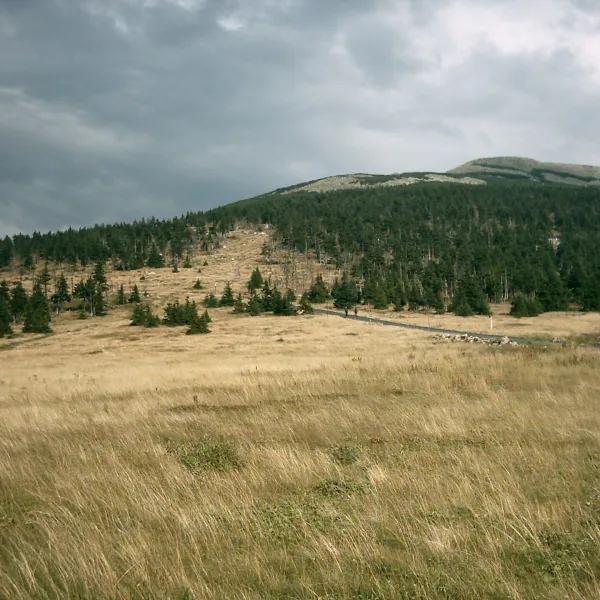
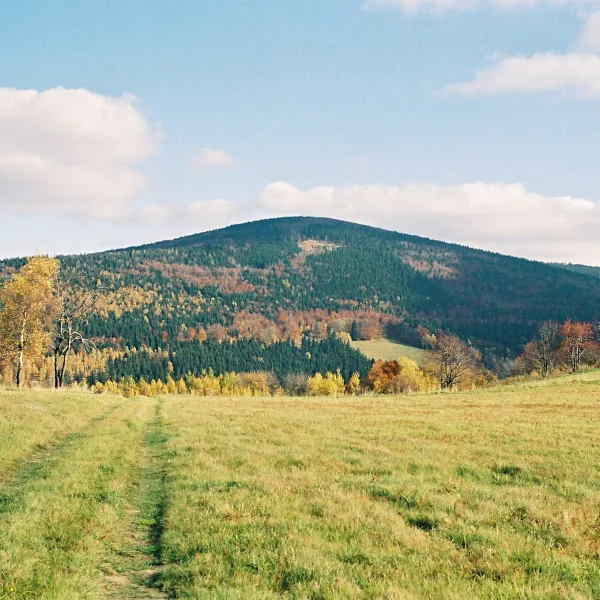
Several mountain entries are major ones. Mount Śnieżka is the highest peak of the Karkonosze, the Sudetes and the Czech lands, on the Polish-Czech border, with a panorama reaching over 200 kilometres in good visibility. Szrenica stands at 1,362 m above sea level above Szklarska Poręba, is reachable by cable car and has a viewpoint and a mountain hut at the top. Śnieżnik at 1,425 m is the highest border summit on the Polish side of the Eastern Sudetes, with a lookout tower and nature reserves around it.
The Karkonosze offer more summits. Wielki Szyszak is the fourth highest peak of the range, but no marked trail leads to the top. Łabski Szczyt (1,471 m) lies between Szrenica and the Snowy Cirques and has a PTTK hut on its slope. Śląskie Kamienie is a group of rocks on the ridge on the Czech border, and Kopa stands on the route to Śnieżka and has a chairlift. If you like nature around Karpacz, start with Kopa and Śnieżka.
Where can you do a shorter walk with a view?
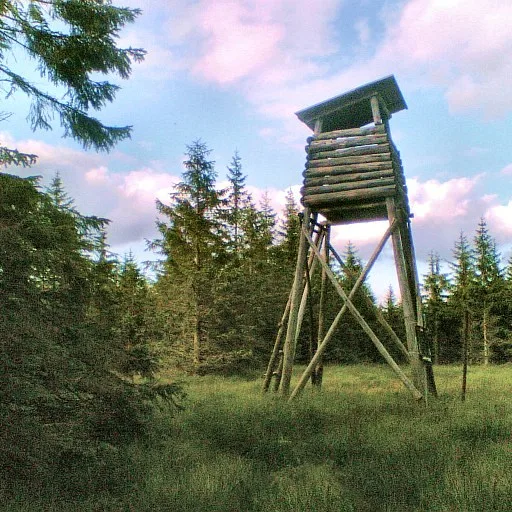
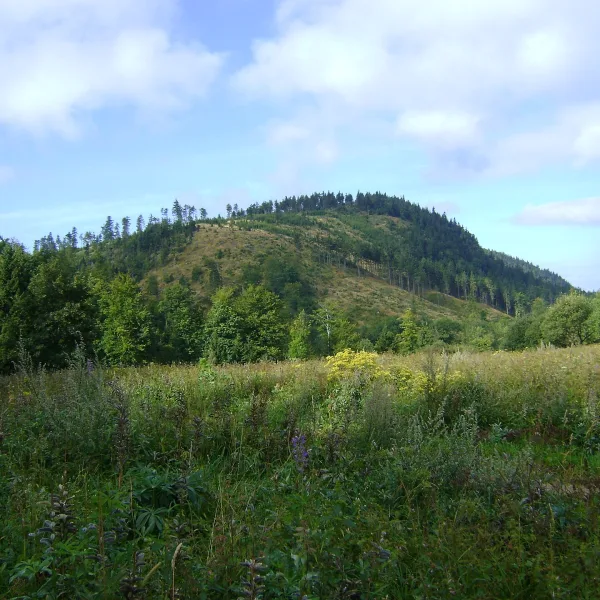
Not every peak takes a full day. Wieżyca in the Ślęża massif is 415 m high with a lookout tower from the early 20th century, reached by the yellow trail from Sobótka. Ślęża (717.5 m) is the highest peak of the Sudetic Foreland, a former pagan cult site with surviving stone sculptures, and the stone bear at its top dates from the La Tène period. If your trip starts in the regional capital, also check nature in Wrocław.
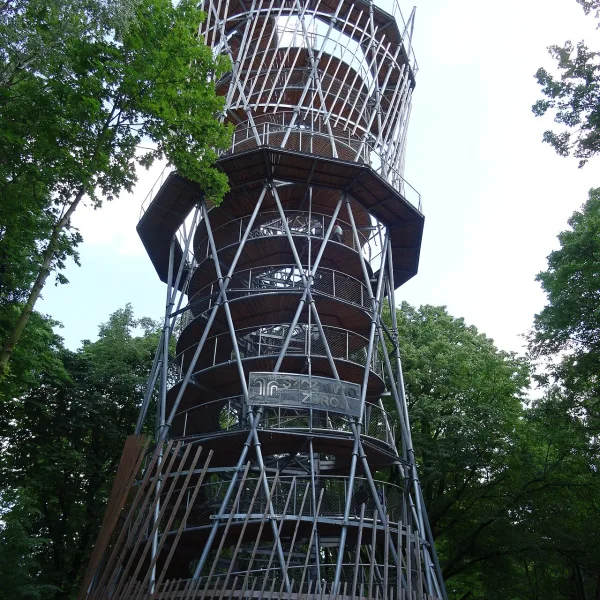
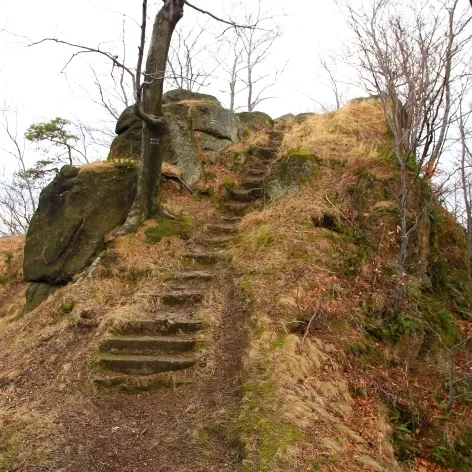
In the Wałbrzych Mountains you can climb Chełmiec (850 m, lookout tower and a millennium cross) or Trójgarb, a three-peaked hill with a lookout tower. The ruins of the medieval Nowy Dwór castle wait on Castle Hill above the Glinik district of Wałbrzych. In the Kaczawa Foothills stands Ostrzyca Proboszczowicka, the cone of an old volcano with a basalt neck and a trail of stone steps.
Which waterfalls are worth seeing?
Waterfalls are the easiest way to see Sudeten nature without a long march. Kamieńczyk Waterfall is the highest in the Polish Sudetes: a 27-metre cascade in a rocky gorge in Karkonosze National Park near Szklarska Poręba. Szklarka Waterfall in Piechowice is the second highest in the Karkonosze (13 metres) and is also accessible for wheelchair users.
The third in the Polish Karkonosze is Podgórna Waterfall, by the black trail from Przesieka to Sosnówka, with two cascades and granite cliffs on both sides. In Międzygórze you can see Wilczka Waterfall, a landscape reserve with a 22-metre drop, the second largest in the Sudetes. And in Karpacz the Wild Waterfall is a flood-control dam on the Łomnica from 1910-1915, today a walking destination. To gather several such places in one area, open nature in Szklarska Poręba or in Piechowice.
Where to find rocks, caves and lakes?
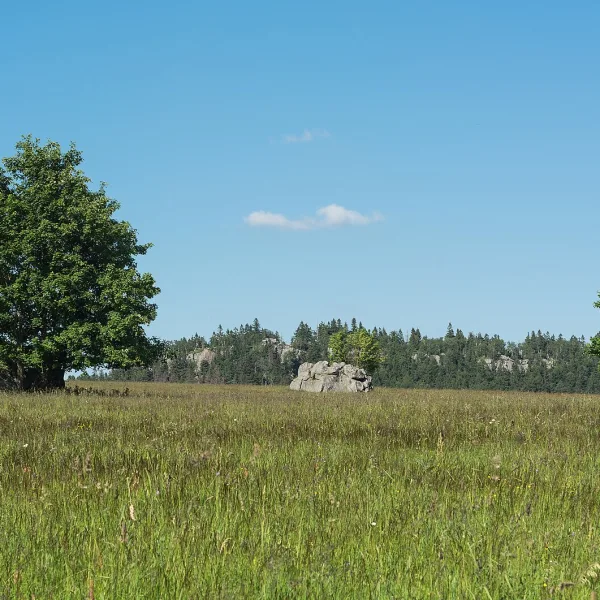
In the Table Mountains two entries fill a whole day. Szczeliniec Wielki (922 m) has viewing terraces, cracked sandstone rocks and a trail from 1814. Błędne Skały is a maze of blocks over about 21 hectares, with marked trails between Kudowa-Zdrój and Karłów. For granite instead of sandstone, see Chybotek in the Izera Mountains, where the largest boulder can be rocked, and Waloński Kamień in Przesieka, where the rocks stand over 2 metres tall.
You can go underground in the Bear Cave in Kletno: the longest cave in the Sudetes, discovered in 1966, with a 45-minute trail and a steady temperature of about 6 degrees. A smaller open cave is Radochów Cave in the Złote Mountains. A completely different landscape awaits at the Colourful Lakes in Wieściszowice: four post-mining ponds of different colours under Wielka Kopa.
How to plan a day around one area?
The simplest way is to pick one region and choose targets from it. Around Szklarska Poręba, combine Kamieńczyk Waterfall with a climb to Szrenica, and in the Kłodzko Valley pair Błędne Skały with Szczeliniec. From Karpacz you can walk to Śnieżka via Kopa. For a longer stay, try nature in Jelenia Góra and Międzygórze with the Wilczka waterfall.
For a slower pace pick one viewpoint and one short stop by the trail, for example Wielka Sowa (1,015 m, lookout tower, a point of the Crown of Polish Mountains) together with Kalenica, the third highest peak of the Owl Mountains, with a beech forest reserve. In winter and on rainy days go where it is covered, for instance to the caves, because the temperature inside stays constant.
Frequently asked questions
Where is the highest waterfall in Lower Silesia?
The highest in the Polish Sudetes is Kamieńczyk Waterfall near Szklarska Poręba, with a 27-metre cascade. In the Karkonosze the second is Szklarka Waterfall in Piechowice.
Which nature spots are free?
Most peaks, waterfalls and rock groups on this page carry the free tag. Some places do not, like Bear Cave in Kletno or Radochów Cave, because they are visited on a guided route.
What to see in the Table Mountains?
Szczeliniec Wielki with its viewing terraces and Błędne Skały, a maze of sandstone blocks. Both lie near Karłów and Kudowa-Zdrój.
Where can you climb a peak with a lookout tower?
Towers stand on Wielka Sowa, Śnieżnik, Trójgarb, Chełmiec, Wieżyca and Jagodna. The easiest start is with the lower peaks in the Ślęża massif or the Wałbrzych Mountains.
Can I visit these places on my own?
Yes, most carry the Solo tag, meaning they suit a solo outing. Before heading to Śnieżka or another border peak, check the current weather conditions.

 Mountains