Historic sites in Wrocław: Centennial Hall, the Iglica, bridges, castles, palaces and the WUWA estate. See what to visit and what is outside-only.
Which historic sites in Wrocław should you see first?
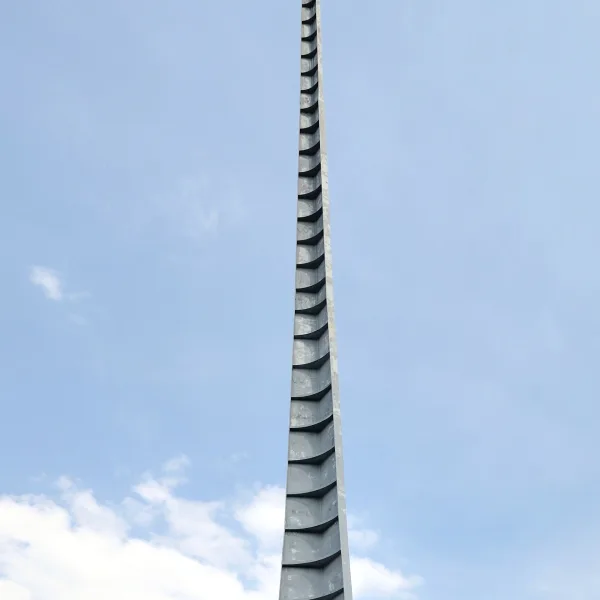
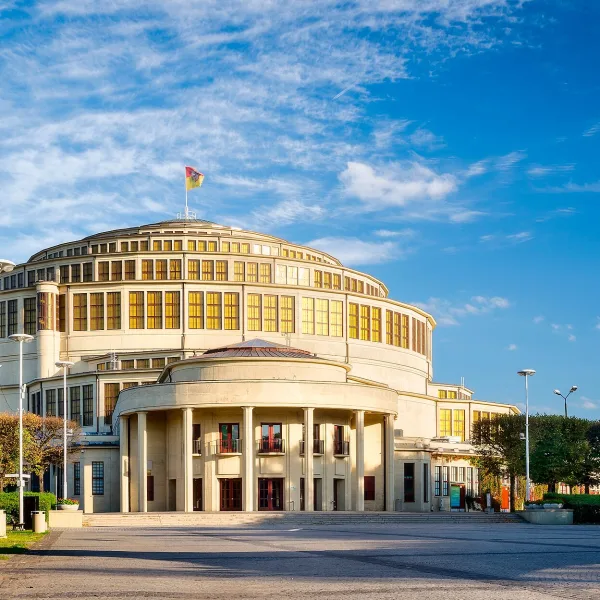
Start with the Centennial Hall in Biskupin. It is a reinforced-concrete arena designed by Max Berg and built in 1911-1913. Its dome is 67 metres across and the building rises 42 metres. When it opened it had the largest reinforced-concrete dome in the world, and today the hall is a UNESCO World Heritage site. Next to it stands the Iglica, a steel spire from 1948 built for the Recovered Territories Exhibition. It now measures 90.3 metres, though it was originally 106 metres tall.
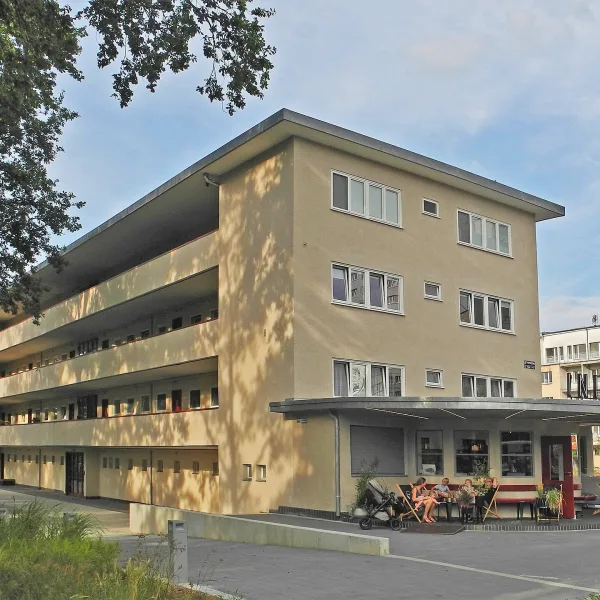
Nearby, look into the WUWA estate in Dąbie: a showcase of modern housing from the 1929 Werkbund exhibition, now listed as a monument. It makes one longer walk, because all three places lie in the same part of the city.
Which bridges and technical monuments are the most interesting?
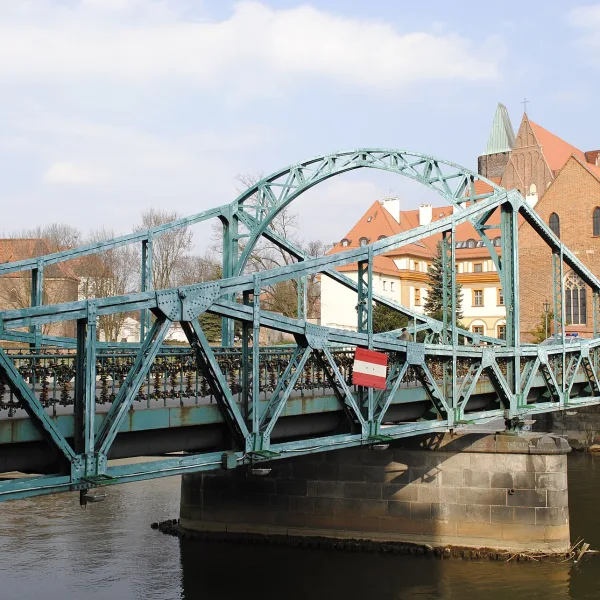
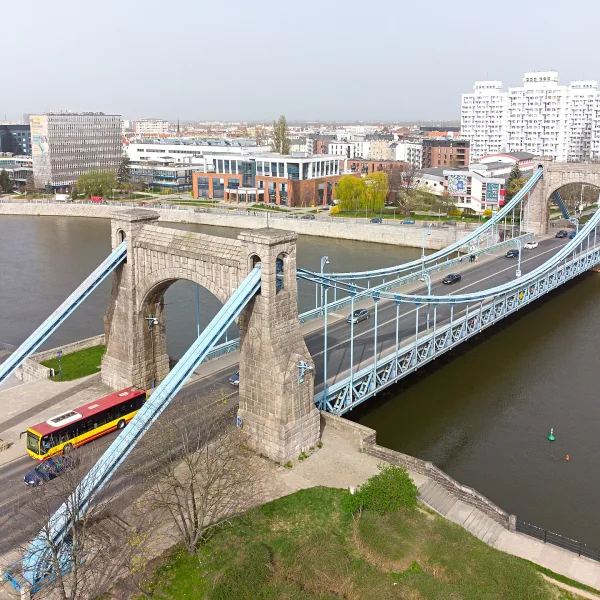
The Tumski Bridge from 1889 is a riveted steel bridge over the northern arm of the Oder, linking Sand Island with Ostrów Tumski. It is for pedestrians only, and until 1945 it was called Dombrücke. On a larger scale, the Grunwaldzki Bridge from 1910 is a suspension bridge hung on two pylons of clinker brick faced with granite. A competition for its design was announced in 1904 and drew 39 entries; the winner was "Gespannt" by Martin Mayer and Robert Weyrauch. Further north stand the Osobowice Bridges from 1897, a stone and brick crossing listed as a monument.
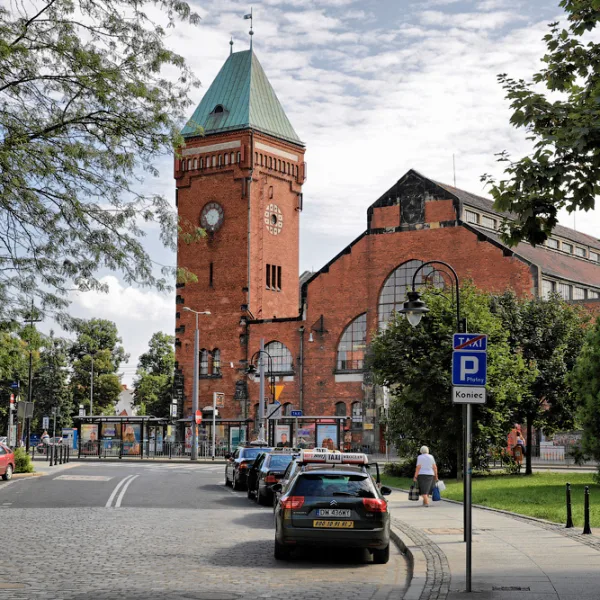
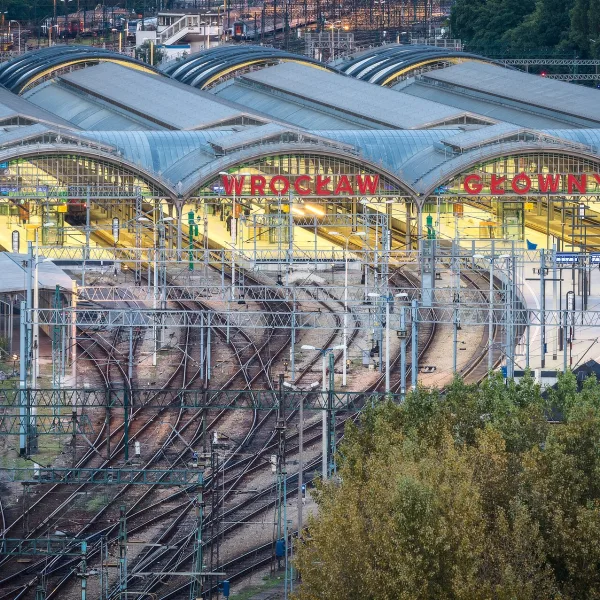
Technical heritage also includes the Market Hall on Piaskowa Street, built in 1906-1908. It still works as a daily market, and stone cannonballs found during the groundwork were set into its facade. Railway fans should see Wrocław Główny: a neo-Gothic station with a 1857 platform hall, one of the few preserved in Poland.
What is there to see around the Market Square and the centre?
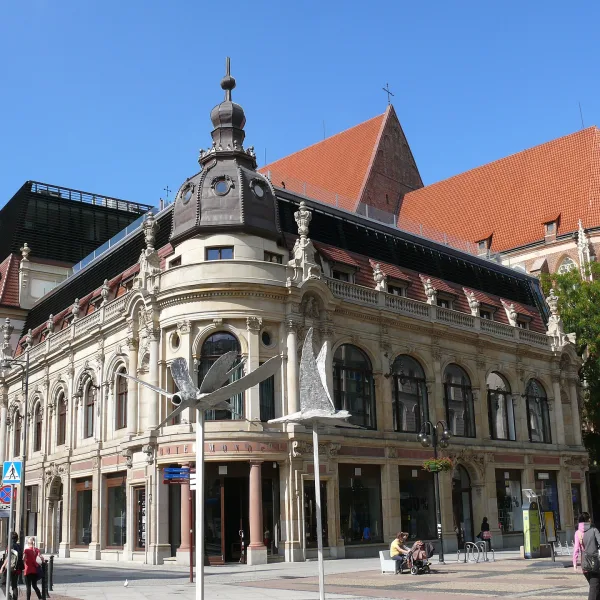
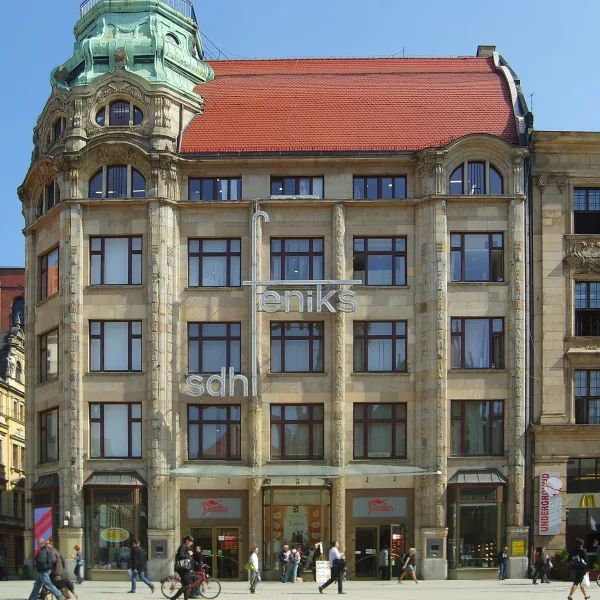
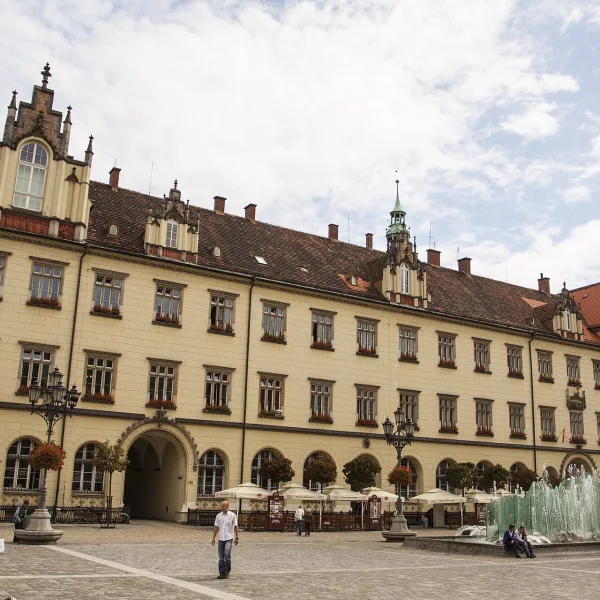
The New Town Hall was built in 1860-1864 to a design by Friedrich August Stüler in the neo-Gothic style, and it is still the seat of the mayor and city council. On the Market Square itself stands the Feniks department store from 1904, an Art Nouveau building by Georg Schneider. A little further is the Hotel Monopol from 1892, one of the best-known Art Nouveau buildings in the city, where Andrzej Wajda shot "Ashes and Diamonds".
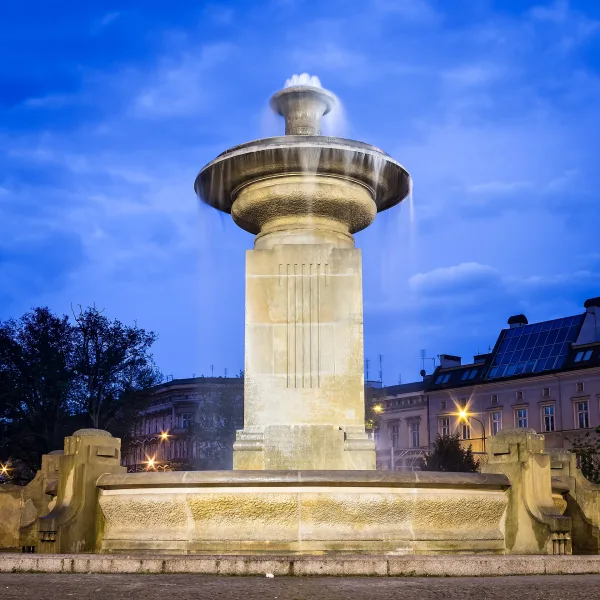
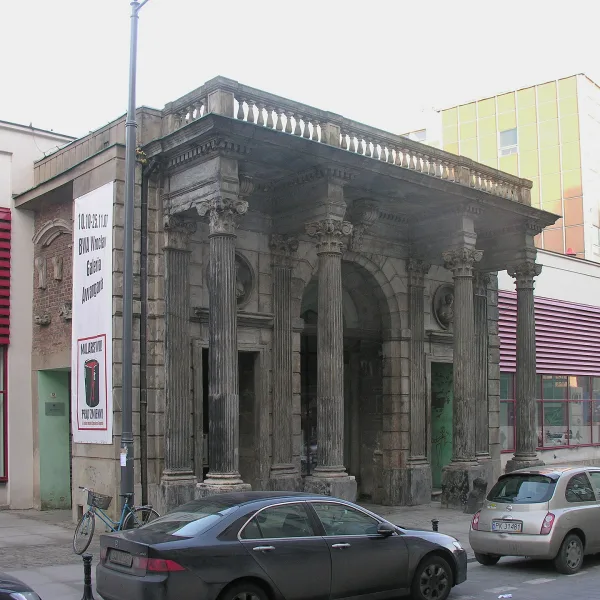
Look out for less obvious buildings too. The Credit Society building from 1900 on Rzeźnicza Street was designed by Karl Grosser, with a Prussian eagle above the entrance. The Oppersdorff Palace on Wierzbowa Street was rebuilt after the destruction of 1945. And the Hatzfeld Palace on Wita Stwosza Street is a Neoclassical rebuild by Langhans on the site of a Baroque palace from 1715-1719; it is currently being renovated. On the Old Town Promenade stands the neo-Baroque fountain of the Allegory of Struggle and Victory from 1905.
Where do you find castles, palaces and manor houses?
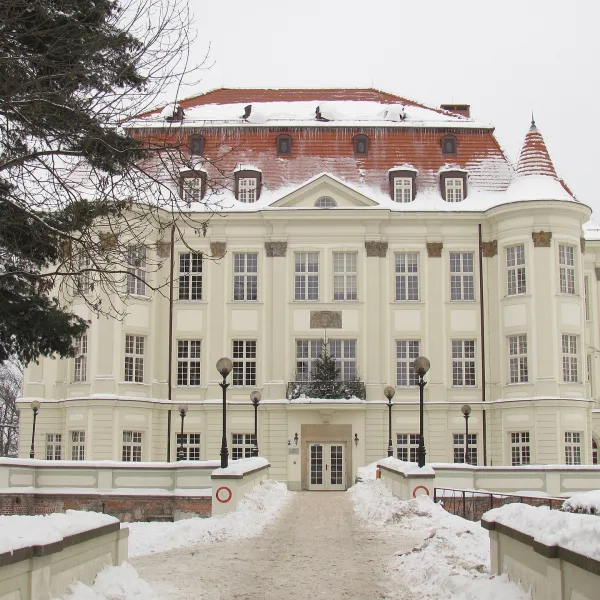
Leśnica Castle has a brick core dating to the 14th century and from 1339 to 1945 served as the residence of wealthy Wrocław burgher families. Today it houses the "Zamek" Culture Centre. The Korn Palace in Pawłowice from 1895 is surrounded by a 7.2-hectare park and is now used by the Wrocław University of Environmental and Life Sciences.
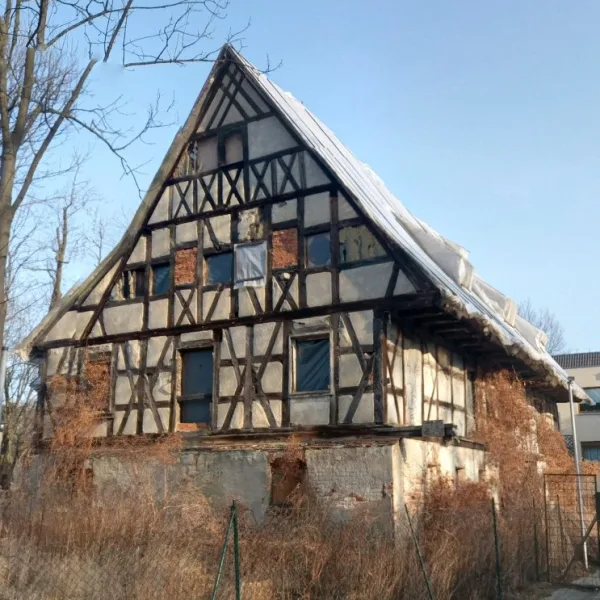
The other places are mostly traces of older buildings. The castle on Ostrów Tumski grew out of a 10th-century stronghold, but only a few fragments survive, mostly closed to visitors. The Imperial Castle in the Old Town no longer exists, and its site is now occupied by the main building of the University of Wrocław. The half-timbered manor from 1550 in Oporów is in private hands and in poor technical condition.
Which monuments can you only view from outside?
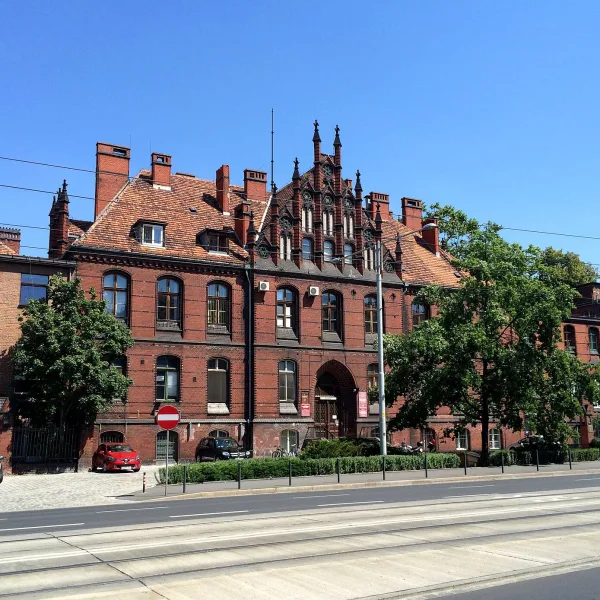
Several buildings on this list are private homes or working institutions. The tenement at 73-74 Podwale Street by Eduard Hentschel and the semi-detached houses of the WUWA estate, at 11/13 Dembowskiego (Theo Effenberger) and 23/25 Zielonego Dębu (Paul Häusler), can be seen only from the street. The neo-Gothic school building at 49 Krucza Street, from 1905-1907, is still a school, and the access bridge of the Southern Hydroelectric Power Plant from 1922 is closed to visitors.
The water tower on Wiśniowa Avenue, built in 1904-1905, has a viewing gallery at 42 metres, but it is currently closed. For monument walks, the pages Architecture in Wrocław and Wrocław solo pair well, since most places here suit a solo outing.
What else from the city's history is worth adding?
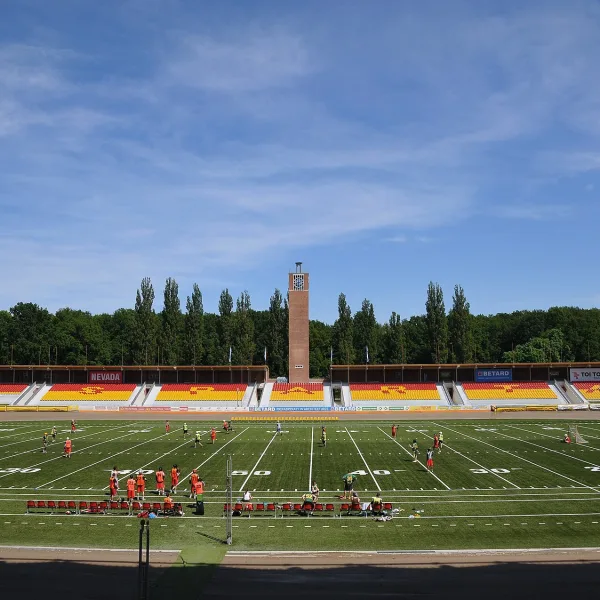
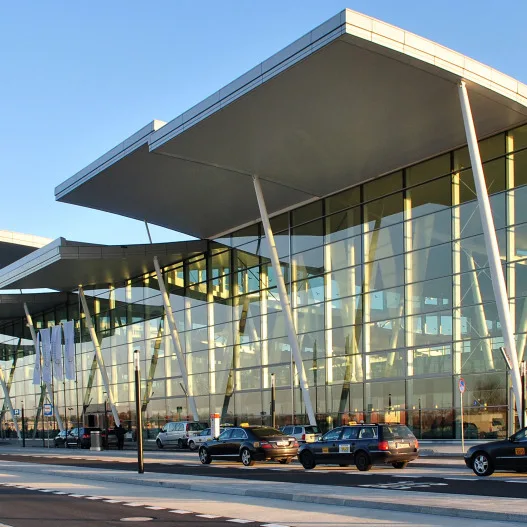
Beyond classic sightseeing there are places of a different character. The Olympic Stadium in Zalesie, built in 1926-1928 to a design by Richard Konwiarz, is now home to the Sparta Wrocław speedway club. The Medical University occupies a former hospital complex from 1890-1909. The Piastowski Brewery in Ołbin is a post-industrial complex currently being converted into a residential estate. Wrocław-Strachowice Airport has operated since 1938, about 10 kilometres from the centre.
Frequently asked questions
Can you go inside the Centennial Hall?
It is an arena that holds up to 10,000 people. Check visiting hours and events on the venue's own site.
Can you visit the Imperial Castle in Wrocław?
No, because it has not survived. The main building of the University of Wrocław now stands on its site.
Is the water tower in Borek open?
The viewing gallery at 42 metres is currently closed. You can see the 1905 building from the outside.
Where should you start with only one day?
Take Biskupin: the Centennial Hall, the Iglica and WUWA. In the evening, cross the Grunwaldzki Bridge to the centre, then go on to the Market Square and Ostrów Tumski.

 Historic sites