Parks and nature in Wrocław: Szczytnicki Park, the Japanese Garden, a botanical garden and green islands on the rivers. Pick where to walk.
Which park in Wrocław should you visit first?
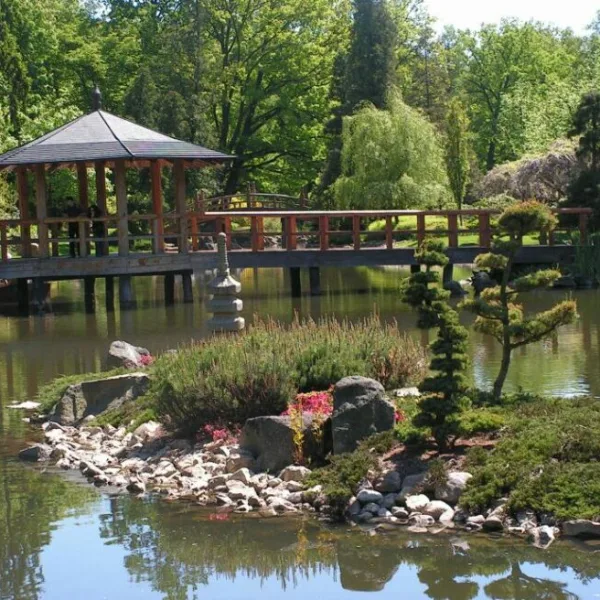
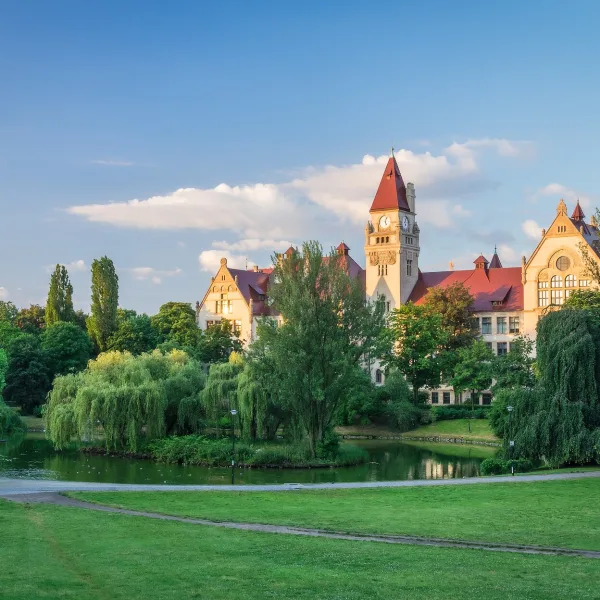
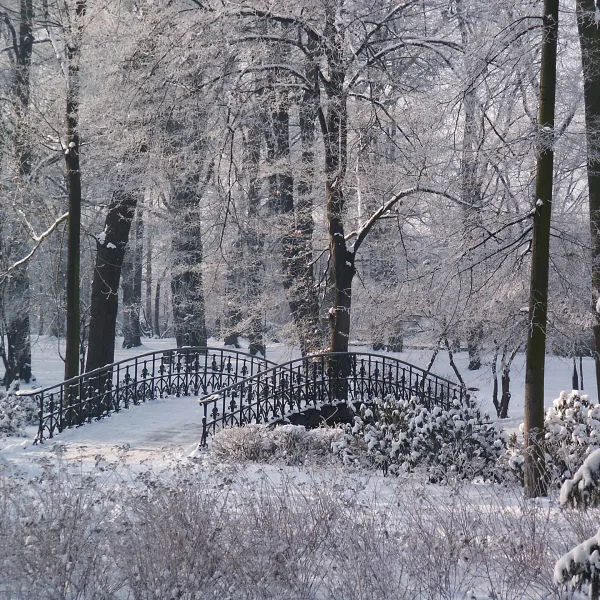
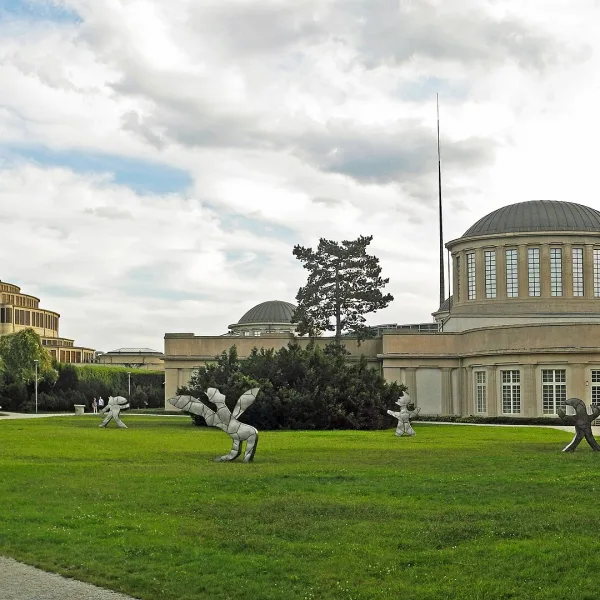
Start with Szczytnicki Park, one of the largest parks in the city at about 100 hectares. It is a landscape park with rich tree stands and a wooden church, and it borders the Centennial Hall. Within its grounds lies the Japanese Garden, created in 1909-1913 on the initiative of Count Fritz von Hochberg. It was designed by the Japanese gardener Mankichi Arai, and you will find cascades, small bridges and a pond with koi carp.
Next to it stretch the exhibition grounds by the Centennial Hall: a park, a multimedia fountain and the entrance to the Japanese Garden. The whole complex is on the UNESCO list. It is easy to link everything into one longer walk.
Where can you walk right in the centre?
Closest to the Market Square is Nicolaus Copernicus Park by the Wrocław Opera. It was laid out in the style of the Tivoli Gardens in Copenhagen, and children get a carousel. Juliusz Słowacki Park, 5.74 hectares, lies partly on the site of the old city moat and borders the Museum of Architecture and the Racławice Panorama. A longer walk is Stanisław Tołpa Park in Ołbin, with a pond, an artificial hill, playgrounds and a dog run.
Quieter alternatives are Stanisław Staszic Park in Nadodrze, laid out in 1905-1908 on the site of a former horse market, and the small St Edith Stein Park with a historic Church of St Michael the Archangel. The Botanical Garden of the University of Wrocław on Ostrów Tumski has existed since 1811, covers 7.5 hectares and is the second oldest botanical garden in Poland.
Which park suits kids?
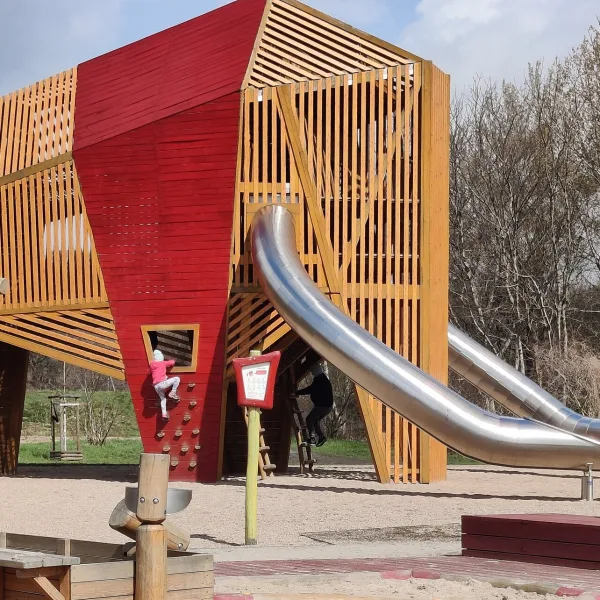
The biggest draw is Mammoth Park in Oporów: an eight-metre mammoth structure with slides, which residents proposed in a civic budget. Kleciński Park by the Ślęza has 9 hectares, an amphitheatre, a playground, a pitch and a dog run. Millennium Park in Muchobór Wielki covers about 90 hectares on both banks of the Ślęza and has roller-skating tracks, an avenue of the European Capital of Culture and outdoor sculptures.
Smaller neighbourhood parks have their strengths too. Popowicki Park has a playground, an outdoor gym and a notable pin oak. Bieńkowicki Park from 1907 has two ponds and a pitch. Strachowicki Park has small ponds and a playground, and Leonardo da Vinci Park features a sculpture of the Vitruvian Man and elements recalling the master's inventions.
Where can you find water, forest and wild nature?
East Park in Księże lies on two islands formed by arms of the Oława river. Stabłowicki Park is the former private park of the botanist Karol Lauterbach, now a city park on the Bystrzyca with three natural monuments. Leśnicki Park has 21 hectares, a Renaissance castle, a hornbeam maze and ponds, and it is entirely listed as a monument. Złotnicki Park, 20 hectares, preserves traces of early medieval strongholds.
For truly wild nature there is the Pilczycki Forest nature reserve: the first nature reserve in Wrocław, about 13 hectares of riparian forest where the Ślęza meets the Oder. Entry is not allowed, so you can only look at it from outside.
Which parks were built on former cemeteries?
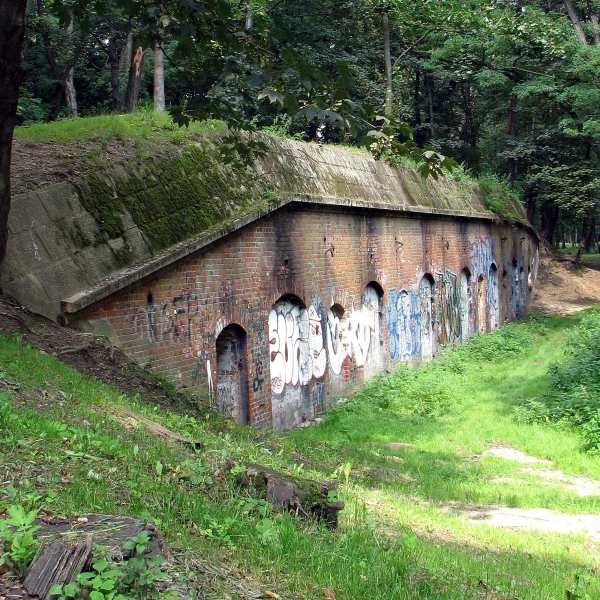
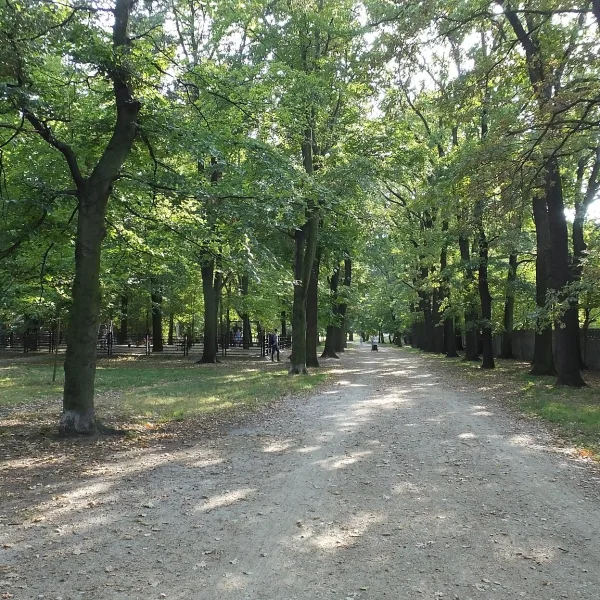
Several parks in Wrocław occupy former necropolises, so keep a calm tone there. Grabiszyński Park, 48 hectares, has a lime avenue as its main walking axis and splits into a northern part by Hallera Avenue and a southern part along the Ślęza. Tarnogajski Park from 2018 was created on the former St Bernard's Cemetery with money from the civic budget. A similar history links West Park, with its oak avenue and remains of First World War fortifications, Maria Dąbrowska Park in Karłowice and Anders Park in Huby from 1975.
How do you plan walks through the parks?
Most parks on this list carry the free tag. You can fit neighbouring places into one walk: Szczytnicki, Dąbski and Biskupiński parks lie in the same part of the city, near the zoo and the Centennial Hall. Dąbski Park on the Great Island by the Oder borders the zoo, Szczytnicki Park and the Centennial Hall, while Biskupiński Park, about 10 hectares, has a playground, tennis courts and pitches. Skowroni Park in Gaj covers about 25 hectares and used to be called the 30th Anniversary of the People's Republic Park. Along the Oława runs the Niskie Łąki Park, which you reach by footbridges from Przedmieście Oławskie. For a wider view see the page on parks and nature across the region.
Frequently asked questions
Which park in Wrocław is the biggest?
Among the parks on the list the biggest is Szczytnicki Park, at about 100 hectares. Second comes Millennium Park, about 90 hectares on both banks of the Ślęza.
Can you enter the Pilczycki Forest reserve?
No. The reserve is protected with no public entry, so you can only see it from outside.
Where can you see the Japanese garden?
In Szczytnicki Park, next to the Centennial Hall. The garden from 1913 has cascades, small bridges and a pond with koi carp.
Which park is good for children?
Mammoth Park with its eight-metre mammoth and slides, Kleciński Park with a playground, and Millennium Park with roller-skating tracks.

 Parks and nature