Sculptures in Wrocław: the Anonymous Pedestrians, an upright steam engine, Kantor's Chair and Baroque figures. Find out where to see them.
Which sculptures in Wrocław are the best known?
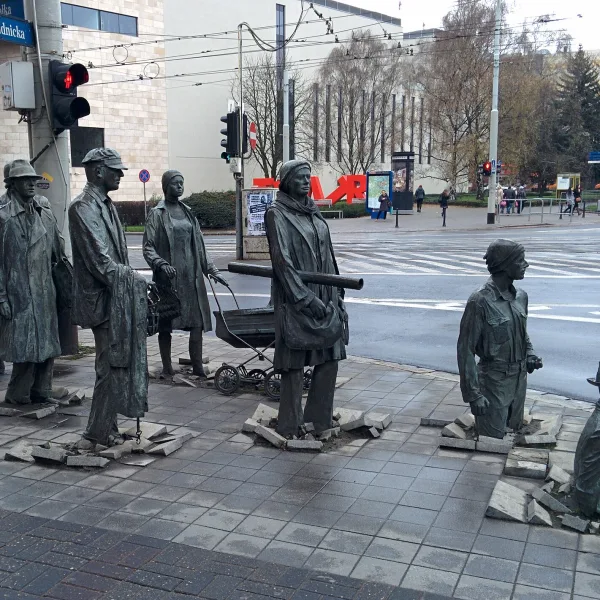
The most photographed is the Monument to an Anonymous Passer-by on Świdnicka Street: fourteen bronze figures disappearing into and emerging from the pavement. It was unveiled on the night of 12 to 13 December 2005, and its model was the installation "Passage" by Jerzy Kalina from 1977 in Warsaw.
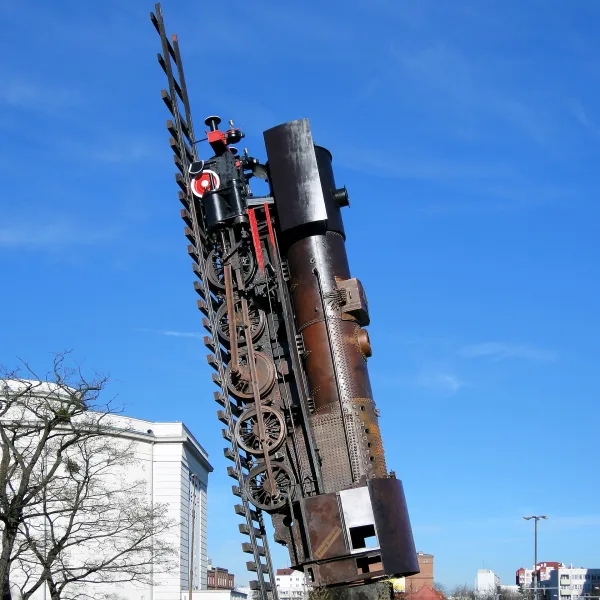
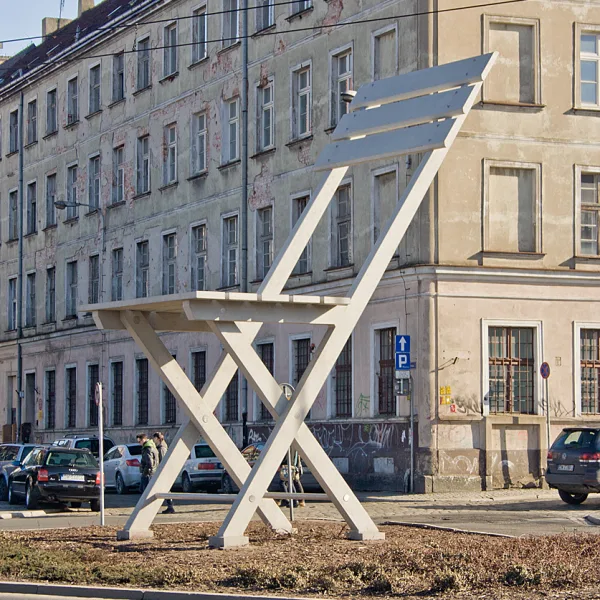
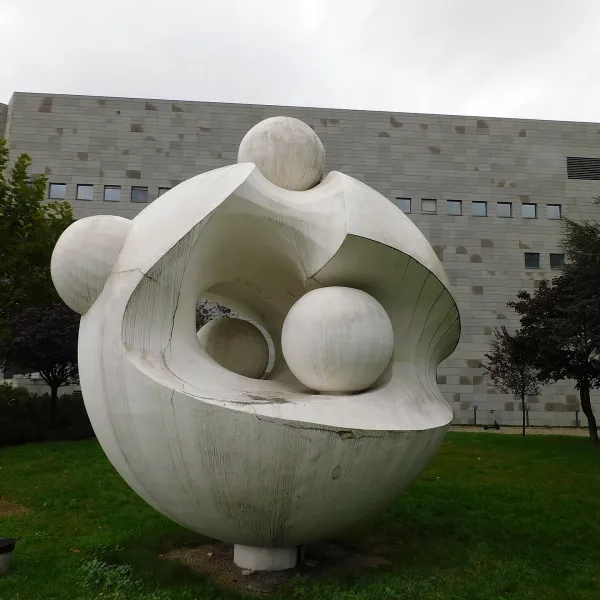
On Strzegomski Square you will see the Train to the Sky, a historic Ty2-1035 steam locomotive set upright with its chimney pointing at the sky. The installation is by Andrzej Jarodzki, and the locomotive is 21 metres tall. In the Old Town stands The Chair by Tadeusz Kantor: a nine-metre concrete sculpture shaped like a folding garden chair, designed in 1970 and built in 2011. By Grunwaldzki Square waits the white reinforced-concrete ball Atom by Roman Pawelski from 1974, about two and a half metres across, with a distinctive hole through it.
Baroque and sacred sculpture on Ostrów Tumski
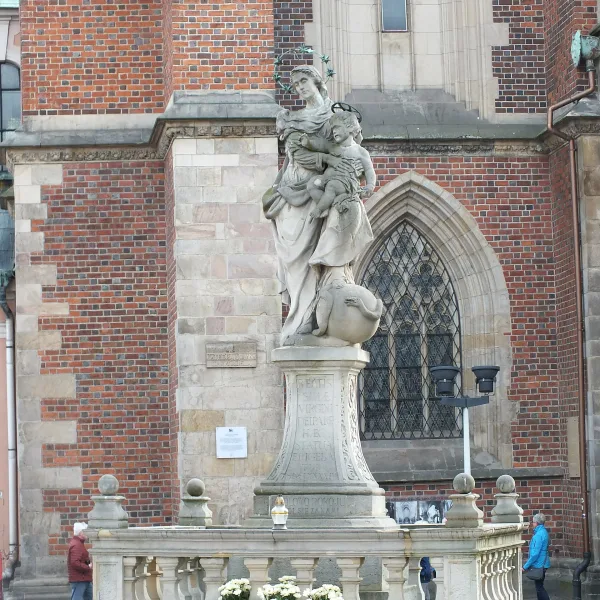
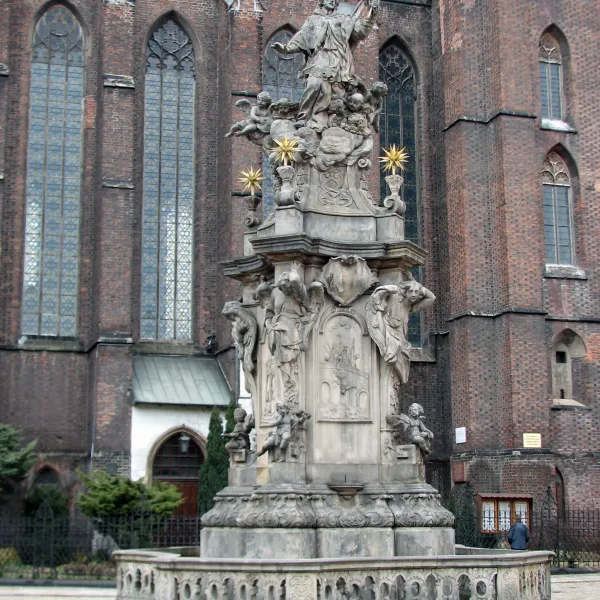
If you like older forms, head to Ostrów Tumski. On Cathedral Square stands the Statue of Our Lady with the Child from 1694, the oldest surviving monument in Wrocław. The Jesuits founded it, and it is attributed to Sulpicjusz Gode. On Church Square, the Statue of St John of Nepomuk from 1730-1732, designed by Christoph Tausch, is considered the largest monument to this saint in the world.
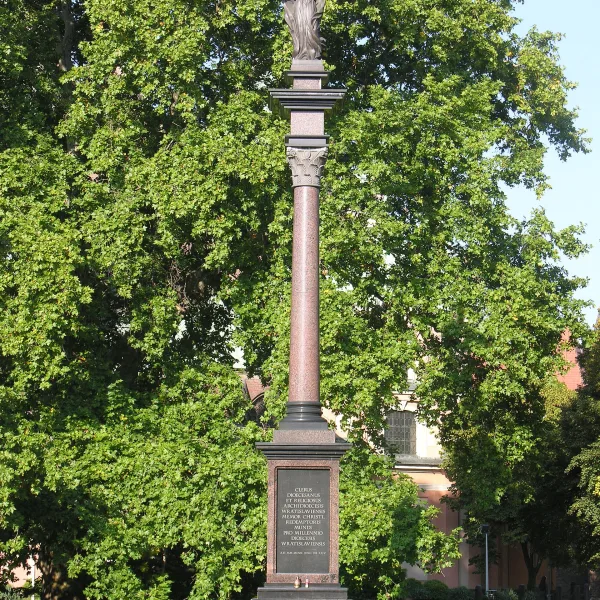
A newer sacred sculpture is the Column of Christ the King of the Universe: a shaft of black and pink granite topped with a bronze statue of Christ, put up to mark the thousand years of the Wrocław bishopric. You can also see a Baroque statue of Mary with the Child and St John of Nepomuk from about 1743 in Leśnica, on St John's Square in front of the castle.
Writers, a composer and an astronomer in stone and bronze
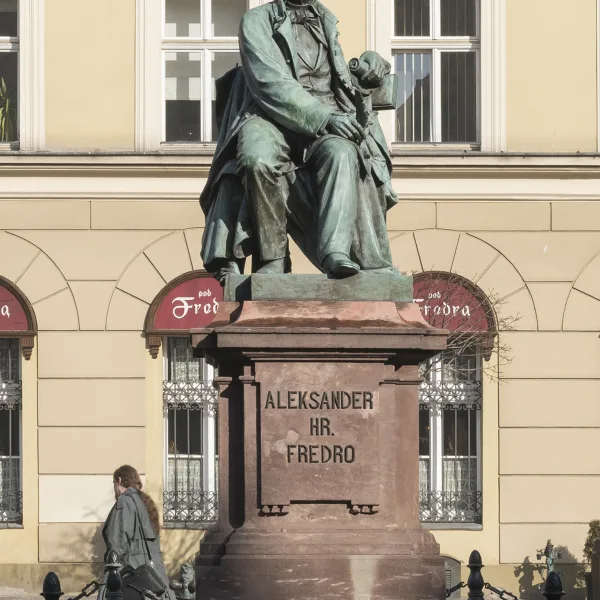
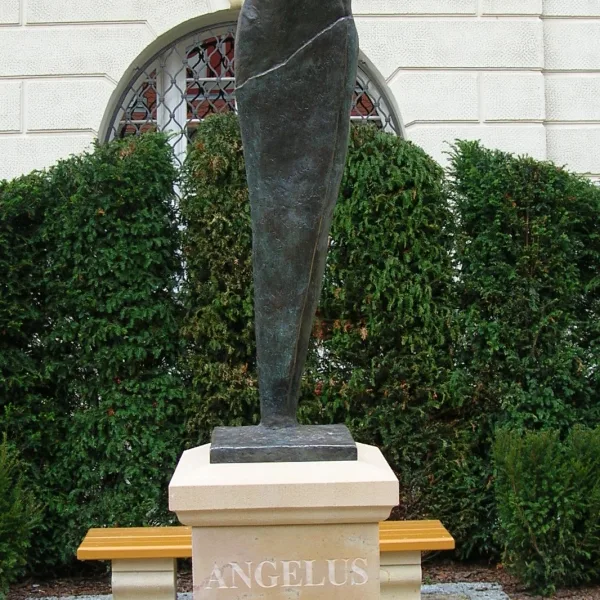
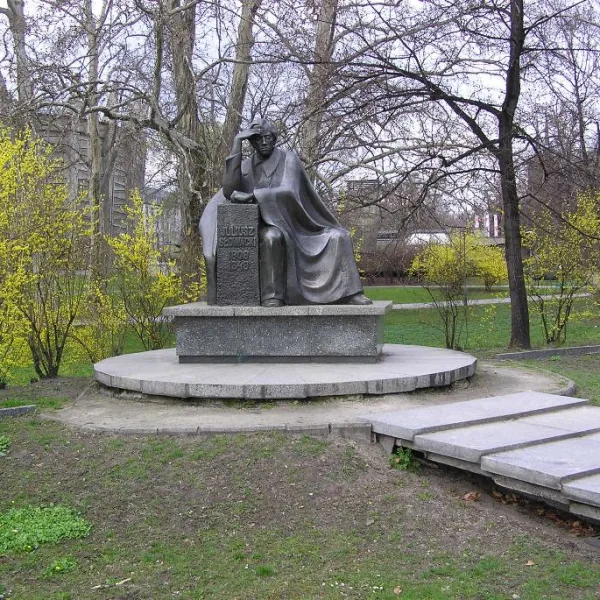
Wrocław has honoured many creators. The Monument to Aleksander Fredro by Leonard Marconi was unveiled in Lviv in 1897 and has stood on the Wrocław Market Square since 1956. Fredro sits holding a pen and a roll of paper. The monument to Juliusz Słowacki in the park named after him was made after a sculpture by Wacław Szymanowski from 1909. Angelus Silesius has a monument from 2007 in the courtyard of the Ossolineum, by Ewa Rossano.
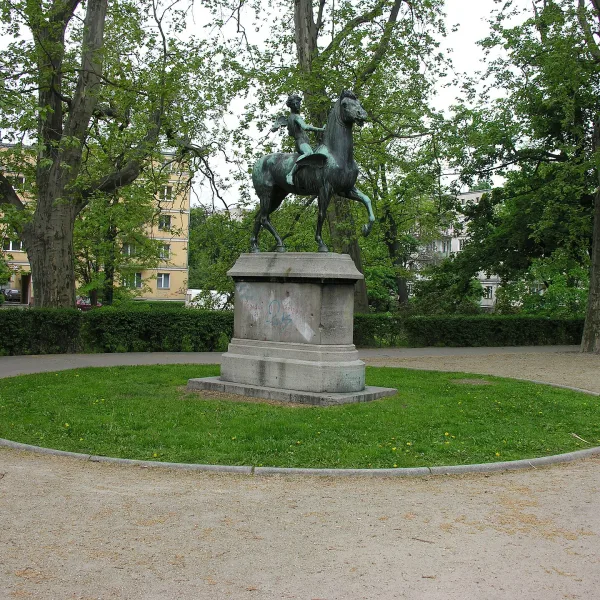
In South Park stands the Monument to Frederic Chopin by Jan Kucz from 2004, recalling the composer's concert in Wrocław in 1830. Near the City Moat you will find the Monument to Nicolaus Copernicus from 1974, shaped as a stylised heliocentric system. In Copernicus Park there is also the bronze Cupid on Pegasus by Theodor von Gosen from 1913.
Open-air sculpture from the 1960s and 1970s
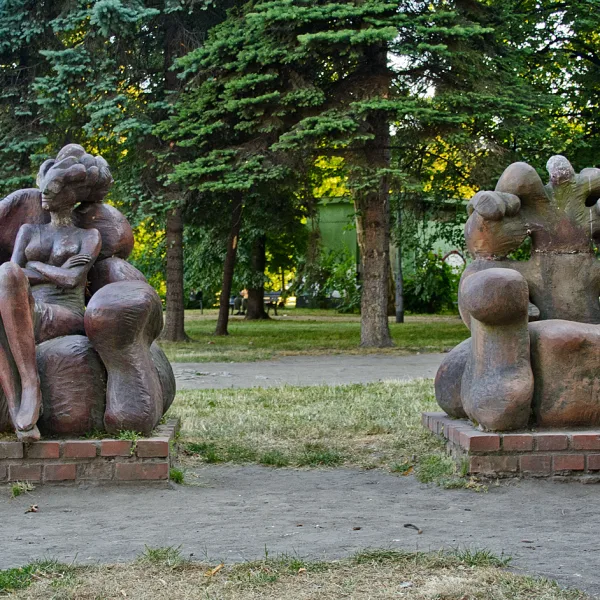
Some Wrocław sculptures came from the Wrocław '70 Sculpture Symposium. On Piasek Island lies the ARENA Living Monument by Jerzy Bereś from 1972: a tree torn from the ground, roots up, in the middle of a circular square. On Słowackiego Avenue stands the Monument to the Executed Hostages from Nowy Sącz, a reinforced-concrete work by Władysław Hasior unveiled in 1971. On Bielarska Island stand "The Chess Players" by Łucja Skomorowska from 1964, and in Słowacki Park the sculpture "Waiting" from 1980, opposite the National Museum.
Sculptures that recall the city's history
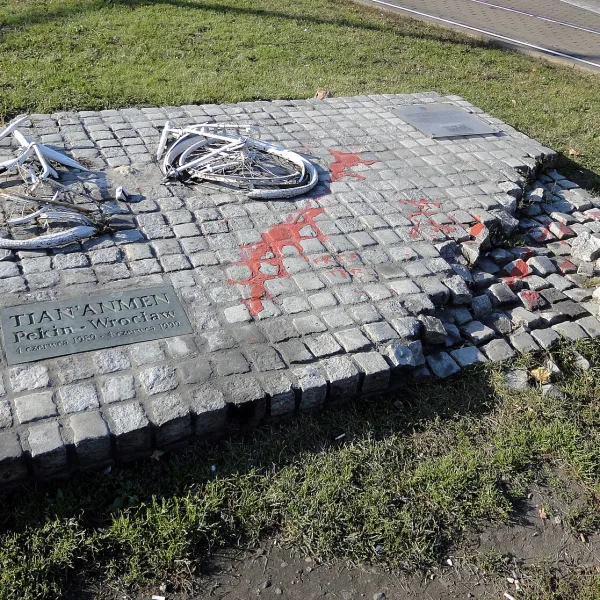
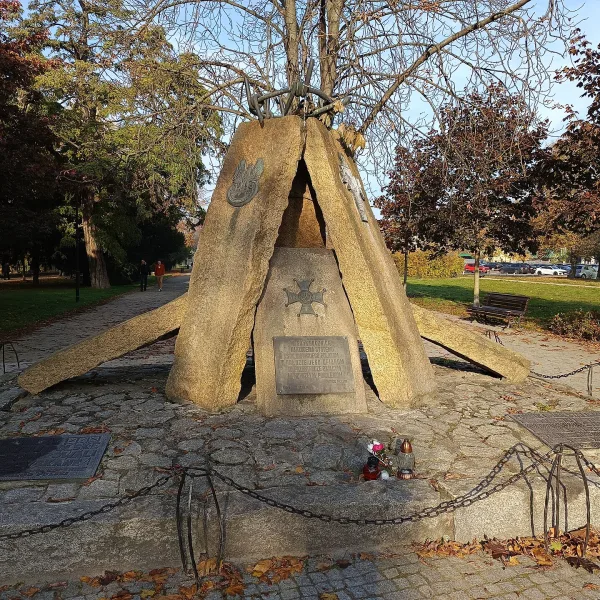
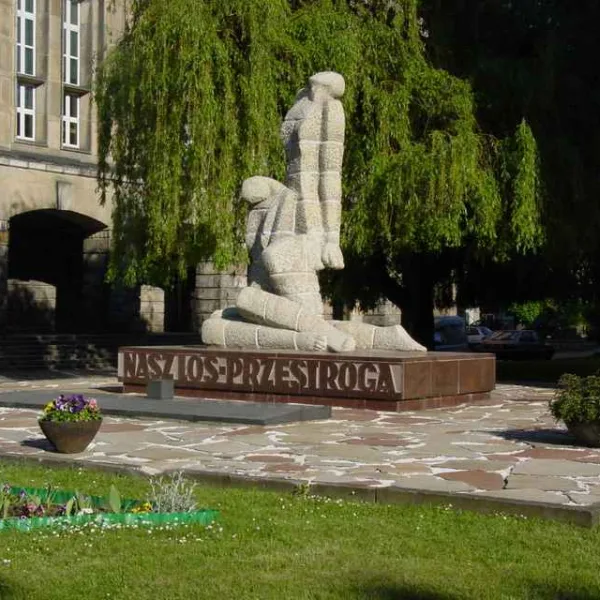
Some sculptures speak of harder moments. The Monument to the Victims of Stalinism by the Opera, designed by Tadeusz Teller and unveiled in 1989, resembles a dolmen of tilted slabs. The Flood Woman (Powodzianka) on Kępa Mieszczańska commemorates the fight against the flood of 1997. The Monument to the Liberation of Wrocław on Slavic Hill takes the form of flames of white cement. The Monument to the Murdered Lwów Professors by Grunwaldzki Square is a place of remembrance for a crime of 1941, and the monument on Oławska Street commemorates the victims of the suppression of the Tiananmen Square protests in 1989. Keep a serious tone at these places.
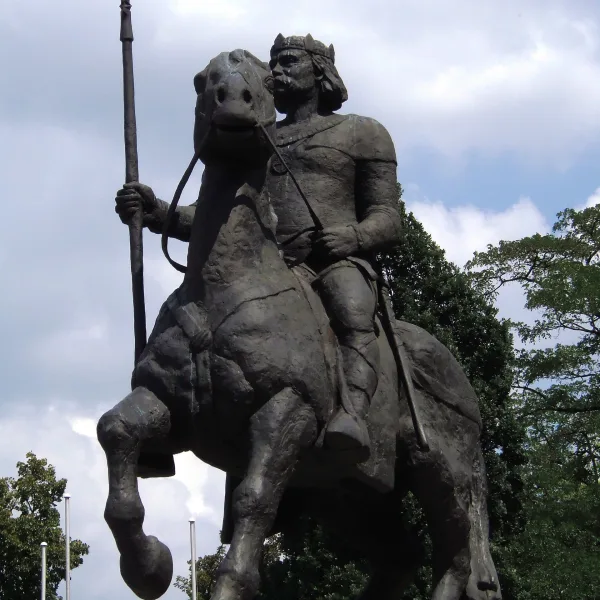
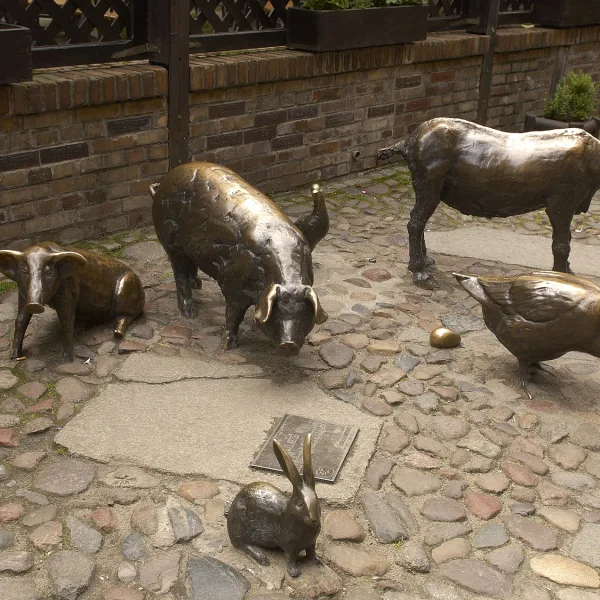
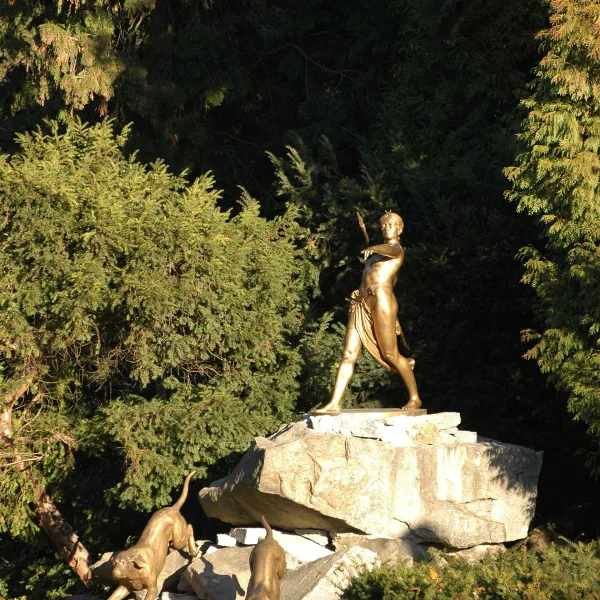
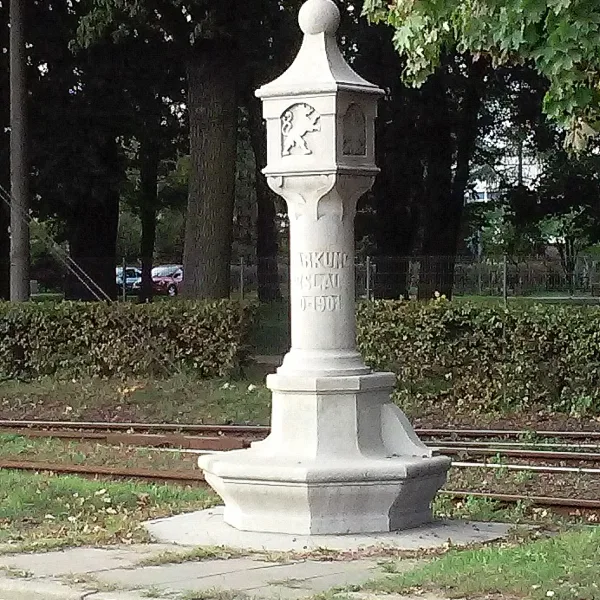
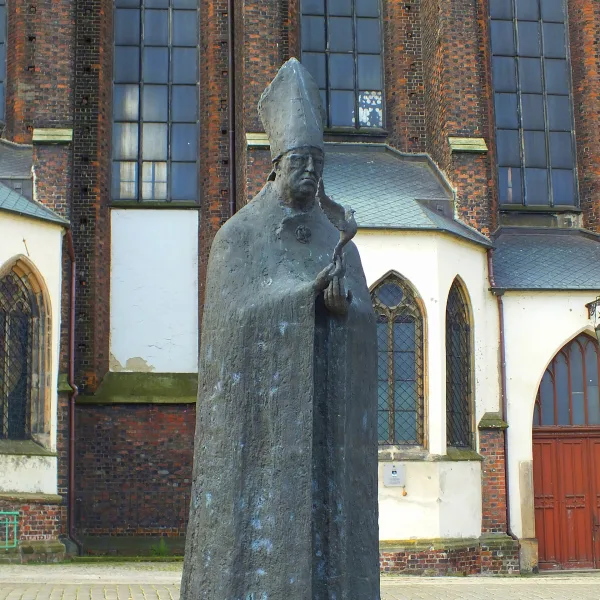
There are lighter stories too. A group of sculptures at Stare Jatki recalls the butchers' shops that have operated here since 1242. The reconstructed Diana in Szczytnicki Park, from 2015, recreates a monument lost in 1945. The Monument to Bolesław the Brave from 2007 is the first equestrian monument in post-war Wrocław. On Piasek Island stands the Bolesław Kominek Monument, a bronze figure 4.35 metres tall, holding a dove as a symbol of peace. Three of the six Century Stones, granite boundary posts set up in 1900-1901 by the former roads out of the city, survive to this day.
Frequently asked questions
Where can you see the most popular sculptures in one day?
In the centre: start with the Anonymous Passer-by on Świdnicka, then walk to the Market Square for Fredro, and finish on Piasek Island with Kominek and ARENA. The Train to the Sky is on Strzegomski Square, so it needs a separate trip.
Is viewing the sculptures paid?
No, all sites on this page carry the "Free" tag. You can plan a whole day of walks without spending money on tickets.
Which sculpture is the oldest?
Among the sites described, the oldest is the Statue of Our Lady from 1694 on Ostrów Tumski.
Where can you find similar places?
See sculptures across the region and the list of cemeteries and monuments in Wrocław.

 Cemeteries and monuments