Palaces in Lower Silesia: hotels with restaurants, residences to view from outside and ruins. Find out which ones open their doors to guests.
Which palaces can you enter as a guest?
The easiest are those that work as a hotel or restaurant. Paulinum Palace stands on the edge of Jelenia Góra, right by the road out towards Karpacz. Its history goes back to the Jesuits who arrived in the town in 1655, and today it is a hotel with a restaurant. In Łomnica, look into the Widow's House manor from 1804, next to the palace, which has a hotel, a restaurant and the seat of a foundation.
In Krotoszyce, in Legnica County, a 17th-century palace is surrounded by a six-hectare park and now serves as a conference and hotel complex. Above the entrance you will see a cartouche with the date 1686. In Krobielowice, in Kąty Wrocławskie municipality, a brick palace stands within a hotel and golf resort. It was built on the site of a 14th-century fortified manor, and Field Marshal Blücher died there.
In Świdnica you can simply walk in, because the Palace of the Krzeszów Abbots houses the city library. The Baroque building of 1723-1725 stands on ulica Franciszkańska in the very centre of town and served in turn as the abbots' residence, barracks and a tax office.
Which palaces can you only see from outside?
Many residences are private or have a new function. The palace in Piotrkówek near Niemcza, from the 16th-17th centuries, is private property and visible only from outside. The palace in Kraśnik Dolny from the second half of the 18th century is now a dwelling house, and so is the neo-Baroque palace in Ligota Strupińska, built in 1890. The Scheibler family's neo-Renaissance palace in Kwietno, with its 31-hectare park, stands on private land and is closed to visitors.
The Oppersdorf Palace in Ołdrzychowice Kłodzkie is a Baroque residence rebuilt in the neoclassical style, now a convent of the Hospitaller Franciscan Sisters. In Czarny Bór the Baroque Czettritz palace of 1784 houses a hospital for addiction treatment. The manor house in Czerna in Głogów County, with its sandstone portal bearing eight coats of arms, serves as an office building.
Which classicist and Baroque palaces have distinctive details?
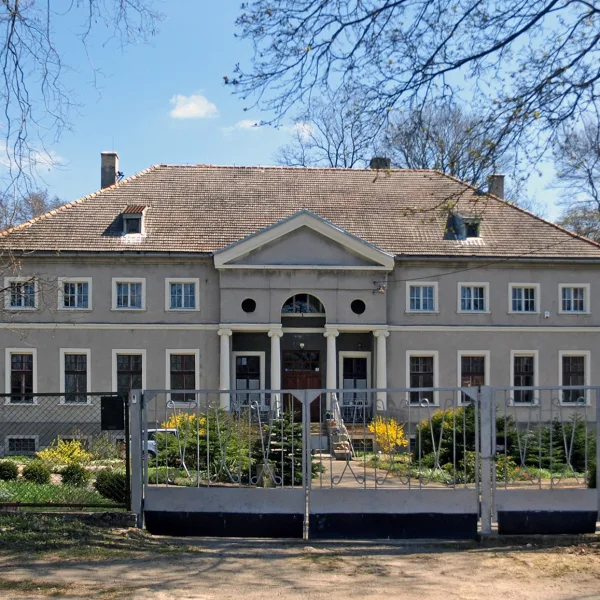
The palace in Gruszów in Marcinowice municipality was built in 1830. Its facade has a four-column portico supporting a balcony with a stone balustrade, and it is listed in the heritage register together with its park. In Jedlina-Zdrój the classicist palace of around 1792 has a portico with four columns, a high hipped roof and two outbuildings.
In Krzyżowice, near Wrocław, look for the five-sided tower-like projection under a helmet roof with a coat-of-arms cartouche, and the portal on two Doric columns. The palace in Kietlin in Dzierżoniów County is a Baroque rebuilding of a Renaissance manor, with a surviving Renaissance heraldic portal. In the 17th century the manor belonged to von Lohenstein, mayor of Niemcza and father of the writer Daniel Casper von Lohenstein. Borek Strzeliński has two separate palaces, from 1790 and 1840, so you can compare their styles in one visit.
Where can you see palace ruins and what happened to them?
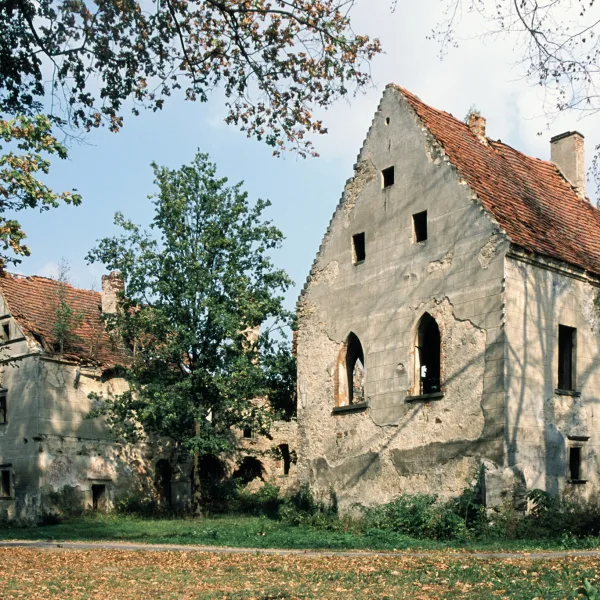
War or later neglect destroyed some palaces. The 17th-century palace in Jakubów burned down in February 1945 as the front passed through and was never rebuilt. The palace in Gałów, known as Schloss Gross Gohlau, has been a ruin since an arson attack in 1998. In Gogołów near Świdnica, the ruin of the former hunting manor of the Dukes of Świdnica, from the 16th century, is in poor technical condition despite repairs carried out over the years.
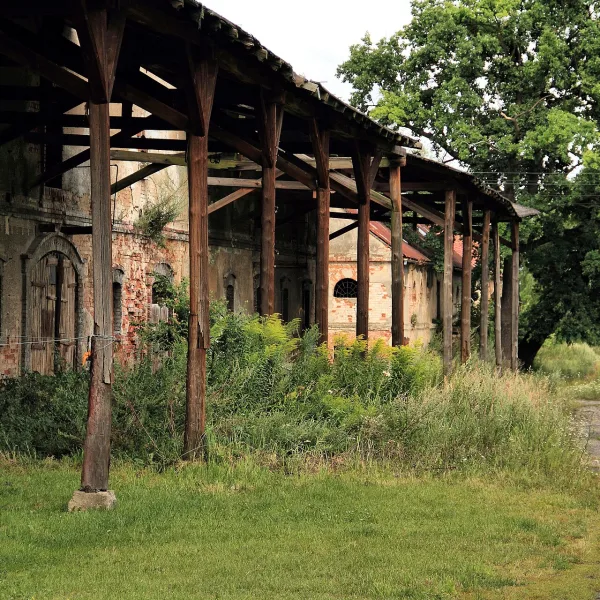
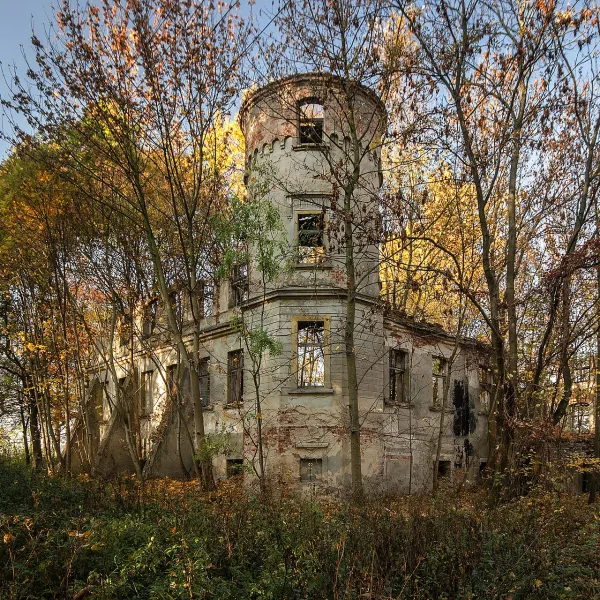
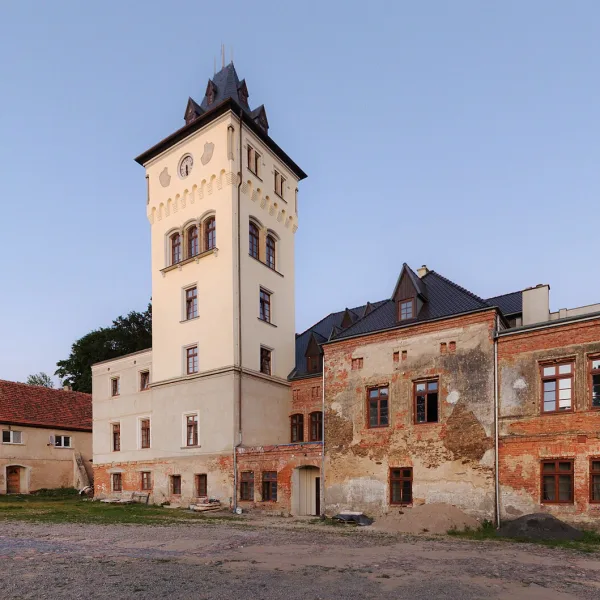
The neo-Gothic palace in Ubocze-Kolonia from the mid-19th century keeps one tower, and the palace in Głębowice, built for the Pourtalès family and regarded by Günther Grundmann as one of the more important classicist works in Lower Silesia, stands as a ruin with its park preserved. Ruins also include the palaces in Trzebicko and Maniów Mały, and the abandoned buildings in Świnino and Budziwojów. The Baroque palace in Bełcz Wielki has been closed and secured for conservation work since a roof fire in 2016. Treat these places as sights to view from outside and do not plan to go in.
What is the difference between a manor and a palace?
A manor is often smaller and more defensive. The manor house in Będkowice near Wrocław is a fortified building of the 16th century with a surviving Renaissance portal. Archaeologists found beneath it the remains of an early medieval motte with a moat and a later castle. The palace complex in Droglowice in Głogów County includes an 18th-century palace, a landscape park with a small lake and a granary. In Zastruże in Żarów municipality, a complex with a 16th-century palace and a park remodelled after 1820 is listed in the heritage register.
How do you plan a palace route?
Plan a day in a single area. Near Jelenia Góra combine Paulinum with Łomnica. Near Świdnica start at the abbots' palace and then drive to Gogołów, Gruszów or Zastruże, remembering that access differs. Around Wrocław you have Będkowice, Krzyżowice, Krobielowice and Maniów Mały. In the west of the region, between Głogów and Polkowice, manors and palaces are scattered in Droglowice, Śrem, Jakubów and Czerna. Around Kłodzko, check both sites in Ołdrzychowice Kłodzkie: the Oppersdorf Palace and the complex of 1572, which was the seat of a state farm from 1949 to 1990 and is now abandoned.
Frequently asked questions
Which palaces work as hotels today?
Among others, Paulinum in Jelenia Góra, the palace in Krotoszyce, the palace in Krobielowice within a golf resort, and the Widow's House manor in Łomnica.
Can you enter palaces that are ruins?
Do not plan to go inside. View ruins and abandoned buildings such as Jakubów, Gałów or Świnino from outside, and check whether the land is private.
Where can I see a palace in a town centre?
In Świdnica, for example, where the Palace of the Krzeszów Abbots stands on ulica Franciszkańska and houses the city library. Private palaces can be viewed only from outside.
Which palace has the oldest parts?
According to the descriptions, the palace complex in Ołdrzychowice Kłodzkie, where a 14th-century manor preceded the building begun in 1572, and Krobielowice, with a fortified medieval manor from the 14th century.
Do palaces usually have a park?
Many do, for example Krotoszyce, Kwietno, Zastruże, Droglowice and Głębowice. A park is often listed in the register together with the palace.

 Historic sites