Monuments and cemeteries in Wrocław and Lower Silesia: memorial sites, mausoleums, necropolises and sculptures in public space.
This category covers monuments, outdoor sculptures, cemeteries, war necropolises, Jewish cemeteries, burial chapels and mausoleums. Some objects commemorate victims of war and repression, some honour figures from culture and history, and some mark local events. Each listing gives the location, the authors and the circumstances of creation, as far as the sources know them.
How to use the list of monuments and cemeteries?
Choose an object by the type of place. Monuments and sculptures stand in streets, squares and parks, so you can usually see them on a walk. Cemeteries and burial chapels are places of burial, not stops on a sightseeing route. When you enter a cemetery, behave with respect and follow the rules set by its administrator.
The listings give an address or a description of the location, and often the name of the author and the date of unveiling. Some cemeteries are closed or were liquidated, like the Jewish cemetery in Złotoryja, where nothing visible remains. If you want buildings of a different kind, see historic sites.
Which monuments are near the Market Square and Świdnicka Street in Wrocław?
Around the Market Square and Świdnicka Street stand several monuments that combine easily into one walk. On the Market Square there is a reconstructed pillory, on its south side a monument to Fredro, and by the lane called Stare Jatki a group of sculptures of slaughtered animals. On Świdnicka Street you will find the Anonymous Passer-by and Bolesław the Brave.
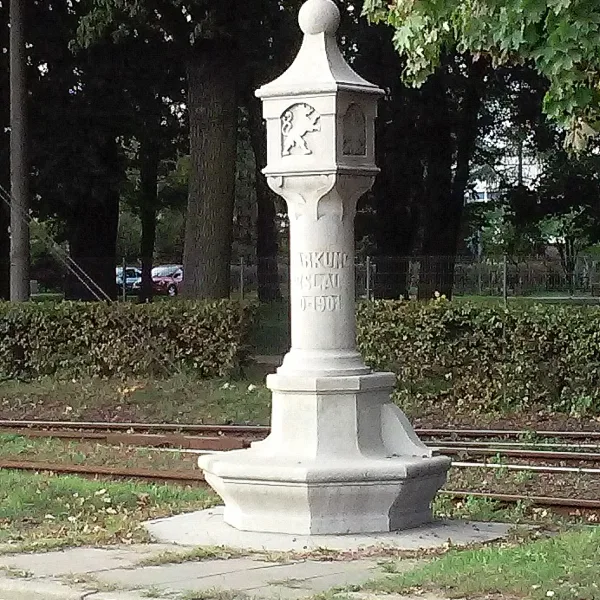
The pillory in front of the windows of the town hall's court chamber is a faithful reconstruction of the pillory of 1492. The original stood on the site of an earlier wooden one from the early fourteenth century. It is a square sandstone post on a three-step plinth, supporting a five-sided openwork lantern.
The monument to slaughtered animals recalls that from 1242 butchers' workshops gathered along this lane. The street Stare Jatki took its name from them, and in time so did the whole quarter.
The monument to Count Aleksander Fredro stands on the south side of the Market Square, although it was made far from Wrocław. Leonard Marconi designed and made it, and it was unveiled in Lviv in 1897. Since 1956 it has stood in Wrocław.
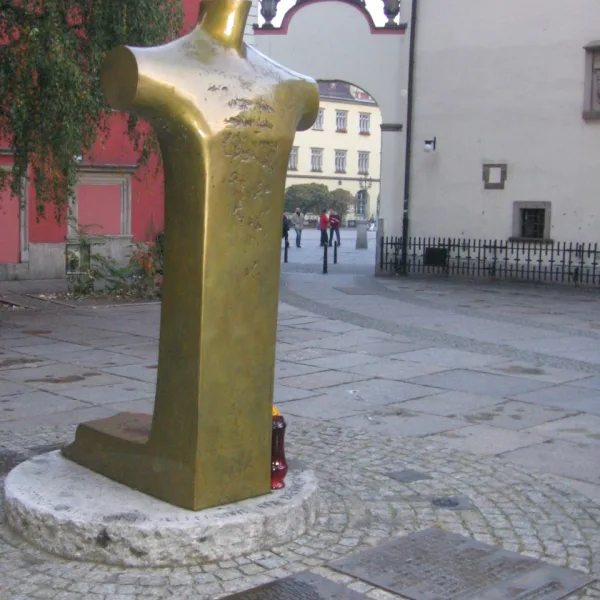
The Monument to an Anonymous Passer-by consists of fourteen life-size bronze figures standing on both sides of Świdnicka Street, where it crosses Piłsudskiego Street. It was unveiled in the night of 12 to 13 December 2005. Nearby stands the equestrian monument of Bolesław the Brave, the first equestrian monument of postwar Wrocław.
What sculptures and monuments are outside the centre of Wrocław?
Monuments are scattered through parks and housing estates. In Szczytnicki Park stands the Column of Frederick William II, a masonry monument from 1806 modelled on Trajan's Column, and the Diana Monument, reconstructed in 2015. The original by Ernst Seger went up in 1898 and was lost in 1945.
On Strzegomski Square in Szczepin stands the Train to the Sky, an installation made of a steam locomotive, the Ty2-1035, set upright and unveiled in October 2010. The author is Andrzej Jarodzki. The locomotive is twenty-one metres high and weighs eighty-two tonnes. On the Plac Grunwaldzki estate you will find a white reinforced-concrete sphere, the sculpture Atom by Roman Pawelski from 1974. In Nadodrze the Powodzianka monument by the Uniwersyteckie Bridges honours the residents' fight against the flood of the millennium in July 1997.
In the South Park stands a monument to Frederic Chopin, commemorating the composer's public concert in Wrocław in 1830. In the Botanical Garden you will find the reconstructed monument to Joseph von Eichendorff. On Ostrów Tumski, the cathedral island, stand the statue of St John of Nepomuk from 1730 to 1732, regarded as the largest monument to this saint in the world, and a Baroque statue of Our Lady with the Child from 1694, the oldest surviving monument in the city.
Where are the memorials to victims of war and repression in Wrocław?
The Katyn Massacre Monument stands in Słowacki Park. It commemorates those murdered in Katyn, Mednoye and Kharkiv and prisoners of the camps in Kozelsk, Starobelsk and Ostashkov. Its form is a cross made of granite slabs, with figures of the Angel of Death and the Katyn Pietà.
The Monument to the Victims of Stalinism by the Wrocław Opera was designed by Tadeusz Teller and unveiled on 17 September 1989. Its form recalls a dolmen made of inclined stone slabs. The Monument to the Unbroken Soldiers, on a square in the Huby district, is dedicated to the soldiers of the postwar anti-communist underground. It was unveiled on 8 May 2024, and its authors are Tomasz and Konrad Urbanowicz.
The khachkar on Janickiego Street, next to the Dominican monastery, is an Armenian stone stele unveiled on 21 September 2012. It commemorates the Armenian genocide and the centuries-long Armenian presence in Poland.
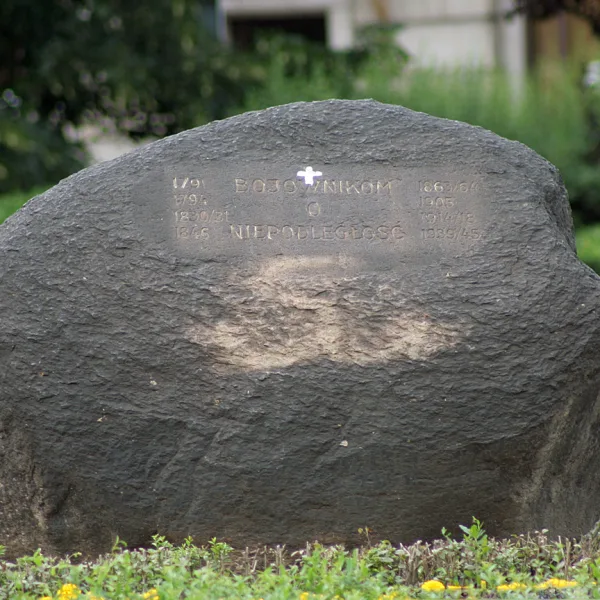
Outside Wrocław, similar in character are the monument in homage to the defenders of the homeland in the Siberians' Park in Kłodzko, unveiled on 3 May 2005, and the monument in Karpacz commemorating the nineteen victims of the avalanche in the Biały Jar on 20 March 1968.
Which Wrocław cemeteries have a listing on the portal?
The Grabiszyn Cemetery is among the largest in the city. Today's Grabiszynek is a fragment of a much larger complex that in the first half of the twentieth century had three separate parts. It is the resting place of notable figures of science and culture.
St Lawrence's Cemetery is a historic Roman Catholic necropolis in Ołbin, founded in 1866 on the site of the former settlement of Rybaki. It covers 4.3 hectares and has kept its brick entrance gate.
The Holy Family Cemetery on Smętna Street in Sępolno was founded in 1928. It is a parish cemetery in a green, quiet part of the city.
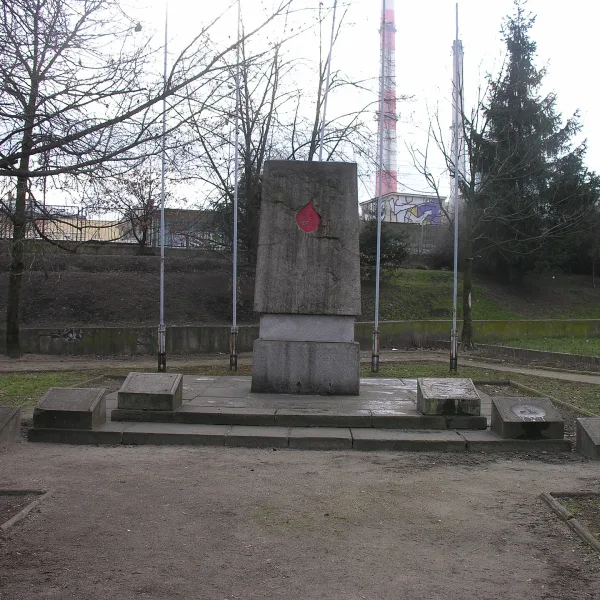
The Cemetery of Soviet Soldiers on Skowronia Góra is a war necropolis. About seven and a half thousand Red Army soldiers who fell during the siege of Wrocław in 1945 were buried here, mainly from the 6th Army of the 1st Ukrainian Front. The site was one of eight fields of temporary burial.
Mausoleums, burial chapels and Jewish cemeteries in the region
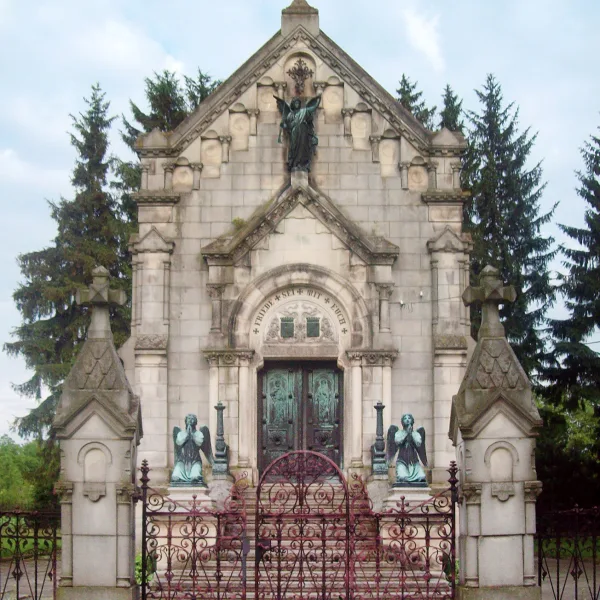
The Schaffgotsch family mausoleum in Raszów is a Renaissance burial chapel from 1577, added to a church in the Kamienna Góra county. It holds one of the most numerous and most valuable sets of sepulchral art in Lower Silesia.
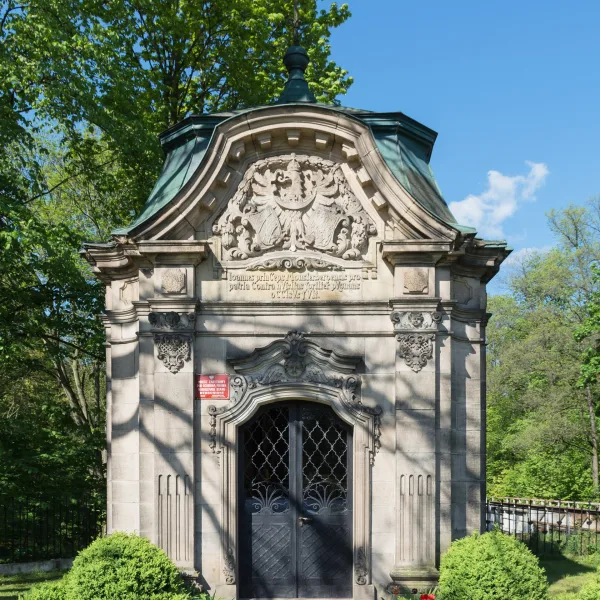
In Legnica, the Mausoleum of the Silesian Piasts by the church of St John the Baptist was built between 1677 and 1679 as the first Baroque burial chapel in Silesia. It commemorates the last dukes of Legnica-Brzeg, a branch of the Piast dynasty. In Wrocław the Piast mausoleum is inside the church of St Clare and St Hedwig on Nankiera Square. It occupies the former main nave, destroyed in the Second World War and rebuilt as a mausoleum between 1968 and 1970, and displays the tomb slabs of dukes and duchesses.
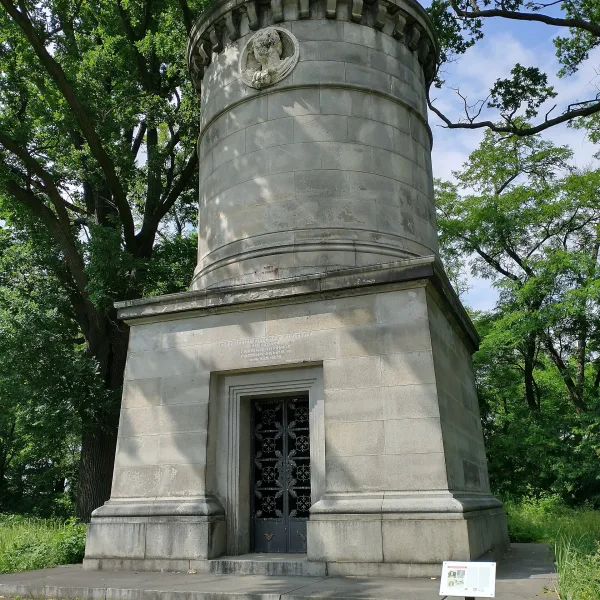
The mausoleum in Wałbrzych is a monumental structure from 1936 to 1938, today largely in ruins and under rescue works. It is not a tomb in the literal sense but a cenotaph, a symbolic tomb without burials, built in honour of about one hundred and seventy thousand fallen Silesians.
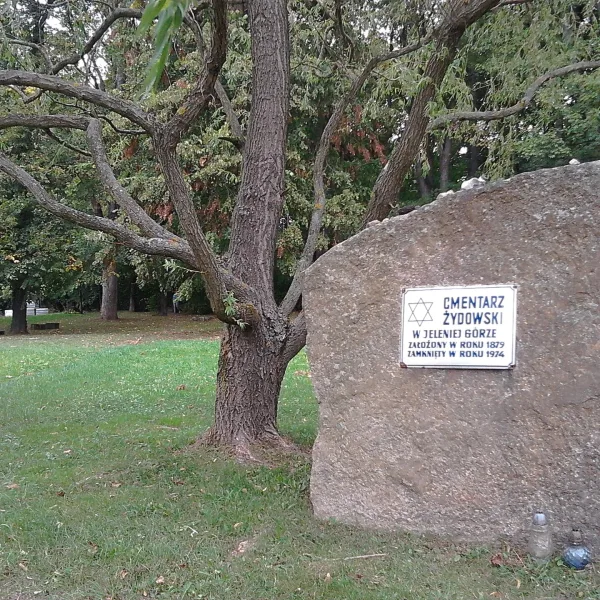
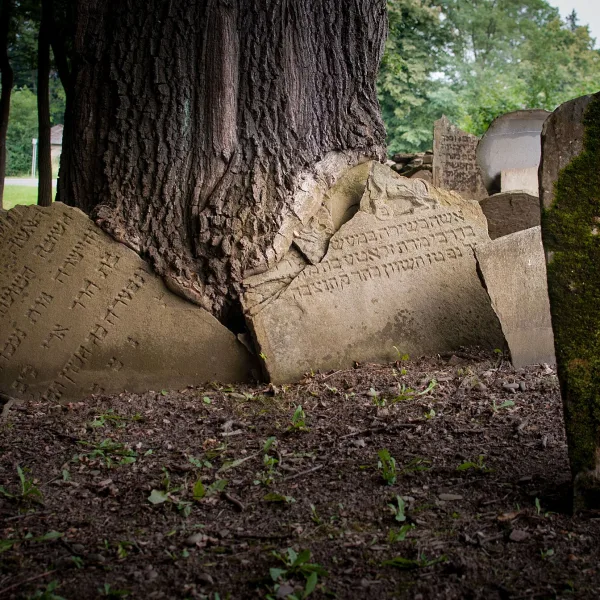
Former Jewish necropolises survive to different degrees. The Jewish cemetery in Chojnów is closed and preserved as a place of remembrance, and from January 1944 it belonged to the town. In Złotoryja the cemetery on Aleja Kardynała Wyszyńskiego was liquidated in 1973, and no gravestones remain.
What monuments and sculptures are in other towns of Lower Silesia?
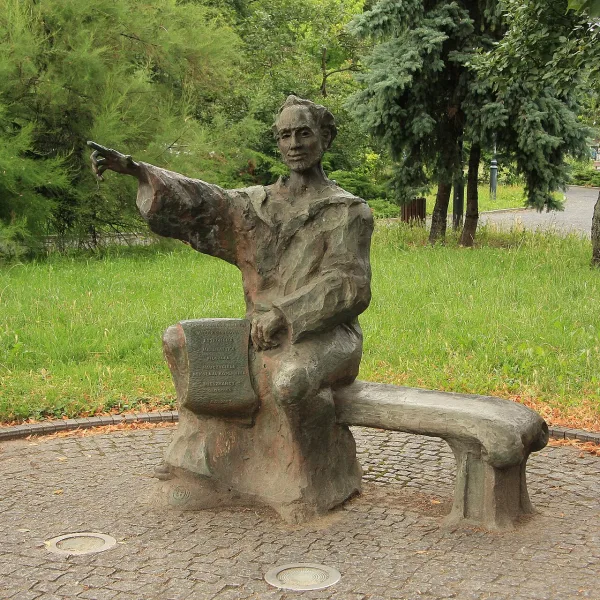
In Świdnica, a sculpture of the astronomer Maria Cunitz sits on a bench in front of the Museum of Old Merchantry: the Maria Cunitz Bench. Its author is Stanisław Strzyżyński, and it was unveiled on 31 March 2009. Cunitz lived around 1610 to 1664 and spent a large part of her life in Świdnica.
In Głogów the Monument to the Children of Głogów stands on John Paul II Square, by the Castle of the Głogów Dukes. It is the largest and best-known monument in the town, set up with donations from residents. In Legnica, on the Market Square by the Art Gallery, stands Julek, a sculpture by Edward Mirowski showing a boy with a satchel, the first in a series of figures of small Legnica residents.
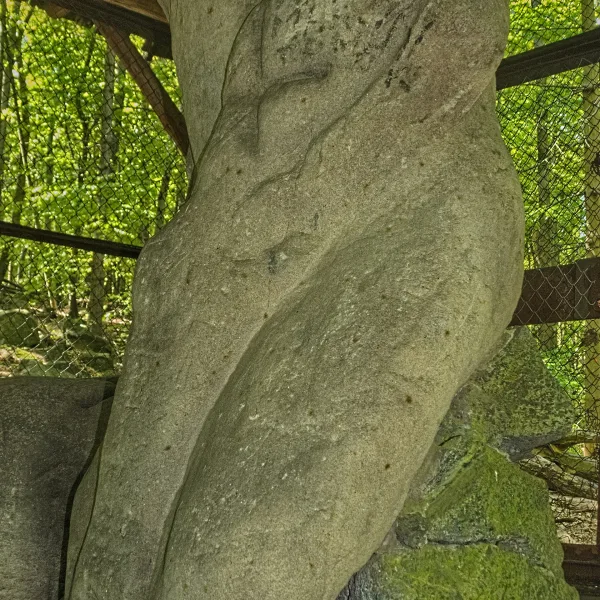
In Bystrzyca Kłodzka a pillory from 1556 stands on the Small Market Square, one of few fully original instruments of the old justice system in Lower Silesia. In Duszniki-Zdrój, in the Spa Park, stands a bronze monument to Chopin from 1976. In Sobótka, at the foot of Ślęża, stands the granite Monk, a megalithic sculpture entered on the register of archaeological monuments. In Zawiszów near Świdnica stands a sculpture from 1935 that commemorates the building of a sewage treatment plant.
Frequently asked questions
Which monument in Wrocław is the best known?
One of the most recognisable is the Monument to an Anonymous Passer-by on Świdnicka Street: fourteen bronze figures that disappear into the pavement and emerge from it. It was unveiled in 2005.
Where are the memorials to victims of crimes and repression in Wrocław?
The Katyn Massacre Monument stands in Słowacki Park, the Monument to the Victims of Stalinism by the Wrocław Opera, and the Monument to the Unbroken Soldiers on a square in Huby. The Armenian khachkar on Janickiego Street commemorates the Armenian genocide.
Which Wrocław cemeteries are historic?
St Lawrence's Cemetery in Ołbin, founded in 1866, is a historic site. The Grabiszyn Cemetery is one of the largest in the city, and notable figures of science and culture are buried there.
Where can I see a Piast mausoleum?
In Wrocław, in the church of St Clare and St Hedwig on Nankiera Square, and in Legnica, by the church of St John the Baptist. The Legnica one was built between 1677 and 1679 as the first Baroque burial chapel in Silesia.

 Cemeteries and monuments